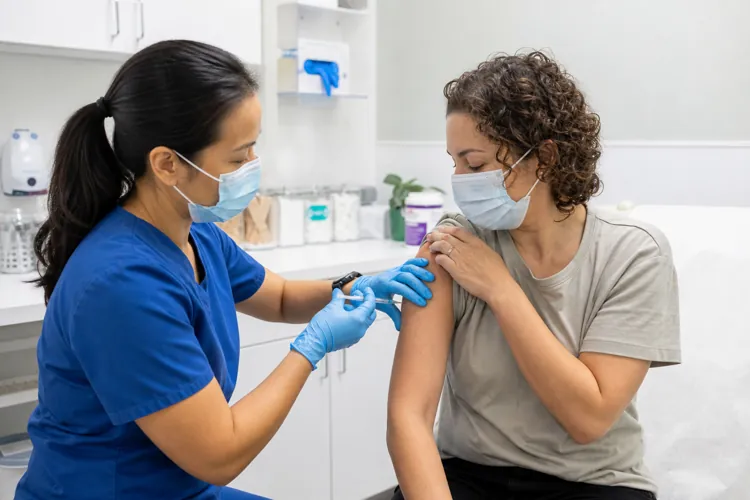

Moderna and Merck say their personalized mRNA cancer vaccine helped delay the return and spread of melanoma in a large Phase 3 clinical trial.
Unlike traditional vaccines, the treatment is created individually from each patient’s tumor and is given after surgery to prevent the cancer from returning.
The companies have not released detailed Phase 3 results, and the vaccine still requires regulatory review before it can be offered to patients.
Moderna’s effort to turn its mRNA technology into a cancer treatment has reached a major milestone, with the company reporting positive results from a late-stage clinical trial involving people with high-risk melanoma.
Moderna and its development partner Merck said the experimental treatment, known as intismeran autogene, met the primary and a key secondary goal of a Phase 3 trial. Patients who received the personalized vaccine with Merck’s immunotherapy drug Keytruda went longer without their cancer returning or spreading to another part of the body than patients who received Keytruda alone.
The companies described the improvements as statistically significant and clinically meaningful. However, they have not yet released the detailed Phase 3 data, including the size of the reduction in risk.
The study will continue to determine whether the treatment helps patients live longer. Moderna and Merck plan to present the complete findings at an international medical conference and discuss potential approval applications with regulators. The vaccine remains experimental and is not currently available outside clinical trials.
A vaccine made for one patient
Intismeran is not a preventive vaccine like those used against COVID-19 or influenza. It is a therapeutic vaccine intended to help the immune system attack cancer that may remain in the body after a tumor is surgically removed.
Doctors first collect a sample of the patient’s tumor and sequence it to identify mutations unique to that cancer. Moderna then manufactures an individualized vaccine containing instructions for as many as 34 tumor markers, known as neoantigens.
Once injected, the mRNA directs cells to produce those markers temporarily. That is designed to teach immune-system T cells what the patient’s cancer looks like so they can recognize and attack remaining cancer cells.
Keytruda, also known as pembrolizumab, works differently. It blocks the PD-1 pathway, which cancer cells can use to hide from the immune system. Researchers hope the combination both identifies the cancer for immune cells and removes one of the cancer’s defenses.
More than 1,100 patients took part
The INTerpath-001 trial enrolled 1,137 patients whose stage IIB through stage IV melanoma had been completely removed by surgery. The patients had not previously received systemic drug treatment for their cancer.
Participants were randomly assigned to receive either Keytruda alone or Keytruda with intismeran. Patients in the combination group received as many as nine vaccine doses, while Keytruda treatment continued for approximately one year.
The trial found that the combination improved both recurrence-free survival and distant metastasis-free survival. The latter measures how long patients remain alive without the cancer appearing in a distant organ.
No new safety concerns were identified, the companies said, although detailed information about side effects has not yet been released. Keytruda itself can cause serious immune-related reactions because it stimulates the immune system.
Earlier Phase 2 findings provided the basis for the larger trial. After five years of follow-up, the smaller study found that the combination reduced the risk of recurrence or death by 49% and the risk of distant metastasis or death by 59%, compared with Keytruda alone. Those percentages should not be assumed to represent the still-undisclosed Phase 3 results.
Other cancers are being studied
The development program includes nine Phase 2 and Phase 3 trials testing intismeran in melanoma, non-small cell lung cancer, bladder cancer, and kidney cancer. Early research is also examining its potential in pancreatic and gastric cancers.
The melanoma result is significant because it is the first positive Phase 3 trial reported for an individualized mRNA cancer treatment. Still, several questions remain, including whether the treatment extends overall survival, how quickly each personalized vaccine can be manufactured, and what it would cost.
For patients, the immediate takeaway is encouraging but limited: the results may eventually lead to a new treatment for preventing melanoma recurrence, but regulatory approval and publication of the full clinical data must come first.