


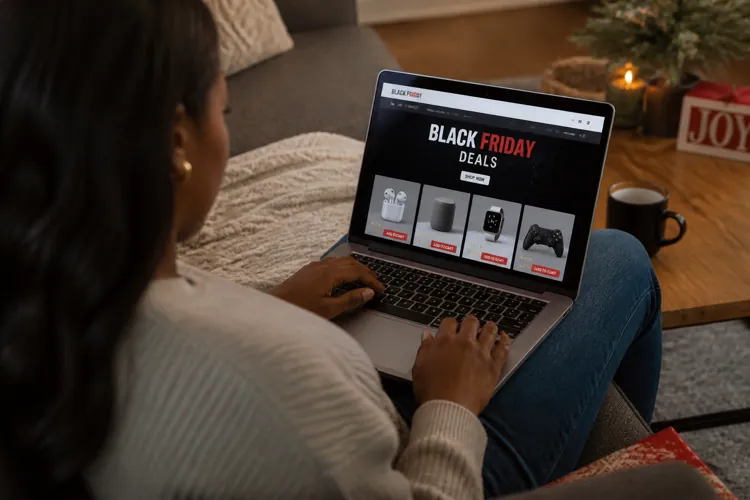

Scammers use fake delivery notifications and lookalike retail websites to steal shoppers' payment information and personal details.
Avoid clicking unexpected links, shop through official retailer apps, and use credit cards or digital wallets for safer payments.
If your shopping account is compromised, act quickly by changing passwords, enabling two-step verification, contacting your bank, and freezing your credit.
Black Friday is one of the biggest shopping events of the year, but all those tempting deals also create opportunities for scammers. As consumers rush to find discounts and check off their holiday shopping lists, cybercriminals are looking for ways to take advantage of the excitement.
From fake package delivery notifications and fraudulent discount websites to hackers taking over shopping accounts, some scams can be surprisingly difficult to spot. And with shoppers making more online purchases during the holiday season, it's especially important to know what red flags to look for before clicking a link or entering payment information.
ConsumerAffairs spoke with Michael Restivo, Chief Revenue Officer at CyberProof, who said Black Friday is a prime opportunity for cybercriminals to target unsuspecting shoppers. He shared some of the most common scams consumers should watch for this holiday season, along with simple steps they can take to keep their personal and financial information safe.
Know how to spot a package delivery scam
One of the most common scams to look out for this holiday shopping season is package delivery scams.
Consumers will receive a text message or email claiming that there is a problem with the delivery for a package they’re waiting on. In order to receive the package, the consumer must pay a fee or share more personal information with the scammer.
Restivo said the scam isn’t about your package. It’s about your panic.
“Delivery scams work because almost everyone is expecting something during the holidays,” he said. “Watch for these signs:
A clock is running: “Your package will be returned in 24 hours.” Real carriers don’t threaten you over a missed delivery.
A small fee: $1.99 to “reschedule” or “update your address.” The amount is small on purpose. What they’re after is your card number.
An odd link: Misspelled or extra words, like “usps-redelivery-help.com,” or a short link that hides where it goes.
No details: No tracking number, no retailer name, or a greeting like “Dear Customer.”
A random phone number: A text from a number you don’t know, even a long string of digits or an email address.
“The simple fix: never tap the link. Open the carrier’s app or type its website address yourself and paste in your tracking number. If the package is real, it will show up there.”
Avoid falling for lookalike sites
Another popular tactic: scammers will create fake websites that look nearly identical to legitimate retailers websites. They lure in shoppers because they look like trusted brands, and then shoppers end up inputting credit card or other payment information for a product that will never arrive.
“Your phone hides the one thing you most need to see: the full web address,” Restivo said. “Small screens shorten links and drop the details that would expose a fake.
“A few habits make a big difference:
Shop in the retailer’s own app: Download a retailer’s app from the official app store, instead of tapping ads or texted links.
Turn on your phone’s built-in protections: This includes spam text filtering, the browser’s “safe browsing,” or fraudulent-website warnings.
Press and hold a link before you tap it: Most phones will preview the full address.
Pay with Apple Pay, Google Pay, or a credit card, never a debit card: Credit cards give you stronger fraud protection, and digital wallets don’t hand your real card number to the merchant.
Update your phone before the holidays: Many scams rely on security holes that updates have already fixed.
Think like a firefighter
If you suspect your account has been affected by a scam, Restivo recommends consumers think like a firefighter: contain first, investigate later.
“Speed matters more than perfection,” he said. “In the first hour:
Change the password. Do it from a device you trust, and change it on every other account that uses the same password.
Sign out everywhere. Most major sites have a “log out of all devices” option, which kicks the attacker out.
Turn on two-step verification. Preferably through an authenticator app rather than text messages.
Call your bank and card issuers. Freeze or replace any card that was stored in the account.
Look for changes the attacker made. New shipping addresses, email forwarding rules, or a recovery phone number you don’t recognize. Attackers leave these behind so they can get back in.
Freeze your credit. It’s free at all three bureaus: Equifax, Experian, and TransUnion.
Report it at ReportFraud.ftc.gov. Or at IdentityTheft.gov if personal information was stolen.
“Scammers have upgraded,” Restivo said. “Their spelling is perfect now. AI tools let criminals write flawless messages, copy a brand’s look in minutes, and launch thousands of fake sites at once.
“The old advice to look for typos doesn’t work anymore. Look at what the message is asking you to do, not how polished it looks. Urgency, a link, and a request for money or your login are the warning signs, however professional the message seems.”
Restoivo’s last tip: “Set up purchase alerts on your cards for the holidays. You’ll know about a fraudulent charge in seconds instead of finding it on your statement weeks later.”