


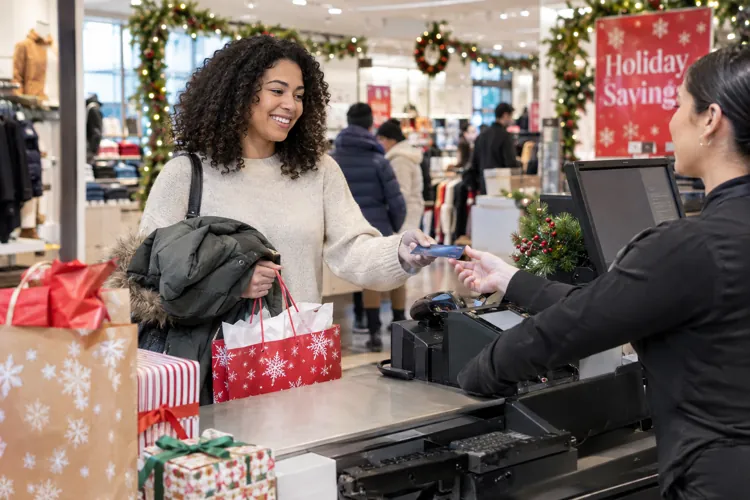

Forty-four percent of consumers feel more financially stressed than last year, while one-third usually take on holiday debt or expect to this season.
Shoppers are setting budgets and reconsidering spending, but sales promotions and convenient financing can complicate those plans.
Buy now, pay later services can spread out purchases, but missed payments and overlapping repayment schedules can create additional financial pressure.
Holiday shoppers are heading into the 2026 season with tighter budgets and growing financial anxiety, making decisions about how to pay almost as consequential as what to buy.
The Electronic Transactions Association and payments consulting firm TSG found that 44% of consumers feel more financially stressed than last year, compared with 27% in 2025. One-third say they usually accumulate holiday debt or likely will this year, up from 19%.
The seventh annual Consumer Holiday Spending Study surveyed 1,099 U.S. consumers September 8–13. ETA represents the payments industry, while TSG provides research and consulting services to that sector.
Budgets are getting more attention
The survey found that 72% plan to establish a holiday budget, and 73% expect to spend less than $1,000. Inflation concerned 82% of respondents, while 64% worried about affording gifts.
A separate survey, conducted online by The Harris Poll among more than 2,000 Americans, also suggests consumers are pulling back. People planning to purchase gifts expect to spend an average of $879, down 21% from $1,107 in 2025.
Those figures measure different spending categories and populations, but both surveys point toward greater caution.
The checkout decision matters
Payment preferences can determine whether a sale happens. In the ETA-TSG survey, 24% would seek a product elsewhere if a merchant rejected their preferred payment method. Another 7% would abandon or postpone buying.
That finding measures shoppers’ preferences, rather than whether a particular payment method improves their finances. The distinction matters: a convenient checkout option still needs to fit the household budget.
Installment payments come with obligations
The data suggest that using buy not, pay later options come with some risk. Among planned BNPL users, 38% expect they will be unable to make payments in full and on time, compared with 25% of credit card users. These are expectations, rather than measured defaults.
BNPL is a loan. One common arrangement divides a purchase into four interest-free payments, generally due every two weeks, according to the Consumer Financial Protection Bureau.
That can make an individual purchase easier to schedule. However, several purchases can create multiple obligations competing with rent, groceries and other bills. For example, three $200 purchases split into four equal installments create $150 in combined payments each installment round.
The CFPB cautions that many providers charge late fees. Automatic withdrawals may also trigger bank overdraft or insufficient-funds fees when an account lacks enough money. Unpaid debt can go to collections and potentially affect credit.
A discount can still lead to overspending
Researchers found that 27% of holiday spenders identify an irresistible deal as a likely reason they would overspend. Another 13% cite spending more to qualify for free shipping or another promotion.
The Federal Deposit Insurance Corporation recommends listing gift recipients, assigning spending amounts and comparing prices. It also cautions that sales can encourage unplanned purchases.
For shoppers considering financing, the practical next step is to map every payment against upcoming income and essential expenses. A smaller installment changes the payment schedule; the full purchase price still belongs in the holiday budget.