


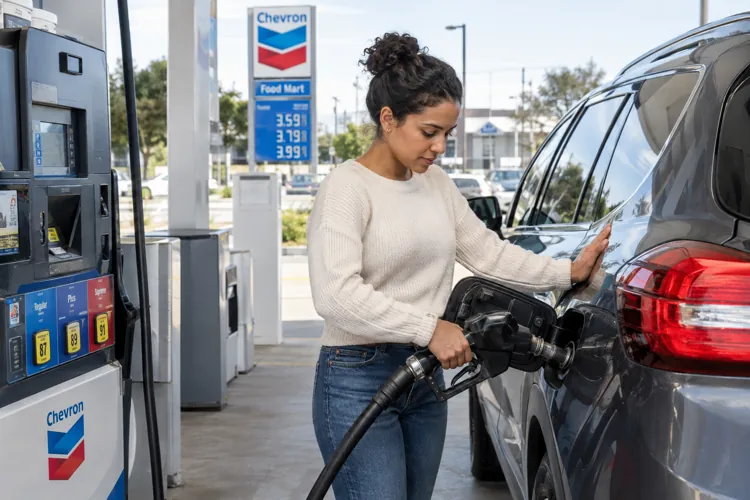

Gasoline prices have fallen below $4 a gallon nationally, dropping nearly 16 cents in the last week to an average of $3.96, according to GasBuddy.
The election isn't responsible for the decline, analysts say. Seasonal reductions in demand, increased refinery production and falling crude oil prices are the primary reasons.
More relief may be coming, with oil prices falling sharply and increased shipments through the Strait of Hormuz potentially keeping gasoline prices below $4 in the weeks ahead.
American motorists are finally getting some relief at the gas pump. For the first time since early August, the national average price of gasoline has fallen below $4 a gallon, and analysts say prices could continue declining as the Thanksgiving travel season approaches.
According to GasBuddy's weekly petroleum analysis, released November 9, the national average fell 15.9 cents over the past week to $3.96 per gallon.
That's a decline of 39.3 cents from a month ago, although gasoline remains 92.2 cents per gallon more expensive than it was at this time last year.
Prices declined in all 50 states during the past week, with some Midwestern states experiencing particularly large reductions.
But GasBuddy's head of petroleum analysis, Patrick De Haan, says consumers shouldn't credit the November 3 midterm elections for the sudden improvement.
Why the election didn't lower gas prices
With gasoline prices falling immediately after a closely watched election, some Americans might assume the results influenced the market. De Haan says history suggests otherwise.
“Many will assume the election had something to do with it, but that’s a myth,” De Haan said.
GasBuddy's analysis shows gasoline prices have declined during the 30 days leading up to every election since 2006 except 2010.
The explanation is largely seasonal.
As summer ends and temperatures cool, Americans typically drive less. At the same time, refineries complete seasonal maintenance and increase production, adding gasoline to the market just as demand begins to weaken.
The transition to less expensive winter-blend gasoline also contributes to lower prices.
Those forces tend to push pump prices downward in the fall, regardless of which political party wins an election.
De Haan acknowledged that election results could increase political pressure on Washington to address energy costs and affordability. However, he said the immediate decline reflects market conditions rather than politics.
Oil prices are falling sharply
Another important factor is the recent plunge in crude oil prices.
GasBuddy reports that Brent crude, the international oil benchmark, fell approximately 16% last week, its steepest weekly decline since the beginning of the COVID-19 pandemic.
By early Monday trading, Brent had fallen to $94.14 a barrel, compared with $108.40 just a week earlier.
West Texas Intermediate, the U.S. benchmark, declined to $87.21 a barrel from $99.35 the previous Monday.
The drop reflects easing concerns about a prolonged disruption to global oil supplies.
President Donald Trump recently indicated that additional extensive military strikes against Iran were highly unlikely while negotiations continued, although he made that assessment conditional on reaching a strong agreement.
Meanwhile, increased oil shipments through the Strait of Hormuz have helped ease concerns about supply shortages.
However, uncertainty remains. Tanker incidents near the strait and the absence of a diplomatic breakthrough could quickly reverse the decline in oil prices.
Where gasoline is cheapest — and most expensive
Although the national average is now below $4, gasoline prices continue to vary considerably depending on where consumers live.
North Carolina has the nation's lowest average price at $3.23 per gallon, followed by Texas at $3.38 and Georgia at $3.44.
California remains the most expensive state, with an average price of $5.69 per gallon. Hawaii follows at $5.56, while Washington averages $4.96.
Some states experienced especially sharp weekly declines. Michigan recorded the largest reduction, with prices falling 35.4 cents per gallon. Colorado prices dropped 31.2 cents, Ohio declined 29.4 cents, Wisconsin fell 28.7 cents and Oklahoma dropped 21.9 cents.
Nationally, the most frequently reported price at individual stations was $3.99 per gallon. The median price was $3.82, meaning half of stations charged less than that amount.
The least expensive 10% of stations averaged $3.16 per gallon, compared with $5.47 at the most expensive 10%.
Diesel prices are also falling
Diesel prices are declining, although they remain substantially higher than gasoline prices.
GasBuddy reports the national average diesel price fell 9.5 cents during the past week to $6.186 per gallon.
The median diesel price was $6.03, while the most commonly reported station price was $5.99.
High diesel prices continue to affect trucking companies, farmers and other businesses that depend heavily on the fuel. Those costs can eventually reach consumers through higher prices for transported goods.
Will gasoline prices keep falling? GasBuddy sees reasons for cautious optimism.
Refinery utilization increased to 94.5% in the latest Energy Information Administration report, indicating that U.S. refineries are operating at a high level of capacity.
Although gasoline inventories remain slightly below their five-year seasonal average, increased production and weaker seasonal demand could help keep prices under control.
De Haan believes the combination of seasonal trends and improved oil shipments through the Strait of Hormuz could keep the national average below $4 in the coming weeks.
For consumers, the savings are becoming noticeable. A motorist purchasing 15 gallons of gasoline would pay about $5.90 less than a month ago, based on the decline in the national average.
Still, gasoline prices remain substantially higher than a year ago, and renewed tensions in the Middle East could quickly erase some of the recent gains.
For now, motorists are enjoying a welcome break from rising fuel costs — one driven primarily by supply, demand and seasonal changes rather than election results.