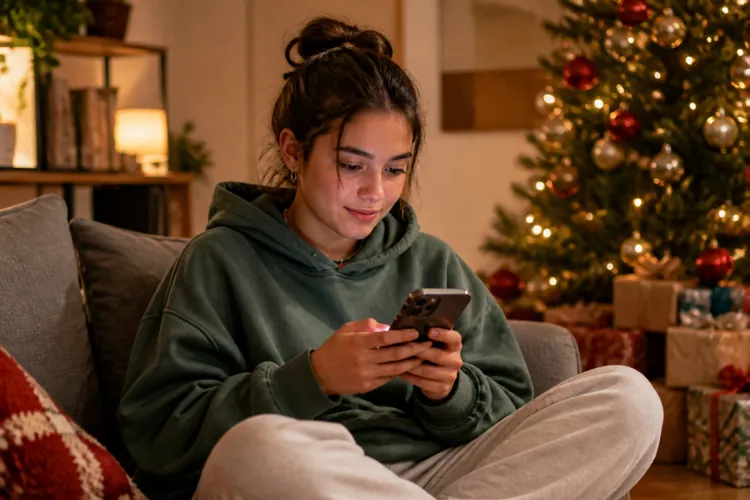

Gen Z consumers are five times more likely than baby boomers to be scammed while holiday shopping online, according to Norton's latest survey.
Social media shopping habits, tempting deals, and pressure to act quickly can make younger shoppers more vulnerable to scams.
Norton's scam research expert shares warning signs to watch for and practical tips to help consumers shop safely this holiday season.
You might assume that people who grew up using the internet would be better at spotting online scams. But new research suggests that isn't necessarily the case, especially when it comes to holiday shopping.
According to Norton's latest Holiday Survey, 25% of Gen Z consumers in the U.S. have been scammed while shopping online during the holidays — five times the rate of baby boomers (5%). Younger shoppers are also more likely to take risks, with 45% saying they're more willing to take chances during the holiday shopping season and 49% admitting they've purchased from a seller they suspected could be a scam.
As artificial intelligence becomes a bigger part of the online shopping experience, scammers have more opportunities to take advantage of consumers. ConsumerAffairs spoke with Leyla Bilge, Norton's Global Head of Scam Research, about why younger shoppers may be particularly vulnerable, how social media is changing the way people shop, and what consumers can do to protect themselves this holiday season.
The biggest red flags
When it comes to holiday shopping, Bilge said the biggest red flag is one many consumers have heard before: an unbelievable offer combined with pressure to act immediately.
“A massive discount, a product supposedly unavailable everywhere else, and a countdown telling you to pay within minutes should make you pause,” she said. “Look out for websites impersonating familiar brands, unusual web addresses, unclear contact information, and sellers asking you to move payment outside a marketplace.
“Scammers can copy the appearance of trust — logos, customer reviews, polished websites, and even advertisements. A sponsored ad is no guarantee that the seller has been verified. And the padlock in your browser means the connection is encrypted. A scam website can have one too.”
The risk to Gen Zs
Norton’s report found that a quarter of Gen Zs are getting scammed online at a rate five times higher than baby boomers. Bilge explained that being digitally fluent doesn’t make someone immune to manipulation.
“Scammers exploit excitement, urgency and trust, including among people who are very comfortable with technology” she said. “Globally, 24% of Gen Z respondents report having been scammed while holiday shopping online, compared with 5% of Baby Boomers.
“Their shopping patterns offer some possible explanations. Younger consumers discover products through social media and are more willing to buy through unfamiliar sellers. There is also a willingness to take a chance. Forty-eight percent of Gen Z respondents have bought something from a seller they suspected might be fraudulent because the offer was too tempting, compared with 32% overall. That suggests we need to address the moment when excitement overrides someone’s doubts, alongside teaching people how to check a website.”
Trust your gut
If you want to avoid falling victim to a scam this holiday season, Bilge’s biggest piece of advice is to trust your guy.
“One particularly risky habit is ignoring your own suspicions because you want an offer to be real,” she said. “Globally, almost one in three respondents have bought something from a seller they thought might be a scam because the deal was too good to pass up.
“Searching desperately for a sold-out gift creates another vulnerable moment. An unfamiliar shop suddenly claiming to have it can feel like a lucky discovery. That is when taking a few minutes to check the seller matters most.”
Other risky habits: buying straight from an advertisement without checking the retailer, moving payments outside a marketplace, and trusting an AI shopping recommendation without verifying the seller.
“Thinking ‘I’m only risking a small amount’ can also underestimate the consequences,” Bilge said. “Depending on the scam, you may expose payment details, personal information, or a password you use elsewhere.”
Take a pause
To protect yourself – and your data – this holiday season, Bilge recommends taking a brief pause before checking out.
Here are some of her other tips:
Build a short pause into every purchase that makes you feel rushed.
Go directly to the retailer’s official website or app.
For unfamiliar sellers, check the exact web address, independent reviews, contact details, and returns policy.
Compare the price elsewhere.
Keep payments within the marketplace and choose a payment method with buyer protection, checking its terms.
Use unique passwords and enable multifactor authentication on shopping and email accounts.
Treat delivery notifications with the same care. If a message asks you to pay a fee or update your details, check your order through the retailer or carrier’s official app.