


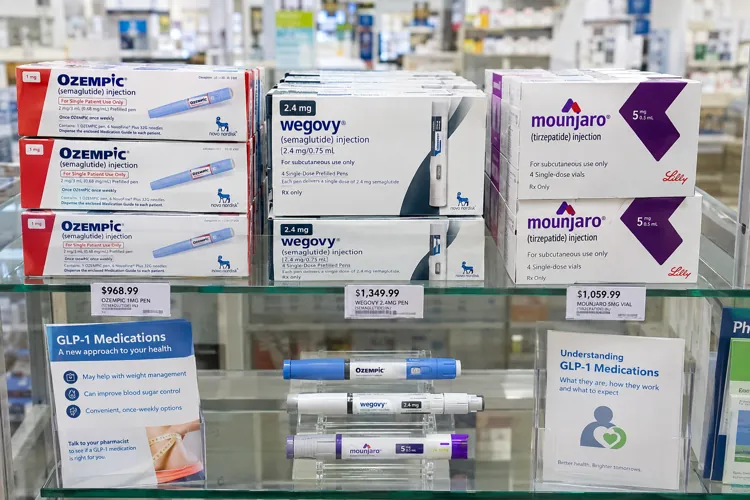

Employer coverage of GLP-1 drugs for weight loss fell from 57% to 53%, the first decline in three years.
Among employers maintaining coverage, 30% are considering eliminating it, according to WTW.
Employees could also face higher premiums and out-of-pocket costs as companies confront rising health expenses.
GLP-1 drugs, such as Ozempic and Wegovy, have proven to be effective weight-loss tools, leading to their increased popularity. But consumers who depend on their employers to make the drugs more affordable may be in for disappointment. Employers are pulling back from covering GLP-1 drugs for weight loss, according to a new WTW survey that points to growing pressure on workplace health benefits.
Among companies that have dropped coverage or are considering doing so, 91% cited cost. The findings specifically concern weight-loss coverage, rather than a broad withdrawal of coverage for diabetes treatment.
“Pharmacy has moved from a line item to the center of the healthcare cost conversation,” said Jeff Levin-Scherz, Population Health Leader, North America, WTW.
“GLP-1s, specialty drugs, and gene therapies can change patients’ lives, but the costs of these advances are hard to sustain. Removing coverage outright tends to fall hardest on the employees with the most to gain. Before making coverage changes, employers should consider clinical programs, risk protection such as stop-loss, and lower-cost purchasing channels.”
The retreat comes as employers project healthcare costs will increase 9.7% in 2027 even after changes to their plans. Prescription spending is a major pressure.
WTW cautioned that eliminating coverage can disproportionately affect employees who stand to benefit most. It urged employers to examine clinical management programs and less expensive purchasing options before dropping benefits.
Other changes
Other changes could reach more workers: 85% of employers are planning or considering shifting costs through employee premium contributions by 2028, while 71% are weighing changes to out-of-pocket expenses. Those figures include options under consideration, rather than only finalized decisions.
The survey included 471 U.S. employers collectively employing seven million people.
For employees, the findings underscore the value of checking prescription benefits during open enrollment. Anyone using a GLP-1 medication should ask whether coverage will continue for their prescribed use, whether approval requirements are changing, and what their share of the cost will be.
Employees facing a coverage change can also ask their benefits administrator about an appeals process or transition provisions before selecting a plan.