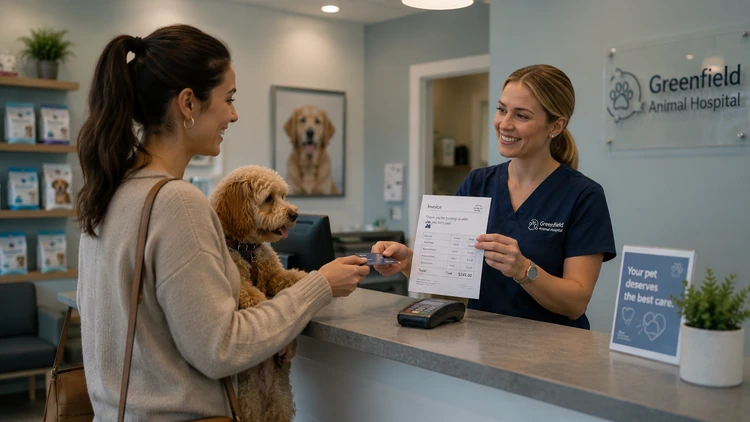

A new survey found that 11% of pet owners ended up paying more after delaying emergency veterinary care.
Financial concerns are causing many pet owners to wait before seeking treatment, with nearly 1 in 5 saying they delayed longer than they should have.
Emergency veterinarian Dr. Audra Pompeani says early treatment can sometimes prevent more serious health complications and higher medical bills later on.
When a pet suddenly gets sick or injured, many owners face a difficult decision: rush to the emergency vet right away or wait and hope the problem improves on its own.
With veterinary costs rising, it’s understandable why some people hesitate before seeking care. But new research suggests that delaying treatment may actually lead to higher expenses in the long run for some pet owners.
A recent survey of more than 1,000 American pet owners found that nearly one in five admitted they waited longer than they should have before seeking emergency veterinary care, often because of financial concerns.
ConsumerAffairs spoke with Dr. Audra Pompeani, VMD, PhD, emergency veterinarian at Pet Emergency & Specialty Center of Marin (PESCM), who explained that delays can sometimes allow medical issues to worsen, turning what may have started as a smaller problem into a more serious — and more expensive — emergency.
The financial aspect of delaying emergency vet care
While pet owners may take a wait and see approach when it comes to emergency care, this can often lead to higher vet bills than originally anticipated.
“Delaying emergency vet care can turn a treatable problem into a more complicated and expensive one,” Dr. Pompeani said. “Pets experiencing vomiting, toxin exposure, breathing changes, urinary blockage symptoms, or wounds often benefit from early medication or other interventions.
“Depending on the case, delays of hours to days without care may lead to that same patient getting sicker and now requiring hospitalization, IV fluids, oxygen support, surgery, or intensive care. The truth is that delaying veterinary care to save money can sometimes remove the lower-cost options.”
Dr. Pompeani explained that many emergencies are progressive and time-sensitive. Some of the symptoms that ultimately lead to more severe conditions and higher bills include:
Difficulty breathing
Repeated vomiting
Seizures
Collapse events
Suspected poisonings
Trauma
Issues with urination.
“In these situations, the body can deteriorate quickly. As a pet's condition destabilizes, we have to treat the original issue as well as complications that developed while care was delayed.”
Don’t hesitate to call the vet
It’s not uncommon for pet owners to consult the internet on their pets’ health issues – especially if their regular vet is closed or they don’t know about emergency vets. However, Dr. Pompeani encourages pet owners to always call the vet rather than experiment with at-home remedies.
“The risk with at-home remedies is fourfold: they may not work, they can mask symptoms, they might waste critical time, and they can even make the situation worse,” she said. “Some human medications and online ‘natural’ remedies are toxic to pets.
“Advice that sounds harmless can be completely wrong depending on the animal’s species, weight, breed, age, or medical history. Consulting online information can be useful for general education, but it should never replace triage when a pet is showing urgent symptoms.”
Making safe, informed choices for your pet
If you’re ever on the fence about emergency care, Dr. Pompeani says it’s always better to be safe than sorry. Many pet owners avoid the emergency vet’s office because they’re not sure if it’s a real emergency, or they fear the cost that comes with it.
However, the real risk is to your pet’s health.
“The key takeaway for pet owners is that calling an emergency vet early does not automatically mean committing to the most expensive treatment,” Dr. Pompeani said. “Instead, it gives you information, options, and a safer decision point.
“A quick phone call can help determine whether you should monitor at home, book the next available appointment, or come in immediately. Sometimes, the most expensive path is the one where owners wait until the pet is more clearly in crisis.”