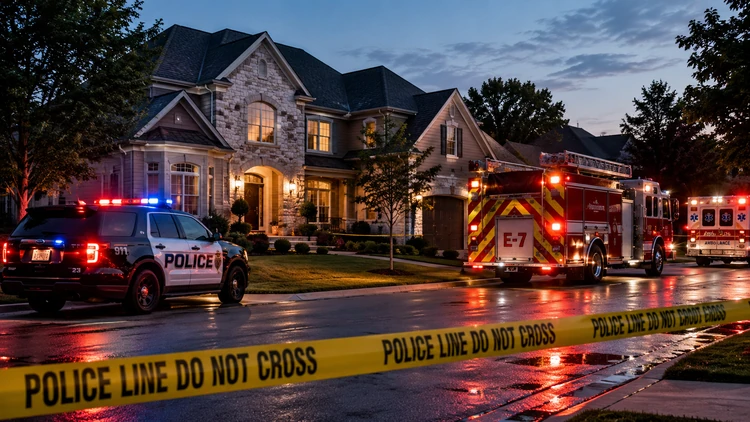

California investigators say an elderly couple found dead in their Bermuda Dunes home had been caught in a devastating celebrity impersonation scam involving someone pretending to be actor Tom Selleck.
Friends say 79-year-old Karen Whitaker sent thousands of dollars to the scammer over many months despite repeated warnings from family and authorities.
The Riverside County Sheriff’s Office is investigating the deaths as a suspected murder-suicide and says there is no evidence the scammer was directly involved.
In most cases, scams are limited to financial loss. In this case, it may have led to two deaths.
What began as a Facebook message tied to grief and nostalgia ended in tragedy for a longtime California couple whose final months were consumed by deception, financial stress, and emotional collapse.
Donald Whitaker, 80, and his wife Karen Whitaker, 79, were discovered dead earlier this month inside their home in the gated Bermuda Dunes community near Palm Springs, after authorities responded to a welfare check request from a concerned neighbor.
Investigators said both suffered traumatic injuries, and preliminary evidence points to a murder-suicide, though the case remains under active investigation and the circumstances remain murky.
It began with a Facebook post
According to family friend Joy Miedecke, the unraveling began roughly a year earlier when Karen Whitaker posted on Facebook about the death of a former classmate. Soon afterward, someone contacted her claiming to be television actor Tom Selleck and said he had known the woman Karen had memorialized online.
Miedecke told various media outlets that the scammer slowly built trust through text conversations and emotional manipulation before asking for small amounts of money. The requests escalated over time, eventually totaling tens of thousands of dollars sent through difficult-to-trace methods, including gift cards.
Friends and relatives repeatedly tried to convince Karen that the messages were fraudulent. At one point, according to Miedecke, someone with connections to people who worked around the real Tom Selleck personally warned her that the actor was not communicating with her. It did not change her mind.
The family later restricted Karen’s access to bank accounts and credit cards after learning how much money had been lost. But friends say she continued trying to send funds to the impersonator. Miedecke also said she believed Karen may have been showing signs of early cognitive decline, making her especially vulnerable to manipulation.
Authorities confirmed there had been prior reports involving possible elder financial abuse, and Adult Protective Services reportedly visited the couple’s home before the deaths.
No direct evidence
While investigators have stressed there is no direct evidence linking the scammer to the couple’s deaths, the case has become a chilling example of how online fraud schemes targeting seniors can inflict damage far beyond financial loss.
Experts say celebrity impersonation scams have grown increasingly sophisticated, fueled by social media access, emotional targeting, and advances in artificial intelligence that allow fraudsters to appear more convincing.
Federal officials have repeatedly warned that older Americans are disproportionately targeted because scammers exploit loneliness, grief, confusion and trust. In many cases, victims resist intervention because they become emotionally invested in the fabricated relationship.
The Whitakers had lived for years in what neighbors described as a quiet retirement community. Friends now say the emotional fallout from the scam transformed the couple’s lives long before investigators arrived at their front door.
No arrests have been announced in connection with either the deaths or the impersonation scheme. Authorities continue to investigate.