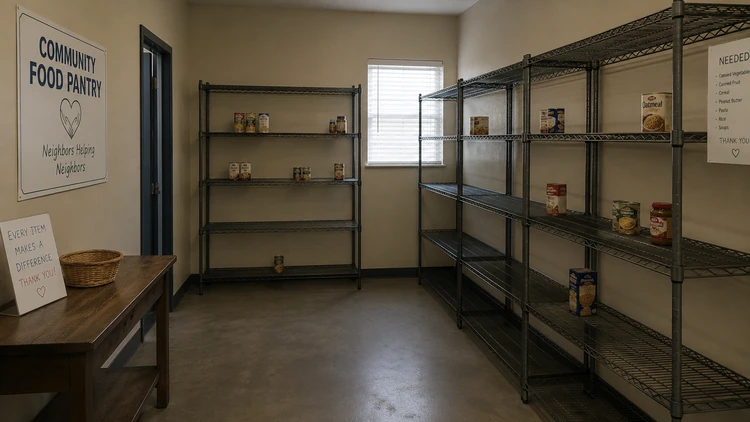

New York Fed researchers say food insecurity has risen sharply among lower-income and less-educated households, as well as families with young children.
The study links growing financial strain to worsening consumer sentiment, even as the broader U.S. economy continues to expand.
Researchers found that households experiencing food insecurity are significantly more pessimistic about their future financial prospects and the economy overall.
Consumers have watched in recent months as rising food prices have helped fuel inflation. But the problem may be a lot worse for low-income groups.
Rising food insecurity among financially vulnerable Americans is contributing to growing consumer pessimism, according to new research published this week by the Federal Reserve Bank of New York.
The analysis, published in the New York Fed’s Liberty Street Economics blog, found that lower-income households, people without college degrees, and families with young children have experienced a “remarkable increase” in food insecurity in recent years. Researchers used newly collected data from the Survey of Consumer Expectations to update earlier pandemic-era findings on financial hardship.
K-shaped economy
The report comes as policymakers and economists continue to debate the emergence of a “K-shaped” economy, in which higher-income households continue to benefit from strong employment, wage gains, and asset growth while financially vulnerable Americans struggle with higher living costs and economic uncertainty.
While overall economic activity has remained resilient, the researchers said many households are facing elevated financial strain. Those pressures appear to be weighing heavily on public attitudes about the economy.
According to the study, households experiencing food insecurity reported substantially weaker expectations for their future finances and broader economic conditions than households that were food secure. The findings suggest that deteriorating household financial conditions may be helping drive persistently weak consumer sentiment readings.
The researchers also noted that food insecurity increasingly overlaps with other forms of financial distress, including difficulty paying bills and concerns about covering essential expenses.
The report was authored by New York Fed economists Gizem Kosar, Ishva Mehta, and Wilbert van der Klaauw. The authors emphasized that the views expressed are their own and do not necessarily reflect official positions of the Federal Reserve Bank of New York or the Federal Reserve System.