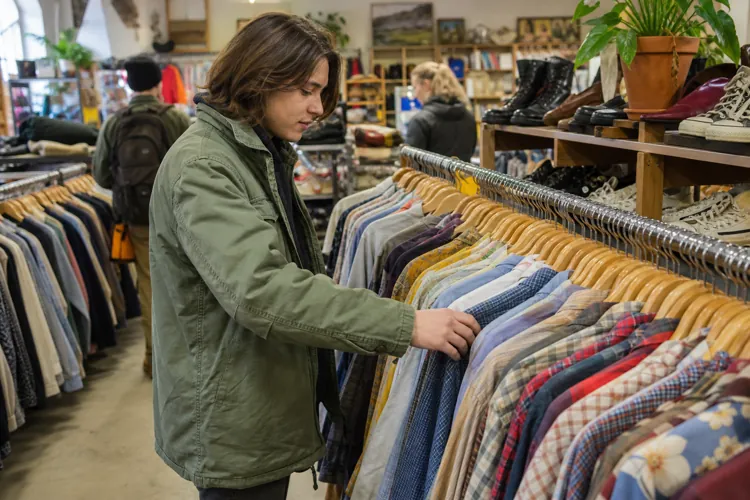

A new survey found that 76% of Americans bought something secondhand in the past year, while nearly nine in 10 have purchased used goods at some point.
Younger consumers lead the trend, and nearly half of Americans already buy luxury items secondhand or would consider doing so.
Rising prices could encourage more resale shopping, as 53% said they would likely buy used more often if new products become more expensive.
Browsing through thrift and second-hand stores has long been an enjoyable shopping experience for a niche group of consumers. With inflation, it’s gone mainstream.
Buying secondhand has become a routine part of shopping for many Americans, according to a new report from The Consumer Collective.
The consumer insights and advisory firm’s report, “Second Nature: The State of Secondhand Shopping in America,” found that 76% of Americans purchased used goods during the past year. Nearly nine in 10 have bought something secondhand at some point, according to the company’s announcement.
The findings suggest resale is becoming an increasingly important competitor for retailers selling new merchandise.
Younger shoppers lead
Millennials had the highest rate of secondhand purchasing in the past year, at 89%, followed by Generation Z at 85%. Among Americans age 62 and older, 59% reported buying used.
The survey also found that 44% of respondents were buying more secondhand merchandise than two years earlier. That figure reached 66% among Gen Z consumers.
Luxury goods are part of the shift. Nearly half of respondents — 49% — already purchase luxury items used or would consider it. That figure measures both existing buyers and potential customers, rather than current purchases alone.
Prices could push more purchases toward resale
Higher prices for new products could strengthen demand for secondhand alternatives. Some 53% of respondents said they would likely shop secondhand more often if prices for new merchandise continued rising.
For some consumers, used goods already account for a substantial share of purchases: One in three said more than a quarter of what they buy is secondhand.
Jessica Ramírez, co-founder of The Consumer Collective, said the implications extend across product categories.
“Over time, we expect to see consumers’ gravitation towards secondhand pull spend from other retailers,” Ramírez said in the announcement.
That is the firm’s forecast, rather than a measured decline in traditional retail sales. But the survey points to a consumer audience increasingly willing to consider previously owned merchandise when deciding where to spend.
The findings come from an online survey of 400 U.S. adults conducted in August 2026. The firm says the figures were stratified to U.S. Census demographics unless otherwise noted. The results describe respondents’ reported shopping habits and intentions, rather than tracked retail transactions.