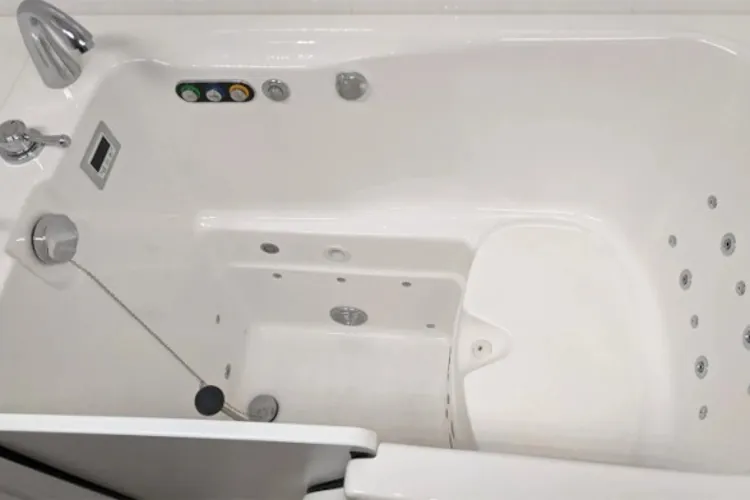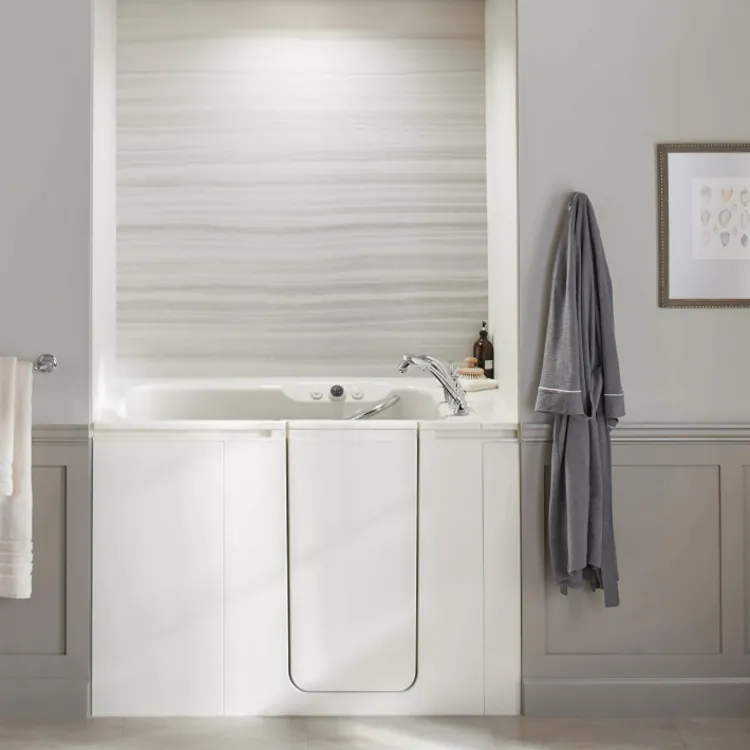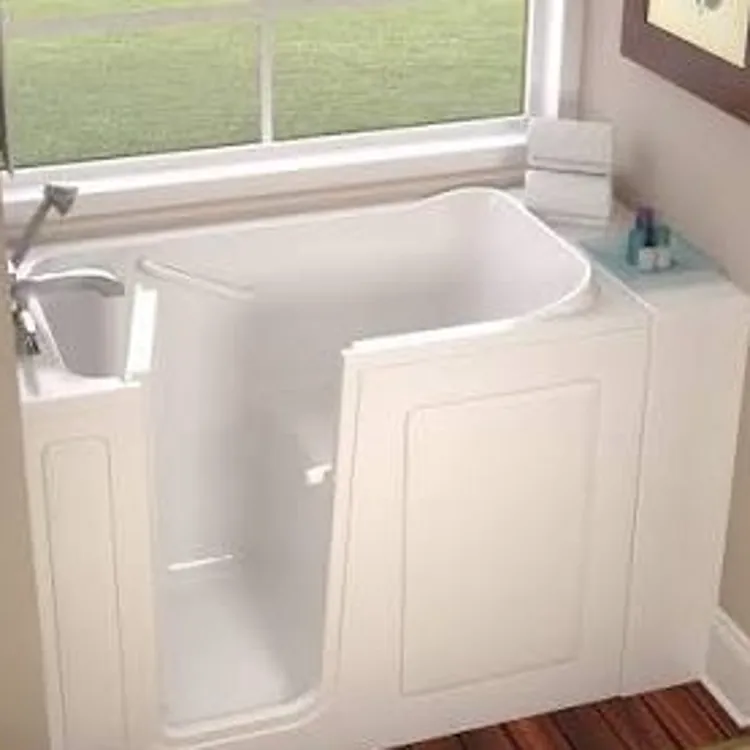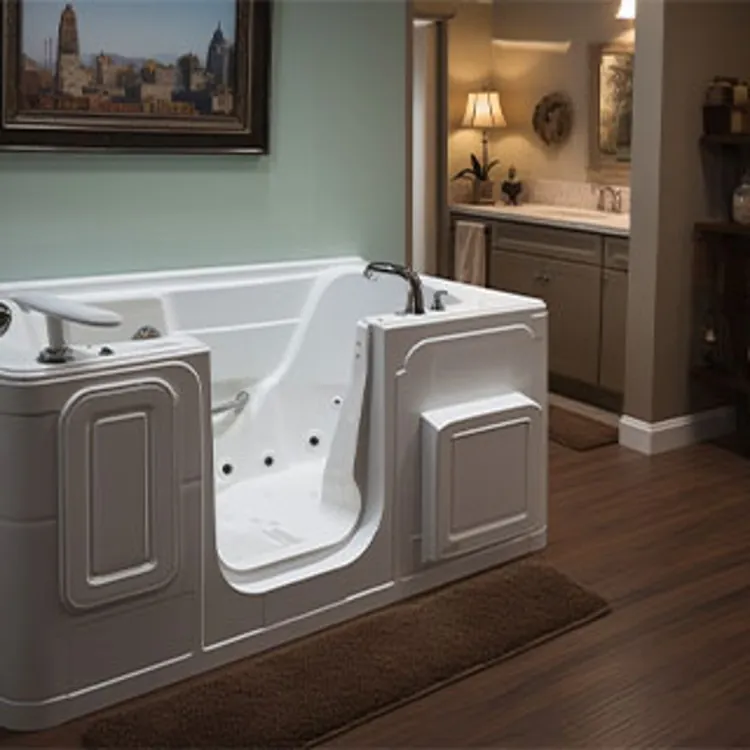



| Company | Customer rating | Step-in height | Number of jets (air and hydro) | Pro installation | |
|---|---|---|---|---|---|
 Safe Step Walk-In Tub | Get Started | 4.9 | 4 inches | 16 air jets; 10 hydrojets |  |
 Kohler Walk-In Bath | Get Started | 4.6 | 3 inches | 17 air jets; 10 hydrojets | |
 American Standard Walk-in Baths | Get Started | 3.8 | 3 inches | 44 total | |
More details about our top walk-in tub companies for mobile homes

- Step-in height
- 4 inches
- Financing
- Undisclosed
- Customizations
- Door placement; wall surround and faucet colors

- Step-in height
- 3 inches
- Financing
- Participating dealers may offer GreenSky financing
- Customizations
- Door placement; tub color; background color; shelf, tray and grab bar add-ons

- Step-in height
- 3 inches
- Financing
- Varies; subject to third-party credit approval
- Customizations
- Door placement; acrylic or gelcoat finish
Key insights
Walk-in tubs can be installed in mobile homes, but there are a few considerations to keep in mind when selecting a model.
Jump to insightThe cost of a walk-in tub typically ranges from $2,500 to $8,000.
Jump to insightWalk-in tubs in mobile homes provide therapeutic benefits, improved safety and allow seniors to age in place, but they also come with potential structural upgrades and space limitations.
Jump to insightCan a walk-in tub be installed in a mobile home?
Yes, several walk-in tub models are available for installation in mobile homes. The ideal size for a walk-in tub for a mobile home is 25 inches wide by 45 inches long. Some models are portable and available for DIY installation. Other tub models require professional installation.
Either way, the process to install a walk-in tub in a manufactured home isn’t too different from installing a walk-in tub in any other house. You still need to check your measurements and make sure your existing plumbing can supply enough hot water and accommodate any extra drainage. Here are a few major considerations to keep in mind:
RVs and trailers often don’t have large enough doors to fit a standard walk-in tub, but many mobile, prefabricated and modular homes do.
- How big is your door? You must have a standard door size (28 by 80 inches); otherwise the tub won’t fit through the opening.
- Do you own a single-wide or double-wide home? Double-wide mobile homes typically have more space and stronger structural support, making installation easier. Single-wide homes may have tighter layouts and structural limitations that require additional planning or modifications.
- How big is your bathroom? Measure your available space carefully. Walk-in tubs are often larger than standard tubs, so smaller bathrooms may require a compact or custom-sized model.
- Do you own your home and the land it’s on? For professional installation, usually you must own your home and the land it’s on. Renters can still get a walk-in tub if they have their landlord’s permission. If you don’t own the home, your landlord must be present for the consultation and installation.
Not everyone’s home is an ideal candidate for walk-in tub installation, but there are other ways to make bathrooms safer for seniors. For more information, read our guides on finding the right shower chair or safety grab bars.
Can a mobile home floor support a walk-in tub?
In many cases, a mobile home floor can support a walk-in tub, but it depends on the home’s structure and load capacity. A filled tub can weigh anywhere from 600 to well over 1,000 pounds, which places concentrated stress on a relatively small section of flooring.
The type of mobile home matters. Double-wide homes generally have stronger floor systems and more robust framing than single-wide units, making them better suited to handle the added weight without modification. Single-wide homes, on the other hand, often have a lighter floor load capacity and may require reinforcement before installation.
This can involve adding additional joists, installing support beams or redistributing the load to ensure the structure can safely handle the weight.
Because these factors aren’t always visible, a professional inspection is essential. A licensed contractor can evaluate the floor structure, identify any weak points and determine whether reinforcement is required before installation. This step helps prevent long-term issues such as sagging floors, structural damage or safety hazards.
DIY and portable walk-in tub options for mobile homes
A DIY walk-in tub conversion kit allows you to modify your existing bathtub without needing a bathroom renovation to install an entirely new tub. To install, a section of your tub is cut out using a template and a pre-formed, watertight insert is added to create a more accessible step-in threshold.
A portable walk-in tub is another option for mobile homes that requires no plumbing upgrades or remodeling.
DIY and portable walk-in tubs are great options for renters, owners of smaller or single-wide mobile homes and budget-conscious buyers.
» LEARN MORE:Types of walk-in tubs
What to consider when buying a walk-in tub for a mobile home
When shopping for a walk-in tub, consider safety and comfort features first. Anti-slip surfaces and safety grab bars are important because they provide extra support. Look for a low-step threshold to ease entry and exit, especially if you have mobility challenges or stiff joints.
- Outward-opening doors: Outward-opening doors make it a little easier to get in and out of the tub without having to step around the door. In a mobile home, the bathroom might not have enough clearance for the door to swing outwards. If there isn't enough clearance for an outward-opening door, you can choose an inward-swinging door.
- Tub material: Fiberglass and acrylonitrile butadiene styrene (ABS) plastic are the ideal materials for mobile home walk-in tubs because they are lighter than acrylic. ABS plastic is a great lightweight and cost-effective option for mobile home bathrooms.
- Free consultation: Many companies often offer a free in-home consultation to evaluate the space and ensure the tub will fit. Find out early if your tub requires custom dimensions to fit in a mobile home — this could increase walk-in tub costs.
- Heated seats and headrest: The surfaces of a walk-in tub can get cold, so quality tubs come standard with heating coils to maintain the water temperature. Look for a model with heated seats and headrests to increase comfort, especially while the tub fills and drains. (Look for a quick drain and fill system to lessen the time you spend waiting in the tub.)
- Therapy features: Therapy features can make the walk-in tub experience feel more like a spa. If you have arthritic pain, poor circulation or lower back pain, look for a tub with massaging jets. Those with depression, anxiety and insomnia might benefit from a tub with chromotherapy features, such as underwater LED lights.
- Drain speed: Mobile homes may have smaller drain lines, which could affect drain speed. Since you have to wait in the tub while it drains, features like fast drainage are especially important to consider when buying a walk-in tub for a mobile home.
» RELATED: Questions to ask a walk-in tub company
How much does it cost to install a walk-in tub in a mobile home?
Not including installation, basic walk-in tub models start around $2,000 to $5,000.
The cost to install a walk-in tub typically ranges from $2,500 to $8,000. The reason for the cost differential is that costs are dependent on the setup of your bathroom and your existing plumbing and electrical systems.
The more work you need to do to update your bathroom to accommodate a walk-in tub, the higher the installation cost will be. Companies that bundle the cost of the tub with installation services start around $10,000.
If your mobile home requires subfloor reinforcement, non-standard plumbing adapters or a walk-in tub with custom dimensions, expect to pay more.
| Cost | What it covers | |
|---|---|---|
| Walk-in tub | $2,000 to $30,000+ | The base tub price depending on brand, size and features |
| Installation | $2,500 to $8,000 | Professional installation, plumbing work and setup |
| Bathroom modifications | $500 to $5,000+ | Structural changes such as widening space, reframing or wall adjustments |
| Finishing work | $300 to $2,000 | Tiling, sealing, trim work and reconnecting fixtures |
Most walk-in tub companies will schedule an in-home consultation to give you a personalized quote that includes the cost of the tub as well as installation.
» RELATED:Pros and cons of walk-in tubs
Pros vs. cons of installing a walk-in tub in a mobile home
Installing a walk-in tub in a mobile home can be a smart investment for safety and comfort, but it also comes with some trade-offs. Understanding both sides can help you decide if it’s the right choice for your space and budget.
Pros
- Improved safety
- Aging in place
- Therapeutic benefits
- Increased appeal for certain buyers
Cons
- Higher upfront cost
- Potential structural upgrades
- Space limitations
- Water usage and wait time
- Mixed resale impact
FAQ
Will Medicare help pay for a walk-in tub?
No, walk-in tubs are not covered by Medicare because they are not considered durable medical equipment. If you have private insurance, check with your provider to find out if they will cover it. In some states, Medicaid programs provide home improvement grants for low-income seniors to age in place, which could help cover the costs of installing a walk-in tub.
How many gallons does a walk-in tub hold?
Walk-in tubs hold anywhere from 40 to 80 gallons. They have greater capacity than traditional tubs, which can usually hold up to about 50 gallons or less.
What size water heater do you need for a walk-in tub?
You need at least a 50-gallon water heater for a walk-in tub. Considering most mobile homes are built with smaller water heaters, you might need to replace it before installing a walk-in tub.
How do you properly maintain a walk-in tub in a mobile home?
Regular maintenance involves cleaning the tub with non-abrasive cleaners to prevent buildup, inspecting the door seal for wear and tear and occasionally flushing the jets (if included) to keep them clear of debris. Always follow the manufacturer’s care guidelines for optimal performance.
Can I install a walk-in tub myself in a mobile home?
Yes, some walk-in tubs are designed for DIY installation and come with clear instructions. However, it’s important to assess your skills and the complexity of your home’s plumbing and electrical systems. Professional installation is recommended to ensure safety and functionality.
Does installing a walk-in tub add value to a mobile home?
Installing a walk-in tub can make a mobile home more attractive to specific buyers, especially seniors or people with mobility challenges. While it may not dramatically increase the home's overall market value, it can boost appeal and marketability within communities where aging-in-place features are highly desirable.
However, if the tub replaces a standard bathtub, some buyers without accessibility needs might view it as a drawback. Homeowners planning to sell should consider whether their target buyers would find a walk-in tub beneficial.
What if my mobile home has limited plumbing or electrical capacity?
Mobile homes often have more compact plumbing and electrical systems compared to traditional houses. Before installing a walk-in tub, you may need to upgrade your water heater to ensure it can supply enough hot water for the tub's larger volume.
Similarly, walk-in tubs with therapy jets, heated surfaces or quick drain systems often require dedicated electrical circuits. A licensed plumber and electrician can inspect your systems and recommend any necessary upgrades to meet the new demands.
Are walk-in tubs safe for mobile homes?
Yes, walk-in tubs are generally safe for mobile homes when properly installed. They are designed with features like low-step entry, grab bars, anti-slip flooring and built-in seating to reduce the risk of falls. However, safety also depends on proper installation and ensuring the home’s structure, plumbing and electrical systems can support the tub. A professional inspection and installation can help ensure everything is set up safely.
Do you need permits to install a walk-in tub?
In many cases, yes, you do need a permit to install a walk-in tub. Permit requirements vary by location, but installing a walk-in tub often involves plumbing and sometimes electrical work, which typically requires permits and inspections. If structural modifications are needed, such as reinforcing the floor, additional permits may also be required. A licensed contractor can usually handle the permitting process and ensure the installation meets local building codes.
Are there small walk-in tubs for tight spaces?
Yes, there are compact walk-in tubs designed specifically for smaller bathrooms, including those commonly found in mobile homes. These models may have a shorter length or narrower width while still offering essential safety features. Some manufacturers also offer custom sizing options, though these can increase the overall cost. Measuring your space carefully and consulting with a professional can help you find the best fit.
What materials are best for walk-in tubs in mobile homes?
Lightweight materials such as fiberglass and ABS plastic are great options for walk-in tubs in mobile homes.
How long does a walk-in tub installation take in a mobile home?
A walk-in tub installation can take anywhere from one to three days in a mobile home. The timeline will vary depending on how much renovation your bathroom needs to support a walk-in tub (e.g., plumbing adaptations, water heater upgrades or structural changes).
Bottom line
Installing a walk-in tub in a mobile home makes it a safer option for aging in place. RVs and trailers often don’t have a big enough door to fit a standard walk-in tub, but many prefabricated and modular homes do. Next, read about how medical alerts systems can help seniors living alone feel more secure in their day-to-day activities.