

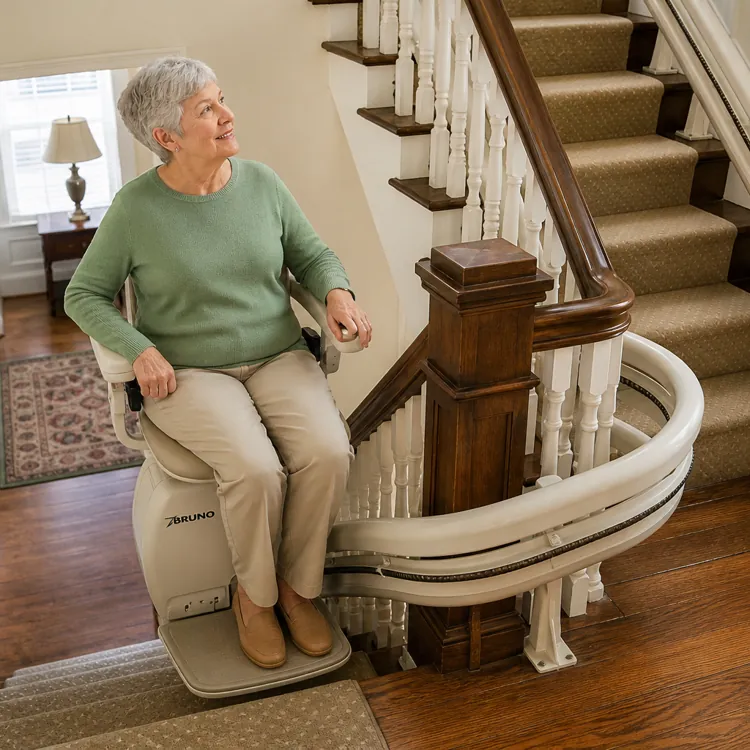
Curved stair lift cost range
Curved stair lifts are considerably more expensive than straight-rail systems. Curved stair lift costs start around $8,000 installed and range up to $16,000, depending on a variety of factors. However, high-end systems or complex installations can cost more than $25,000.
- Indoor curved stair lifts: $8,000 to $15,000
- Outdoor curved stair lifts: $8,500 to $16,000
Curved stair lift cost factors
There are several factors that drive up the cost of a curved stair lift, including:
- Rail fabrication: Curved stair lift rails are typically custom-fabricated to fit your staircase.
- Rail length: Each foot of rail length adds to the cost of curved stair lifts.
- Rail upgrades: Extras such as rail extenders and folding rails to move chair assemblies out of walkways when not in use add cost and complexity to installation.
- Staircase length and slope: The number of stairs and staircase angle (how steep it is) influence not only rail length but also the required motor strength.
- Weight capacity: Curved stair lifts typically have weight limits around 300 pounds, with heavy-duty models, such as Bruno Independent Living Aids’ Elite, supporting up to 400 pounds.
- Staircase width: A narrow staircase may require a compact model or customized rail placement, limiting your options and potentially increasing the price.
- Clearance requirements: If the lift would block a doorway or walkway, you may need a folding rail or other customization, increasing the price.
- Number of landings and turns: Each landing requires an additional straight rail or another curve, sometimes two, to change the direction of the chair unit.
- Curve angles: Deep curves, such as tight 180-degree turns around corners, require specialized rails and chair units.
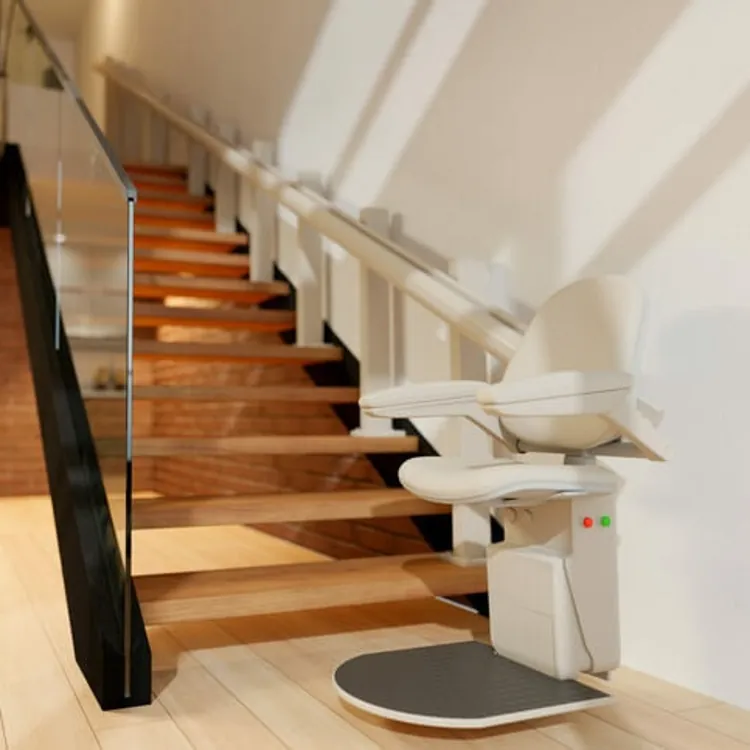
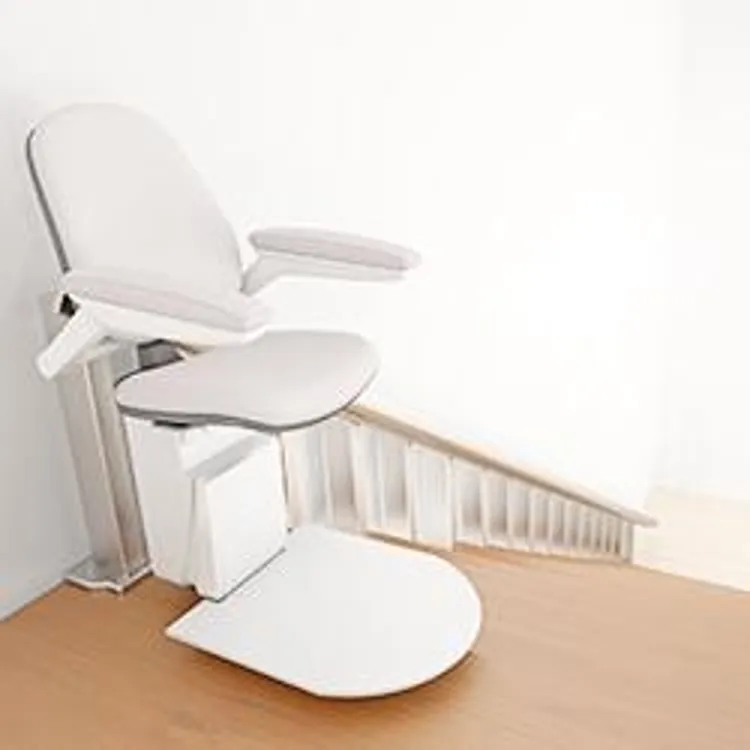
- Chair unit features: Features such as bariatric models, foldable or swivel seats and armrests, remote control units, color matching and backup batteries for power outages all add costs.
- Outdoor installation: Outdoor models generally cost more because they require weather-resistant components and may involve site preparation, permits and inspections.
- Optional coverage: A service plan or extended warranty adds to the initial price but may help cover future maintenance and repairs. Costs and coverage vary.
Factors that determine installation complexity
Your staircase determines how your stair lift must be installed because the rail must fit its exact shape.
For curved stair lifts, installation planning starts with a professional consultation to measure your staircase for a custom rail. Most brands, such as Acorn Stairlifts, offer an in-home consultation at no cost or obligation.
Stair lift installation typically includes:
- Mounting: Stair lift rails are installed, and the chair unit is installed on the rail.
- Testing: The installer tests the unit to ensure safety and good working order.
- User training: The installer will show you how to use, charge and care for your stair lift.
Installation costs for stair lifts are fairly predictable and typically make up 15% to 35% of the overall price. However, outdoor units, especially curved models, may have additional costs that aren’t included in the quote.
Additional outdoor stair lift costs may include site preparation, repair work on unsafe or unstable stairs, repair or remediation of erosion near the stairs, permits, inspections and electrical work.
Curved vs. straight stair lift costs
Straight stair lifts generally cost one-third to one-half as much as curved models, depending on the brand, features and staircase complexity.
Average cost ranges include:
- Straight stair lift: $2,500 to $8,000
- Curved stair lift: $8,000 to $16,000
Why straight stair lifts cost less
Straight stair lifts have rails that can be mass-produced to fit the majority of home stairs, which makes them much cheaper to manufacture.
Curved rails must match the curve of the staircase and are generally manufactured to order, which costs more. Curved rails also require professional installation that is more detailed and complex.
When choosing the best stair lift for your home, mobility and safety typically trump cost. That said, a few manufacturers, such as Harmar Mobility, have developed specialized chair units using modular curved rails that drastically shorten the installation time.
Ways to lower curved stair lift costs
Curved stair lifts are a significant investment, so most shoppers try to find ways to lower costs. While stair lift rentals and used lifts are rare because most curved rails are custom, there are other ways to save.
- Multiple straight stair lifts: Installing separate straight lifts on either side of a landing may cost less than one curved lift, but you must be able to transfer safely between them.
- Dealer financing: Most stair lift dealers offer financing options for new stair lifts, although terms vary widely.
- Bank financing: Homeowners often find that bank financing offers better terms than dealer financing. Home equity lines of credit (HELOCs) are a common way people finance stair lifts.
- Get multiple quotes: When shopping for a curved stair lift, compare quotes from multiple dealers. Dealers that carry several brands, such as Silver Cross, can also help you compare prices among manufacturers.
- Careful feature choice: When shopping for a stair lift, categorize features as “nice-to-have” or “must-have.” For example, the standing seat on Stannah Stairlifts’ Sadler model may be a must-have if you have limited knee movement, while a custom seat color may be a nice-to-have.
- Sales: Most stair lift dealers, such as Lifeway Mobility, offer occasional sales and discounts.
- Tax deduction: If your stair lift is deemed medically necessary and can be documented as such, you may be eligible for a federal tax deduction under the capital expense medical expense rules surrounding stairway modifications outlined in IRS publication 502.
Payment assistance for curved stair lifts
While original Medicare doesn’t cover stair lifts because they are classified as home improvements and not durable medical equipment (DME), there are other programs that can help you pay, including:
- Medicaid Home- and Community-Based Services waivers: Availability varies by state, but some Medicaid programs provide funding for medically necessary stair lifts.
- Medicare Advantage: Some private Medicare Advantage plans cover stair lifts.
- VA grants: The VA offers several programs to help veterans pay for stair lifts. These include Specially Adapted Housing grants, Special Home Adaptation grants and Temporary Residence Adaptation grants.
- USDA Rural Development’s Section 504 Home Repair Program: This program helps very low-income families with required home modifications.
- Rebuilding Together: This nonprofit group works with seniors, disabled individuals and veterans and offers a variety of assistance programs. Its Safe at Home program helps individuals stay in their own homes instead of relying on group housing.
FAQ
How much does a curved stair lift cost?
Curved stair lifts typically range between $8,000 and $16,000, but outdoor stairs or complex installations can raise prices to over $25,000.
Does Medicare pay for a curved stair lift?
No, original Medicare doesn’t pay for stair lifts. However, some Medicare Advantage plans may cover them.
Why are curved stair lifts more expensive than straight lifts?
Curved stair lifts are primarily more expensive than straight stair lifts because they use custom rails and involve more complicated installations.
Can I install a curved stair lift myself?
No, the need for precise measurements and fitting makes curved stair lifts unsuitable for DIY installation.
How long does curved stair lift installation take?
Curved stair lift installation could take as little as an afternoon, but large or complicated projects could take several days. Because curved stair lifts are typically custom-designed, it’s impossible to give a single timeline that fits all projects.
Article sources
ConsumerAffairs writers primarily rely on government data, industry experts and original research from other reputable publications to inform their work. Specific sources for this article include:
- IRS, "Publication 502 (2025), Medical and Dental Expenses." Accessed Aug. 20, 2026.
- Medicare.org, "Will Medicare Cover a Stair Lift?" Accessed Aug. 24, 2026.
- Centers for Medicare & Medicaid Services, "Home & Community Based Services." Accessed Aug. 22, 2026.
- U.S. Department of Veterans Affairs, "Disability housing grants for Veterans." Accessed Aug. 25, 2026.
- United States Department of Agriculture Rural Development, "Single Family Housing Repair Loans & Grants." Accessed Aug. 23, 2026.