

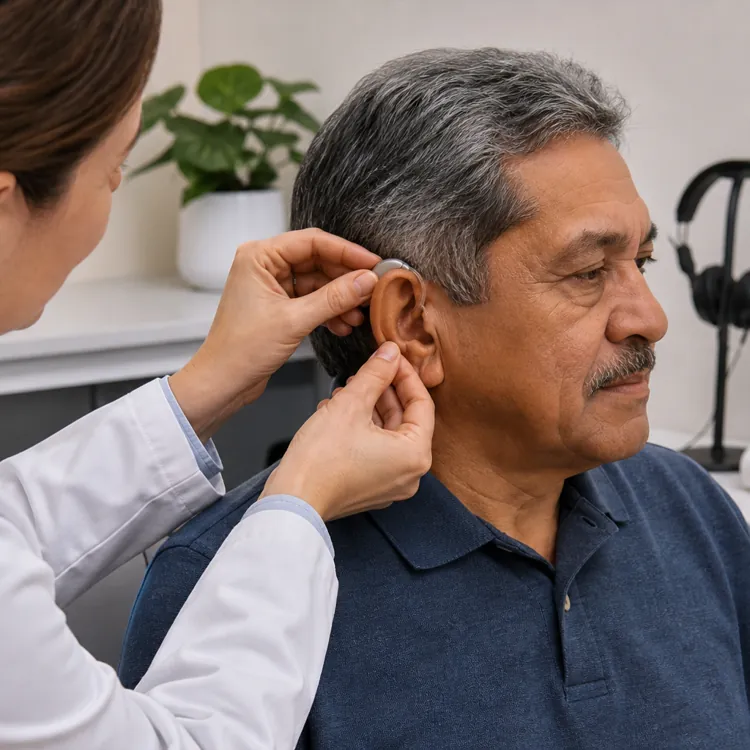
Compare our top hearing aids picks for veterans
| Company | Customer rating | Our pick for | Hearing aid styles* | Financing available (Y/N) | Warranty | |
|---|---|---|---|---|---|---|
 Starkey Hearing Aids | Learn More | 4.3 | Best overall | BTE, CIC, IIC, ITC, ITE, RIC |  | Limited |
 Audicus | Get Pricing | 4.4 | Best customer service | CIC, RIC | | 2 years |
 hear.com | Learn More | 4.5 | Best for veterans discount | BTE, CIC, ITE, RIC | | 1 to 3 years |
 Beltone Hearing Aids | Learn More | 3.4 | Best for durability | BTE, CIC, IIC, ITC, ITE, MIH, RIC, RIE | | 1 year |
- Starting price
- $1,998
- Financing offered
- Varies by location
- Hearing aid types
- BTE, CIC, IIC, ITC, ITE, RIC
- Types of hearing loss
- Mild to profound
- Starting price
- $1,498
- Financing offered
- Available through CareCredit, Allegro
- Hearing aid types
- CIC, RIC
- Types of hearing loss
- Moderate to severe

- Starting price
- $1,599
- Financing offered
- Available through Sychrony Bank
- Hearing aid types
- BTE, CIC, ITE, RIC
- Types of hearing loss
- Mild to profound
- Starting price
- $2,000
- Financing offered
- -
- Hearing aid types
- BTE, CIC, IIC, ITC, ITE, MIH, RIC, RIE
- Types of hearing loss
- Mild to profound
Methodology: How we chose the best hearing aids for veterans
The ConsumerAffairs Research Team evaluated hearing aid companies serving veterans based on: hearing care and service experience, device selection, cost and value, and online reputation. Our analysis combined verified customer feedback with company-reported product and pricing details to identify the providers that offer the strongest hearing aid experience for veterans.
1. Hearing care and service experience (based on verified reviews): Review data reflects verified feedback submitted to ConsumerAffairs between July 1, 2023, and June 30, 2026. In addition to evaluating recent review activity, we measured satisfaction with:
- Staff
- Customer service
These factors help show how well companies support customers through the fitting process and after a purchase.
2. Device selection: We reviewed company-reported product details to gauge how much choice each company offers, including:
- Whether the company offers hearing aids for all types of hearing loss
- Number of product lines
- Number of hearing aid styles and types
Companies with broader lineups and support for more types of hearing loss received higher scores.
3. Cost and value: We reviewed company-reported pricing and purchase protections and evaluated:
- Price satisfaction
- Starting price for a pair of hearing aids
- Warranty length
- Trial period length
- Whether the company offers a veterans discount
Companies receiving high pricing satisfaction and offering lower starting prices, longer warranties and trial periods, and veteran-specific discounts received higher scores.
4. Online reputation: We considered the volume of reviews submitted in the past six months and how quickly and consistently each company responded to customer reviews. Companies with more recent review activity and higher response rates received higher scores.
Which companies we included
We evaluated companies with an overall ConsumerAffairs star rating of at least 3.5, based on reviews submitted over the three-year period from July 1, 2023, to June 30, 2026.
How scoring works
Companies earned a 0 to 10 score for every factor:
- The top-performing company for a given factor earned a 10.
- Other companies were scored relative to that leader.
This standardized scoring system allowed us to compare customer satisfaction, device selection, pricing and online reputation on the same scale.
How we chose the winners
Every company was evaluated using the same core factors, but we adjusted the weighting for each award to reflect what matters most in that category. The company with the highest weighted score earned the corresponding “Our pick for” designation:
- Best overall: weighted most heavily toward staff and customer service satisfaction and warranty length, with moderate weight on price satisfaction, hearing loss coverage and device types.
- Best for customer service: emphasized customer service and staff satisfaction, which together made up nearly half of the category’s weighting.
- Best for veterans discount: gave 20% of the weighting to whether a company offers a veterans discount, with the remainder spread across service, cost and device factors.
- Best for device variety: primarily emphasized the number of product lines, while placing moderate weighting on hearing aid types and trial period length.
Hearing aids for veterans buyer’s guide
If you’re having trouble hearing after service, you’ll have to choose between VA-issued hearing aids and devices you buy on your own. The goal is simple: better hearing without wasting money or time.
Key insights
VA care can cut costs entirely, but you won’t see every brand or style there.
Jump to insightTinnitus programs, Bluetooth and rechargeability matter for many veterans.
Jump to insightPrivate discounts for veterans help most when VA coverage isn’t an option.
Jump to insightWhat to look for in hearing aids for veterans
Choosing hearing aids that are right for you starts with assessing how your hearing loss shows up: trouble in crowds, ringing in ears or missing soft voices. Look for aids that handle those problems first, then think about how often you can realistically get to a clinic or use an app for a hearing aid follow-up.
Features and coverage
For many veterans, useful features include:
- Good speech clarity in noisy places
- Tinnitus programs you can turn up or down
- Rechargeable batteries instead of constant swaps
- Bluetooth for calls and TV, if you use them a lot
- A comfortable style (RIC, BTE, ITE, CIC), as this affects how the aid feels in your ear, how visible it is and how well it holds up to sweat and dust
Eligibility or requirements
If you’re enrolled in VA health care, you may qualify for hearing aids based on service-connected hearing loss or how much hearing affects your daily life. That usually means a hearing test at a VA clinic, a fitting visit and follow-ups for adjustments.
Ease of use
Ask yourself: Will you actually use an app, or do you want someone turning the dials for you? Remote tweaks help if you’re far from care, but in-person visits are better if you’d rather sit down with an audiologist and talk it through.
Limitations or risks
- VA devices: More wait time and fewer brand options, but lower bills and often great follow-up
- Private or online devices: More choice and speed but higher out-of-pocket costs, and you need to watch for upsells and thin support after the return window closes
Hearing aids cost
The cost of hearing aids typically ranges from $1,000 to $4,000 per ear, depending on factors like device technology tier, style, add-on services and whether you buy through the VA or a private retailer. Lower-priced options and some over-the-counter devices usually come with fewer advanced features and little or no bundled professional care, while premium prescription aids from clinics include testing, fitting and follow-up, which push prices higher.
Veterans who qualify for VA hearing aids often get devices, repairs and batteries at no charge, while those buying privately may reduce costs through veteran discounts, insurance benefits or payment plans.
Pros and cons of hearing aids
Modern hearing aids can make daily life easier, but they also come with tradeoffs you should know before committing.
Pros
- Clearer speech in everyday environments when amplification is tuned to your hearing loss
- Tinnitus masking features that can soften ringing for some users
- Less listening fatigue during long conversations or meetings
- Many feature Bluetooth for streaming phone calls, music and TV audio
- VA audiology can provide hearing aids, batteries and repairs at no device cost for eligible veterans
Cons
- High upfront cost if you don’t qualify for VA coverage or have good insurance benefits
- Regular cleaning, charging and maintenance to keep devices working well
- Initial period where everything sounds too loud or strange while your brain adjusts
- They only last three to seven years before needing replacement
- Risk of being upsold more expensive models or service plans in some private or online settings
FAQ
How can veterans get free hearing aids through the VA?
Veterans first enroll in VA health care, then schedule a hearing evaluation with a VA audiologist; if hearing aids are recommended, the devices, fittings, repairs and future batteries are provided at no charge as long as VA eligibility is maintained.
How much do VA hearing aids cost?
For eligible veterans, VA-provided hearing aids are free.
What are the eligibility requirements for free hearing aids?
VA guidance lists categories such as any service-connected disability, former prisoners of war, Purple Heart recipients, veterans who are housebound or need regular aid and attendance, and those whose hearing loss or related conditions significantly interfere with daily living or participation in their own care.
Are VA hearing aids any good?
VA clinics typically fit major manufacturers' devices with advanced features like noise reduction, tinnitus support and Bluetooth. Plus, veteran accounts often describe high-quality technology and excellent follow-up care, even though brand and style choices are narrower than in private clinics.
Is it worth going to the VA for hearing aids?
Private hearing aids can cost several thousand dollars per pair, while VA-provided devices, batteries and repairs are free for eligible veterans, making VA care worth it if you can get an appointment and find a pair you like.
Article sources
ConsumerAffairs writers primarily rely on government data, industry experts and original research from other reputable publications to inform their work. Specific sources for this guide include:
- U.S. Department of Veterans Affairs, "Veterans Health Administration (VHA) Audiology Services." Accessed July 30, 2026.
- U.S. Department of Veterans Affairs, "How to apply." Accessed July 30, 2026.