
Key insights
Most homeowners choose solar loans, leases or power purchase agreements (PPAs) to pay for solar installations.
Jump to insightThe solar panel installation experience depends largely on your location, and it may take some time to get necessary permits and installation approval.
Jump to insightOnce your system is installed, it will need to be inspected and approved before turning it on.
Jump to insight6 steps to getting solar panels installed
To get solar panels installed, you’ll generally need to get financing, have an engineer evaluate the installation, get necessary permits, get all the necessary parts, have the parts installed and make sure the installation is inspected and approved.
1. Contract and financing
Once you sign your contract, a team of professional installers and electricians design a solar power system for your home that maximizes performance and safety. It’s important to pick a solar company with a history of good customer service and quality installation. You’ll also have to decide how you want to pay for your installation. Most homeowners opt for solar loans, leases or power purchase agreements.
Cash purchases and financing
With a solar PPA, you can access the energy your solar system creates (usually at a good rate), but you don’t own the system once it’s installed.
Although an outright cash purchase or solar financing requires a significant upfront cost, purchasing or financing a system may qualify you for state or local tax credits and rebates.
» MORE: Solar panels: lease vs. buy
Solar leases and power purchase agreements
Paying outright for a solar setup isn’t realistic for most homeowners. Many people sign leases or power purchase agreements instead, which first came about when solar energy systems grew more popular for residential use.
With a lease or PPA, a homeowner essentially rents out their roof space to a development company that maintains ownership of the solar energy system once it’s installed. When you enter into a lease or PPA, the solar company lets you use the energy produced on your roof at a (usually) lower rate than the local utility offers.
» MORE: Best solar financing companies
2. Engineering evaluation
You need an engineering evaluation to make sure the installation is completely viable. In this crucial step, a professional visits your property to make sure it’s suited for solar panels. Technicians may physically measure your roof’s pitch and dimensions to ensure the proposed system will fit and comply with local regulations related to panel spacing and roofline setback requirements.
If you plan to install a rooftop system, engineers may need to enter your home or attic to evaluate your roof’s rating in relation to the weight of the panels. If you’re installing a ground-mounted system, the company representative will identify the best location to generate solar energy while minimizing efficiency loss and wire trenching costs.
3. Permits
Once your solar system design is ready, it’s time to get permits from local authorities. This is often the longest and most difficult part of the entire installation process, but many solar energy companies help with this step. Standards and requirements for individual solar panel installations are highly variable across the country, with dramatic differences between even neighboring jurisdictions.
Getting the proper permits from local authorities is likely to be the most time-intensive step in the process.
Building permits
For the safety of your home and neighborhood, a permit from the local building authority is required to install a solar energy system. Permits ensure that a photovoltaic (PV) system adheres to local building, fire and electrical codes.
You can get a building permit from your local authority having jurisdiction (AHJ), which may be at the state, county or municipal level, depending on your location. AHJs across the country vary widely in terms of permit requirements, costs and general timelines.
If you belong to a homeowners association (HOA), it’s a good idea to check whether it has banned solar installation in your area. Fortunately, to encourage renewable energy production, many states have created access laws that prevent HOAs from prohibiting reasonable solar panel installations.
Interconnection permits
You need approval from the local electric utility before installing grid-tied solar energy systems. Completely off-grid solar panel installations don’t require these interconnection permits, but grid-tied and hybrid systems (grid-tied plus battery storage) can’t operate without one. Typically, you’ll have to provide a detailed list of system parts and wiring diagrams as well as approval from a licensed electrician.
4. Panels and parts
Once you have approval from your local AHJ and utility, it’s time to obtain the physical elements of your solar panel system.
In most cases, your solar company orders your panels and system parts for you, especially in the event of a lease or PPA. If you’ve skipped a few steps and already have your solar panels, some contractors may be willing to install your rooftop array and complete the system with any other components necessary for safe and efficient operation.
You should receive your panels and other parts by delivery before the day of installation. Most solar companies want to avoid having the equipment sit idle on your property for long.
5. Installation
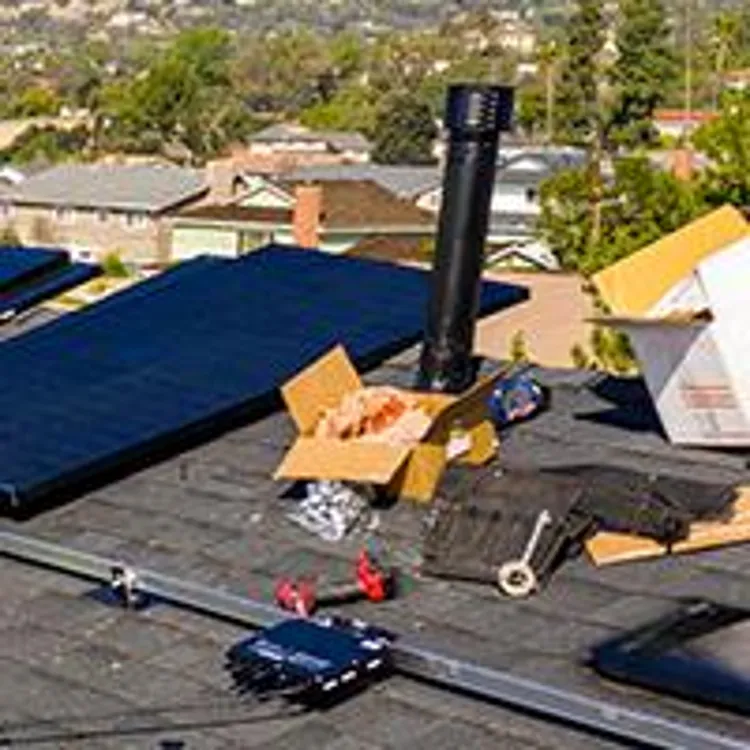
In an ideal scenario, a professional solar company arrives on the scheduled day of installation with all the equipment and materials and the labor force necessary to complete the task at hand efficiently.
Many companies specialize in rooftop solar installations and can complete most residential installations in one day, though larger projects and homes with complicated roofs may take several days. The process may also be delayed by unforeseen circumstances, such as unsafe weather conditions.
6. Inspection, approval and getting on the grid
Once your system is installed and ready to go, it’s time for your solar company to coordinate on-site visits with the local AHJ and utility company to complete a final safety inspection and grid interconnection approval.
If everything’s in order, a licensed electrician will activate your solar panels (so they can generate electricity) and feed it into the electrical grid.
FAQ
How much do solar panels cost?
If you’re looking to install a complete photovoltaic energy system, you can typically expect to spend between $18,000 and $43,000 on solar panels. The total price of installation depends on the size of the array and other system parts (like inverters, microinverters and batteries) as well as your eligibility for tax credits and other incentives. For instance, there are state-based solar programs available for people with low or moderate income, which can help you save on costs.
How many solar panels do I need?
The number of solar panels you need depends on the amount of electricity you use at home and other factors, such as how much energy each panel produces. Many solar panel systems are built to produce 100% of a property’s annual electricity consumption, which usually requires somewhere between 25 and 35 solar panels for residential single-family homes.
How do solar panels work?
Solar panels work by harnessing sunlight and generating direct current (DC) electricity. Once this energy is processed by an inverter, it can power a home or commercial property, or it can enter the power grid as alternating current (AC). Solar panels work best with direct sunlight, but they’re still capable of generating some electricity on cloudy days.
How can I choose the right solar panel installer?
Generally, you’ll want to choose a solar panel installer who has at least a few years of experience, along with the necessary certifications (such as certification from the North American Board of Certified Energy Practitioners (NABCEP)). You should also compare quotes from at least a few different providers.
Bottom line
The solar installation process can be long and complicated, but a good solar company can help you through each step. Although the logistics of a solar installation are fairly universal for American homeowners, cost, regulations and project timelines are all extremely variable throughout the country.
Ultimately, you can expect at least a few months between signing a solar contract and grid interconnection. The average timeline for a homeowner going solar is about 90 to 120 days, though, according to John Striebel, former CEO of Apollo Energy.
“Occasionally there are installation hiccups, and sometimes approval can even be faster if there is no homeowners association or any other overseeing bodies,” Streibel said.
Article sources
ConsumerAffairs writers primarily rely on government data, industry experts and original research from other reputable publications to inform their work. Specific sources for this article include:
- Clean Energy States Alliance, “Directory of State Low- and Moderate-Income Clean Energy Programs.” Accessed Nov. 11, 2025.
- U.S. Department of Energy, “Quarterly Solar Industry Update.” Accessed Nov. 11, 2025.