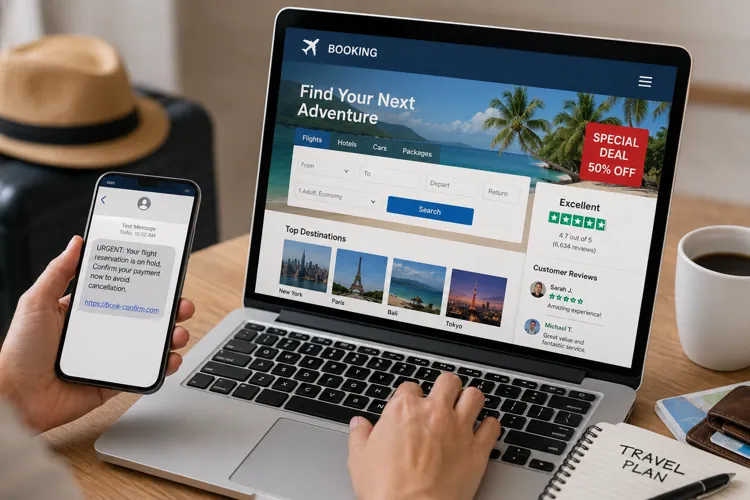

Travel scams are rising: AI-powered fake booking sites, phishing emails, and impersonation scams are making fraud harder to spot than ever.
Watch for red flags: Fake vacation rentals, lookalike travel websites, and "too-good-to-be-true" deals are among the most common scams this summer.
Book smart: Reserve directly with travel providers, pay with a credit card, and verify any emails, texts, or calls through the company's official website before taking action.
Summer travel season is in full swing, and unfortunately, so are the scammers.
A new report highlighted by Travel + Leisure found that more than 40% of Americans have fallen victim to an online scam, with travel-related fraud becoming increasingly sophisticated thanks to AI-generated content, fake booking websites, phishing messages, and impersonation scams.
The problem isn't just that scammers are becoming more active. They're becoming harder to spot.
Today's fraudsters can create realistic-looking websites, convincing emails, professional social media ads, and even fake customer service operations that mimic legitimate travel brands. Experts say many travelers are being caught off guard because the scams often appear to come from companies they already trust.
Here's what travelers need to know before booking their next trip.
Why travel scams are exploding
Travel is expensive right now. Airfares, hotels, and vacation rentals remain costly, which means consumers are actively searching for deals. Scammers know this.
According to research from cybersecurity company McAfee, many travelers admit they feel pressure to book quickly when they find a good price. That urgency creates the perfect environment for fraud. Roughly one-third of travelers say they would book a cheaper deal before fully verifying it was legitimate.
Add artificial intelligence into the mix, and scams become even more convincing. AI can generate realistic emails, fake reviews, polished websites, and customer service messages that look nearly identical to the real thing.
The most common travel scams right now
Fake vacation rentals: This remains one of the oldest and most effective travel scams. Criminals steal photos from legitimate listings and create fake rental properties on websites, social media, or classified platforms. Travelers pay deposits or full booking amounts only to discover the property doesn't exist.
Fake booking confirmations: Scammers send emails or text messages claiming there's a problem with a reservation, payment, or account verification. The message often creates urgency and directs travelers to click a link or enter payment information. Some scams even include real reservation details, making them appear legitimate.
Lookalike travel websites: Fraudsters build websites that closely resemble major airlines, hotel chains, or booking platforms. A slight misspelling in the web address may be the only clue that something is wrong. Travelers think they're booking directly with a trusted company when they're actually handing over payment information to criminals.
Fake customer service numbers: Some scammers buy online ads or manipulate search results so their phone number appears when travelers search for airline or hotel customer support on Google. Once connected to the scammer via a phone call, victims may be tricked into sharing credit card information or paying bogus fees.
Pro tip: Also avoid logging into your banking apps while using any public Wi-Fi networks at airports or hotels. Any banking you need to do can wait until you’re on a secure network.
Five ways to protect yourself
Book directly whenever possible: Whenever possible, book through the airline, hotel, cruise line, or well-known travel platform directly. Avoid clicking links in unsolicited emails or text messages. Instead, open your browser and type the company's web address yourself.
Pay with a credit card: Credit cards typically offer stronger fraud protections than debit cards, wire transfers, gift cards, or peer-to-peer payment apps. Never pay for a vacation rental using gift cards, wire transfers, or cryptocurrency. If something goes wrong, disputing a charge is often much easier.
Be suspicious of urgency: Scammers love phrases like "limited availability," "act now," "last chance," and "your reservation will be canceled." Legitimate companies may have deadlines, but they rarely pressure customers into immediate action without the ability to verify their credibility.
Read reviews carefully: Look beyond just the star rating. Pay attention to recent reviews, repeated complaints, and customer photos. If multiple travelers mention hidden fees, booking issues, or poor communication, consider it a warning sign.
Verify before clicking: If you receive a text, email, or phone call regarding a reservation you made, make it a habit to not use the contact information provided in the message. Instead, visit the company's official website by typing it into your web browser and call the actual phone number on their website, or start a live chat (if available).
Pro tip: Always trust your gut. If a deal looks dramatically cheaper than every other option, assume there’s a reason and investigate further, or just save yourself the hassle and simply walk away.
The bottom line
Travel scams are getting fairly sophisticated and are no longer easy to spot. AI tools, fake websites, phishing texts, and impersonation scams have made fraud look more legitimate than ever.
The good news is that most scams still rely on the same tactics. Specifically, they make you rush decisions, create confusion, and are often deals that seem too good to be true.
So always slow down, verify before you pay, and book through trusted sources. A few extra minutes of research can help ensure your vacation memories are about the trip itself — not the scam that nearly ruined it.