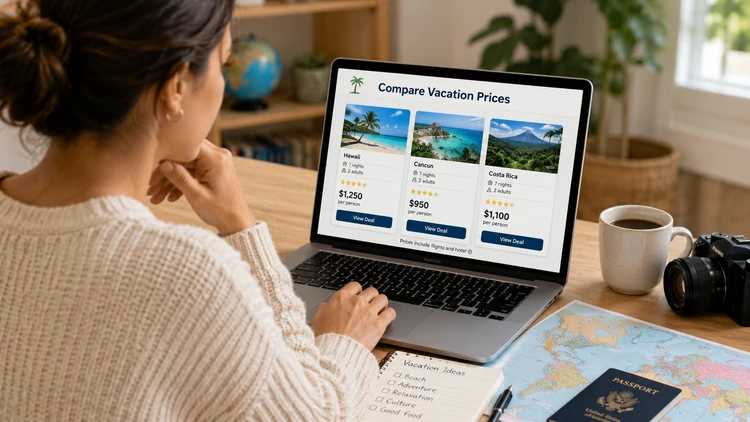

A new BestMoney survey found that more than half of Americans expect to overspend on summer travel or are vacationing without a strict budget.
Travelers say vacations are important for their mental health, even if it means cutting back on everyday spending or relying more on credit cards.
Finance expert Anna Baluch says airfare, food, hidden fees, and emotional spending during trips are making it harder for consumers to stay on budget.
Summer vacations are still a top priority for many Americans this year — even as travel costs continue to climb.
A new survey from BestMoney found that more than half of travelers expect to overspend or travel without a firm budget, highlighting how rising airfare, hotel prices, and everyday expenses are reshaping vacation plans.
ConsumerAffairs spoke with finance expert Anna Baluch of BestMoney who explained that many consumers are making financial trade-offs to afford trips this summer, from cutting back on daily spending to relying more heavily on credit cards and side income to cover costs.
Why are Americans overspending?
BestMoney surveyed 1,000 Americans about their summer travel plans, spending expectations, and financial trade-offs.
Ultimately, over 75% of respondents said vacations are important for their mental health, and 63% said that vacations are worth financial sacrifices.
“I think a lot of Americans still see summer vacations as a priority, even with rising costs, so they’re willing to spend more or make sacrifices elsewhere to be able to travel,” Baluch said.
“And once people are actually traveling, spending tends to become a lot more emotional than rational. Someone says they’ll keep it low-key, then they’re upgrading dinner reservations or booking an excursion because they don’t want to feel like they missed out, and they’re trying to live in the moment.”
Where are costs rising the most?
When you’re planning a trip, it’s not hard for the costs to start adding up. But where are prices increasing the most?
Airfare: “This still feels like the thing Americans are most irritated by because pricing has become so unpredictable,” Baluch said. “A lot of travelers have this feeling that if they don’t book immediately, prices are going to jump again.”
Food: “This is probably where budgets quietly drift the most. Not even just expensive restaurants. It’s the constant spending throughout the day that gets people. Airport food, coffees, drinks, convenience purchases, delivery fees at hotels, when people are traveling they spend in smaller chunks and don’t always register how quickly it’s adding up.
Destinations: “Some destinations are just noticeably more expensive now than people remember from even a couple years ago,” Baluch said.
Staying within budget without sacrificing quality
Baluch explained that the people who tend to feel best financially after a vacation are usually the ones who adjust their expectations early – rather than trying to make a more expensive trip work no matter what.
She recommends traveling for four days instead of seven, staying a little farther from the busiest area, or driving instead of flying.
“Based on the survey responses, many consumers are already doing that,” Baluch said. “Cheaper accommodations, closer destinations, staying with family, people seem willing to compromise on logistics before they give up travel completely.
“I’d also say people should actually look at their spending during the trip, even if it’s annoying. Most of us avoid checking until we’re back home, and by then the damage is already done. Each night when you’re winding down, open up your banking app and see how much you’ve been spending so you’re not shocked when you get back home.”
Expect the unexpected costs
When it comes to booking a trip, the price you see is rarely the final price you pay.
Baluch explained that many travelers focus heavily on the headline price, and not enough on the full cost around it. Think about the trip as a whole: baggage fees, parking costs, Ubers, tips, resort charges, inflated food prices around tourist areas.
“A flight that looks cheap upfront can end up much more expensive once bags, seat selection, transportation, and other additions get layered in,” Baluch said. “Hotels do the same thing with parking fees and resort charges.
“At the end of the day, unexpected costs are almost guaranteed to pop up somewhere along the trip. Delays happen, plans change, people eat out more than expected. Building a little buffer into the budget from the beginning makes the whole thing less stressful.”