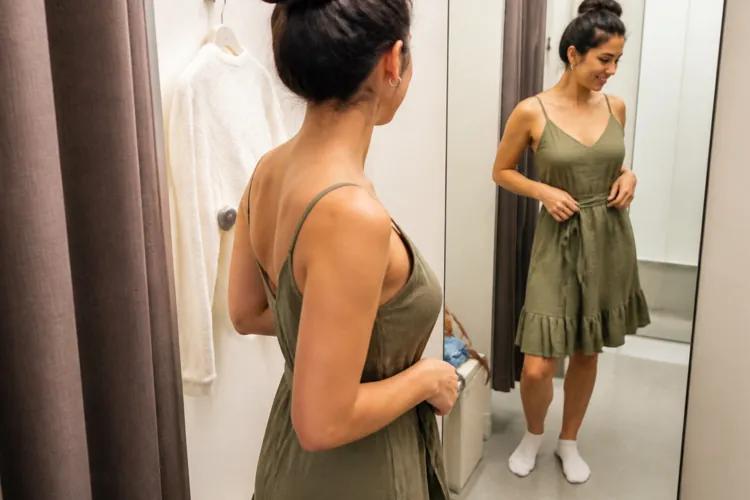

A new survey found that 4 in 5 GLP-1 users delayed buying new clothes until their weight stabilized, with the average wardrobe refresh costing $328.
Many consumers are looking for ways to save money during weight loss by buying secondhand clothing or ordering multiple sizes and returning what doesn't fit.
Experts say setting a clothing budget, planning purchases over time, and focusing on versatile basics can help keep wardrobe costs under control during a weight-loss journey.
For many people taking GLP-1 medications for weight loss, the changes don't stop at the number on the scale.
As pounds come off and clothing sizes shift, many are finding themselves faced with an unexpected expense: replacing much of their wardrobe. While some shoppers are waiting until their weight stabilizes before buying new clothes, others are piecing together temporary wardrobes or turning to secondhand options to keep costs down.
To better understand how weight loss is affecting shopping habits, ConsumerAffairs spoke with Dr. Sean Arora, Medical Director at Trimi, about a recent study from Trimi on why these spending patterns are emerging and what consumers should keep in mind as their bodies — and closets — change.
How the study was conducted and what it found
The findings come from an online survey of 737 U.S. adults who currently use, previously used, or are on a maintenance dose of a GLP-1 medication.
The survey was conducted in June 2026 through the research platforms CloudResearch Connect and Prolific, with participants screened to confirm they had used a GLP-1. Researchers noted that because it was a self-reported, non-probability survey, the results reflect the experiences of those surveyed and may not represent all GLP-1 users.
Some of the key findings include:
Four in five respondents said they delayed buying new clothes until their weight stabilized, waiting an average of six months before refreshing their wardrobe.
On average, participants spent $328 replacing clothing that no longer fit.
55% said they ordered multiple sizes of the same item as their body changed.
More than four in 10 turned to secondhand shopping.
44% reported spending more on clothing because they felt more confident in how they looked after losing weight.
“In theory, waiting to buy clothes until after weight loss can save money,” Dr. Arora said. “However, this approach often involves replacing many clothing items at once, which can be expensive. Replacing jeans and work clothes together, for example, might cost $150 or $200.
“At the same time, comfort and confidence can suffer when you wear clothes that no longer fit. So, it can be important to set aside some money each month to make the cost of purchasing new clothes easier to handle.”
Managing costs of a new wardrobe
A key trend emerging among weight loss medication users: buying clothes in multiple sizes.
Dr. Arora explained that while this can be helpful in figuring out your new size, it’s also important to make returns in a timely manner – so you don’t get stuck paying for multiples of the same item.
“While it can help to buy clothing in more than one size, the extra clothing should be returned quickly,” he said. “To ensure timely clothing returns, we recommend keeping track of return dates and only using one payment method.”
Another money-saving hack: go secondhand.
“During weight loss, buying used clothing can be a good decision because it’s needed for a shorter time,” Dr. Arora said. “Often, it isn’t worth it to pay the full price for brand new jeans that might fit for only a few weeks.”
Budgeting tips to consider
For consumers taking weight loss drugs, it can be difficult to know when to buy new clothes, how much to buy, and how much your body will fluctuate. While there’s confidence that comes with sizing down, Dr. Arora suggests sticking to your budget.
“It can be easy to spend too much money on new clothes,” he said. “Purchasing new clothing can feel like a reward for weight loss. So, be sure to set a budget and choose items that can be worn several different ways.
“As you steadily lose weight, be sure to plan clothing changes as opposed to emergency shopping. To do this, make a list of clothing pieces you need for work, exercise, events, and everyday life. Next, spread the cost across several months. A small group of basic pieces is excellent to have during the weight-loss transition. It helps to save the more expensive or tailored clothing until your size is steadier.”