2025 Senior Finances and Retirement

Article Image

How much money do you need to retire? Americans are lowering their goals

Key Takeaways:

  • The average American’s retirement “magic number” for 2025 is $1.26 million—down $200K from 2024, yet still out of reach for many.

  • One in four Americans with retirement savings have only one year or less of their annual income set aside.

  • More than half of Americans fear outliving their savings, but over a third have taken no steps to prevent it.

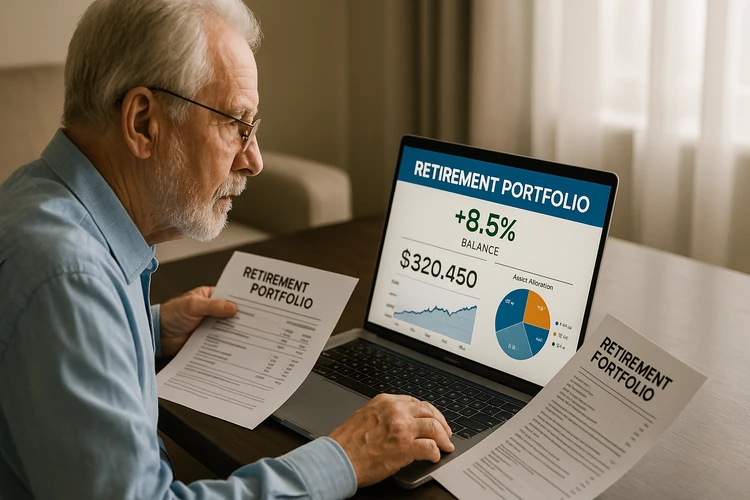
As inflation cools, Americans’ expectations for what they need to retire comfortably are shifting, but the gap between goals and reality remains fairly wide. According to Northwestern Mutual’s newly released 2025 Planning & Progress Study, the average “magic number” Americans believe they’ll need to retire has dropped to $1.26 million. That’s a $200,000 decrease from 2024’s $1.46 million estimate and roughly even with 2022 and 2023 expectations.

While this lower figure might reflect decreased anxiety over inflation—which dropped from 6% in 2023 to around 3% in 2024, it doesn’t mean people are feeling more secure. In fact, financial anxiety remains widespread. 

A full 25% of Americans with retirement savings report having only one year or less of their annual income set aside. And more than half (51%) of Americans believe it’s at least somewhat likely they will outlive their nest egg, with only 16% saying it’s “very unlikely.”

“Americans' 'magic number' to retire comfortably has come down—but it remains high, far beyond what many people have actually saved,” John Roberts, chief field officer at Northwestern Mutual, said in a press release. He added that people’s perceptions may be adjusting as inflation expectations settle, but concern about retirement preparedness has intensified.

Retirement savings: A generation gap

The study highlights troubling disparities in retirement readiness across generations. Generation X, many of whom are nearing retirement age, appear particularly vulnerable: 52% have saved three times their current income or less, and a majority (54%) don’t believe they will be financially ready to retire.

In contrast, younger generations seem both more proactive and more optimistic. Gen Z, for instance, started saving at an average age of 24, plans to retire by 61, and over a third (34%) believe they’ll live to 100. Boomers, on the other hand, began saving around age 37, expect to retire by 72, and only 23% anticipate reaching the century mark.

Gen Z is the most confident generation in terms of retirement preparedness, not surprising since they have the longest time horizon. However, they may be overlooking key aspects of financial planning.

A majority (61% of Gen Z and 60% of millennials) admit they are overly focused on investing and wealth-building while neglecting protective measures like life and disability insurance—strategies boomers are more likely to embrace.

Monthly saving goals by age

For individuals aiming to hit the $1.26 million retirement target by age 65, starting age significantly impacts required monthly contributions. Assuming a 7% annual return:

  • A 20-year-old would need to save $330/month.

  • A 30-year-old would need $695/month.

  • A 40-year-old would need $1,547/month.

  • A 50-year-old would need $3,958/month.

These figures underscore the steep cost of delayed saving—a challenge for those who started late or had interruptions in their financial journey.

Northwestern Mutual recommends replacing roughly 80% of one’s pre-retirement income, but stresses that retirement plans should be customized. Factors such as desired lifestyle, retirement age, and living location heavily influence individual needs.

“Rules of thumb are everywhere, but nothing is better than a financial plan that’s personalized and custom-built just for you,” said Roberts.

Article Image

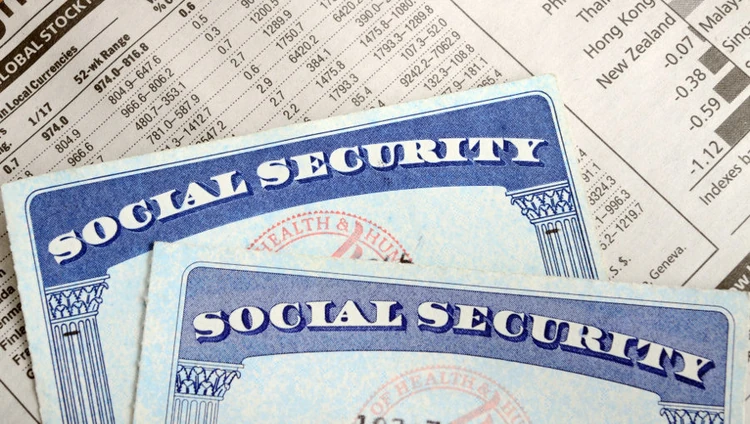
Social Security denies paying benefits to millions of dead people

Less than 0.33% of more than three million deaths a year are errnoneously reported to Social Security, as the government works to correct records of people aged 100 and over, the Social Security Administration (SSA) said Sunday.

States primarily report deaths to Social Security, but reports also come from family members, funeral homes, federal agencies and financial institutions.

"Instances when a person is erroneously reported as deceased to Social Security can be devasting to the individual, spouse, and dependent children," SSA said. "Benefits are stopped in the short term which can cause financial hardship until fixed and benefits restored, and the process to prove an erroneous death will always seem too long and challenging."

People who might be incorrectly listed as dead should contact their Social Security office as soon as possible and bring at least one piece of current identification, the administration said.

The update on incorrectly reported deaths follows Trump and his government-efficiency adviser Elon Musk saying dead people aged more than 100 are receiving Social Security benefits.

In response, Lee Dudek, acting commissioner of Social Security, said those individuals didn't have a date associated with their death, but they weren't "necessarily receiving benefits."

"The reported data are people in our records with a Social Security number who do not have a date of death associated with their record," he said in a statement. "These individuals are not necessarily receiving benefits.

Earlier in March, the Social Security Administration said it had made "significant progress in identifying and correcting beneficiary records of people 100 years old or older."

“We are steadfast in our commitment to root out fraud, waste, and abuse in our programs, and actively correcting the inconsistencies with missing dates of death," Dudek said in a statement.

Article Image

Social Security Administration clarifies changes to telephone services

The Social Security Administration has issued a press release with a headline stating “Correcting the record about direct deposit and telephone services.”

“Recent reports in the media that Social Security plans to eliminate telephone services are inaccurate,” the agency said. 

While some posts on social media suggested the change was due to federal workforce reductions, SSA said the change is an effort to increase protection for America’s seniors and other beneficiaries by eliminating the risk of fraud associated with changing bank account information by telephone.

SSA said it continuously investigates and analyzes potential threats to strengthen and secure programs and protect people who receive benefits. 

“Approximately 40% of Social Security direct deposit fraud is associated with someone calling SSA to change direct deposit bank information,” SSA said in the release. “SSA’s current protocol of simply asking identifying questions by telephone is no longer enough to prevent fraud.”

How to change bank information

If a recipient needs to change their bank account information on SSA’s record, they will need to either:

  • Use two-factor authentication with SSA’s “my Social Security” service; or

  • Visit a local Social Security office to prove their identity.

“These methods align with most major banks,” the agency said. “All other SSA telephone services remain unchanged.”

Article Image

Feeling old and grumpy? Get a job, study suggests

A new survey from the University of Michigan’s National Poll on Healthy Aging reveals that older Americans continue to work not just for financial reasons, but for their health and overall well-being.

The poll shows that work offers numerous benefits, including improved physical and mental health, a sense of purpose and cognitive benefits.

Key findings

  • Health boost from work: Over two-thirds of older workers report that their job has a positive impact on their physical and mental health. In particular, those over 65 report even greater health benefits from work, including better cognitive function and sharper focus.
  • Sense of purpose: For 46% of those working, a major reason for doing so is a sense of purpose. Work provides not only financial security but also fulfillment, which can be crucial as people age.
  • Positive mental and physical impact: Older workers, especially those 65 and older, overwhelmingly agree that work keeps their brains sharp and helps maintain their social connections.

“Our perceptions of working after age 65 have changed over time, and these data suggest that most older adults who are still able to work after the traditional retirement age derive health-related benefits from doing so,” said poll director Jeffrey Kullgren, M.D., M.P.H., M.S., a primary care physician at the VA Ann Arbor Healthcare System and associate professor of internal medicine at U-M.

“As we learn more about how loneliness, lack of social connection and isolation intertwine with physical and mental health in older adults, the role of work is important to consider.”

Barriers to work

Despite these benefits, the poll also highlights the significant barriers older Americans face in maintaining or finding work. Among the key obstacles:

  • Health challenges: 29% of older adults report disabilities or chronic illnesses that prevent them from working.
  • Lack of training and skills: 13% said they lacked the necessary training or experience for available jobs.
  • Caregiving responsibilities: 13% cited caregiving duties as a significant barrier, with many caring for spouses or aging family members.
  • Age discrimination: 11% reported facing age discrimination, which often prevents them from obtaining or advancing in positions.

Financial and social aspects

  • Key motivations for working: For those 50 and older, the most important reasons for working are financial stability (78%), saving for retirement (65%), and having access to health insurance (59%).
  • Age group differences: Workers 65 and older reported significantly more positive effects on their physical and mental health compared to those aged 50-64.

While many older adults experience health and mental benefits from working, significant barriers remain. Addressing issues such as age discrimination, caregiving duties, and the need for updated skills could allow more older adults to continue working in a meaningful way, reaping the health and social rewards.