
2025 Political Commentary and Analysis

Article Image

Nextdoor wants to be your local news outlet

  • More than 3,200 U.S. newspapers have folded in 20 years, creating news deserts and fueling misinformation.

  • Big Tech platforms disrupted ad revenue and control how news is seen online, leaving local outlets vulnerable.

  • Nextdoor partners with over 3,500 local publishers, hoping to drive traffic and engagement through local headlines.


Local news in America is in crisis. Over the past two decades, more than 3,200 print newspapers have shuttered, leaving millions of Americans living in so-called “news deserts” without reliable local coverage.

One in six U.S. residents now has limited or no access to local journalism, a void that researchers say leads to lower voter turnout, heightened polarization, increased government spending, and the spread of health misinformation.

The situation could get worse if the Trump administration succeeds in cutting off funding to National Public Radio (NPR), whose local stations are among the few or only remaining local news outlets in many smaller cities. 

The collapse of local journalism has been hastened by technology giants like Google and Meta, whose dominance of the digital advertising market has siphoned away the revenue that once sustained newsrooms. Readers, meanwhile, have increasingly turned to "aggregators" like Google News or Apple News instead of subscribing directly to news outlets. They don't originate news coverage and usually don't have anything to contribute locally. 

Social platforms such as Facebook and X (formerly Twitter) have also made it harder for publishers to reach audiences by deprioritizing news content in user feeds.

Artificial intelligence (AI) may soon make matters worse if it can vacuum up enough local information from other sources to repackage for consumers wondering what's going on in their town.

A different path

Amid the turmoil, Nextdoor Holdings Inc. — the neighborhood-focused social network — is pursuing a different path. Unlike other tech platforms that prioritize keeping users within their walled gardens, Nextdoor announced on Tuesday a partnership with more than 3,500 local publishers.

Nextdoor aims to distribute local news headlines directly within its app, which boasts 46 million weekly users. A carousel of local stories now greets users as soon as they open Nextdoor.

“We’re sending traffic out versus keeping everything inside the walled garden,” Nextdoor CEO Nirav Tolia said. While acknowledging that this approach might not always deliver the smoothest user experience — particularly when readers encounter paywalls — Tolia maintained that supporting local publishers is part of Nextdoor’s broader mission.

Though publishers aren’t paid to share content on the platform, some are seeing benefits. One local publisher said he was seeing traffic bumps of up to 12 percent thanks to Nextdoor’s referrals. 

For local news outlets already on the brink, any new distribution channel is a welcome lifeline. But as publishers know all too well, tech platforms can change course overnight, leaving traffic — and livelihoods — hanging in the balance.

Article Image

How will Trump's No-Tax-on-Tips law work?

  • New law exempts up to $25,000 in tips from federal taxes, delivering on Trump’s campaign pledge
  • Unclear rules leave workers and employers guessing which tips—and jobs—qualify

  • IRS braces for administrative chaos amid staffing shortages and technological demands


A hallmark promise from Donald Trump’s presidential campaign is now law, granting tipped workers a significant tax break. But even before the ink has dried, the new measure is sowing confusion across the service industry and posing major logistical challenges for the Internal Revenue Service.

Under the legislation, workers in jobs that “customarily and regularly receive tips” can exclude up to $25,000 in annual tip income from federal taxes.

The intent is to boost take-home pay for millions of restaurant servers, bartenders, hotel staff, and others who rely on customer gratuities. Yet critical details remain unresolved — particularly around which tips count under the law and which workers are truly eligible.

Electronic tips in limbo

One of the thorniest questions is whether tips made via digital apps like Venmo, PayPal, and Cash App fall under the exemption. The statute refers specifically to “cash tips,” leaving ambiguity over electronic payments, which have become the norm in many businesses.

Historically, the IRS has treated electronic tips as taxable income, making the law’s narrow language a potential flashpoint in future tax filings.

Businesses eye classification changes

Employers, meanwhile, are grappling with how the new tax rules might reshape hiring and compensation practices. Some labor experts warn that businesses could attempt to classify more positions as “tipped” to capitalize on the tax savings, potentially blurring legal lines under labor laws that strictly define which roles are tip-eligible.

Federal wage laws permit employers to pay tipped workers as little as $2.13 an hour if they receive at least $30 a month in tips and ultimately earn the full federal minimum wage once gratuities are counted.

Businesses can also establish tip pools, but those pools face limits on which workers can participate without requiring employers to pay higher base wages.

IRS faces hurdles

For the IRS, the new law comes at a time of significant internal strain. Agency officials are warning that implementing the tax break will demand major updates to systems and processes, even as the IRS contends with an aging workforce and a potential exodus of experienced employees. Roughly 22% of the IRS’s customer service staff and 27% of its technology workforce are expected to leave by year’s end.

“If there’s any significant tax law change—and I’m not talking just about extenders but certain types of income not being taxable—that is going to introduce a tremendous amount of challenge that people need to be thinking about in terms of systems that we need to update,” said Doug O’Donnell, former acting IRS Commissioner, in a Bloomberg News report.

Until clear IRS guidance arrives, the burden of properly tracking and reporting tips will fall on workers and businesses alike — an arrangement that risks costly mistakes, audits, and lost tax savings.

While Trump’s no-tax-on-tips pledge sailed through Congress on a wave of political enthusiasm, the real-world path to delivering relief to workers is proving far more complex — and could leave many service industry employees in limbo as the next tax season approaches.

Article Image

GOP Medicaid plan adds work requirements

• Up to 5.2 million Americans at risk of losing coverage under proposed rules
• Republicans aim to enforce 80-hour monthly work or training for Medicaid recipients
• Critics warn the move will harm low-income adults and increase administrative costs


A sweeping tax and spending bill released by House Republicans includes a controversial provision that could strip health coverage from millions of low-income Americans by 2026.

The legislation, which is part of the GOP’s budget reconciliation package, proposes implementing mandatory work requirements for certain Medicaid beneficiaries starting in 2029.

The measure doesn't go as far as some had expected.  It doesn’t lower the minimum share the federal government contributes to Medicaid in each state, cap per-person federal spending in the program or other steps some spending hawks sought, which may cause conservative Republicans to refuse to back it.

The issue is becoming divisive for Congressional Republicans. 

Sen. Josh Hawley (R-Mo.) warned against slashing Medicaid spending. In an op-ed published Monday in The New York Times, Hawley said that paying for President Trump’s domestic agenda by slashing health care for the working poor “is both morally wrong and politically suicidal.”

The proposal requires that individuals aged 19 to 64 complete at least 80 hours per month of work, community service, or job training to retain their Medicaid eligibility.

According to independent estimates from the Robert Wood Johnson Foundation and the Urban Institute, this change could lead to the loss of coverage for between 4.6 and 5.2 million people, even among those who are already working or would be exempt, due to confusion or lack of awareness.

'Putting up barriers'

Democratic lawmakers and healthcare advocates argue the move would be especially harmful to vulnerable populations. “This isn’t about efficiency and cost-cutting,” said Rep. Frank Pallone (D-N.J.), in a Bloomberg News report. “It’s about putting up barriers to care in a program that already operates more cost-effectively than Medicare or private insurance.”

The bill also introduces other Medicaid reforms, including new cost-sharing requirements and delays to Biden-era access initiatives, while pressuring states like California that offer Medicaid to undocumented immigrants. The House Energy and Commerce Committee is expected to mark up the legislation this week.

Article Image

Trump vows to slash prescription drug prices with executive order

  • President Trump plans to sign an executive order tying U.S. drug prices to those paid by other countries.
  • The “Most Favored Nation” policy would mark a dramatic shift in how drug prices are set, potentially cutting costs and saving trillions.

  • Pharmaceutical companies warn it could cost their industry over $1 trillion and reduce drug availability for low-income Americans.


President Trump on Sunday pledged to dramatically lower prescription drug prices by signing a new executive order that would peg the cost of medications in the U.S. to what other countries pay — a policy long championed by health advocates and criticized by the pharmaceutical industry.

“Our Country will finally be treated fairly,” Trump wrote on his social media platform, Truth Social. “Healthcare Costs will be reduced by numbers never even thought of before... the United States will save TRILLIONS OF DOLLARS.”

The executive order, expected Monday, would institute a “Most Favored Nation” policy, forcing drug manufacturers to charge the U.S. government no more than the lowest prices paid by other developed nations. Countries with single-payer systems — such as Switzerland and Japan — routinely negotiate significantly lower prices for the same drugs.

For example, the list price for Jardiance, a diabetes medication, was $611 per month in the U.S. last year, while it cost $70 in Switzerland and just $35 in Japan, according to the nonprofit health policy group KFF.

A battle with big pharma

Industry groups were quick to push back. Alex Schriver, senior vice president at the Pharmaceutical Research and Manufacturers of America (PhRMA), called the move “government price setting” and warned it would “hurt American patients” and innovation, according to a Wall Street Journal report.

Pharmaceutical executives estimate the proposed pricing model for Medicaid alone would cost the industry more than $1 trillion over 10 years and could prompt drugmakers to exit Medicaid, the government program for low-income Americans.

Despite lobbying efforts to prevent the policy, Trump signaled no intention to relent, suggesting the industry’s “campaign contributions” had lost their influence.

“Not with me, and not with the Republican Party,” he wrote. “We are going to do the right thing.”

Previous attempts, legal hurdles

Trump previously attempted to implement a similar drug pricing rule during his first administration for Medicare Part B drugs. That effort was overturned by a court on procedural grounds and later dropped by the Biden administration.

This time, Trump is pushing for a broader application, though he hasn’t clarified whether the new order would apply to Medicare, Medicaid, or all federal programs.

His announcement comes amid mounting public frustration over skyrocketing drug prices and a new wave of scrutiny as he campaigns for a return to the White House.

Article Image

Trump fires three Democratic members of Product Safety Commission

  • President Trump has moved to fire the three Democratic members of the Consumer Product Safety Commission (CPSC), a decision likely to face legal challenges.

  • The action leaves the consumer watchdog agency with only two active members, both Republicans, on its five-person panel.

  • The move comes as the Supreme Court considers the limits of presidential power over independent federal agencies.


In a controversial move late Thursday, President Donald Trump ordered the dismissal of three Democratic commissioners serving on the Consumer Product Safety Commission (CPSC), raising questions about the future of independent regulatory bodies and igniting what is expected to become a major legal battle.

The commissioners — Mary Boyle, Richard L. Trumka Jr., and Alex Hoehn-Saric — each confirmed they received formal notification from the White House that their service on the CPSC was being terminated. Their dismissals come amid broader administration efforts to reshape or reduce the authority of independent federal agencies.

The CPSC oversees the safety of consumer products used every day by Americans, from toys and strollers to electronics and ATVs.

Democrats vow to fight

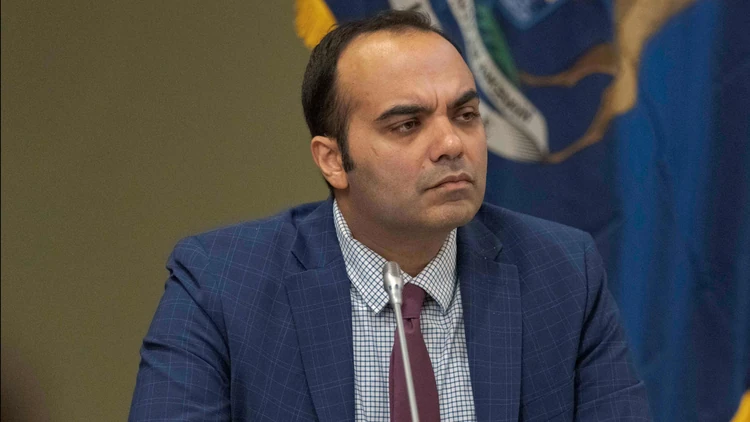
Trumka, whose 2023 remarks about the possible health risks of gas stoves sparked national debate, called the dismissal “unlawful” and pledged to fight it in court. He emphasized that his term does not expire until October 2028.

“I will continue protecting the American people from harm through that time,” he said in a statement. “The President would like to end this nation’s long history of independent agencies, so he’s chosen to ignore the law and pretend independence doesn’t exist. I’ll see him in court.”
Boyle and Hoehn-Saric echoed that sentiment, with Boyle vowing to continue serving in her role and Hoehn-Saric warning that the firings were “part of this Administration’s efforts to eliminate federal agencies, personnel, and policies that have made Americans safer.”
Agency left barely operational

The CPSC now consists of just two members — both Republicans, including acting chairman Peter Feldman and Douglas Dziak. Without at least three commissioners, the agency lacks a quorum, limiting its ability to issue new regulations or take enforcement actions.

According to Commissioner Trumka, the dismissals came shortly after a visit from representatives of the Department of Government Efficiency (DOGE), a Trump administration entity involved in streamlining or shutting down federal offices. DOGE officials had reportedly been detailed to the agency over objections from the Democratic commissioners.

The firings are the latest flashpoint in an ongoing legal and political debate over the president’s authority to remove officials from independent agencies — an issue that is now under review by the U.S. Supreme Court in separate cases involving the National Labor Relations Board and the Merit Systems Protection Board.

The White House did not immediately issue a public statement.

Article Image

White House warns: Tariffs on tech are still coming

Key takeaway:

  • Smartphone and electronics tariff exemptions seen as temporary, not negotiable

  • Semiconductor levies expected “in a month or two,” as part of Trump’s reshoring push

  • Lawmakers criticize administration’s unpredictable and sweeping tariff strategy


A temporary exemption from U.S. tariffs on smartphones and consumer electronics may offer only short-term relief, with the Biden administration preparing a fresh wave of import duties targeting semiconductors and pharmaceuticals, Commerce Secretary Howard Lutnick said Sunday.

Appearing on ABC’s "This Week," Lutnick clarified that while tech products were excluded from last week's sweeping tariff implementation, they are still squarely in the crosshairs of President Trump’s long-term plan to bring critical manufacturing back to U.S. soil.

“These are coming soon,” Lutnick said. “They’re included in the semiconductor tariffs which are coming in probably a month or two.”

Exempt but not safe

Markets rallied briefly last Friday when the White House announced a 90-day pause on certain tariffs, including those on smartphones and electronics, amid global backlash and intense economic uncertainty. But Lutnick underscored that the move was not a sign of softening.

“It’s not a permanent sort of exemption,” he said. “He’s just clarifying that these are not available to be negotiated away by countries.”

This tough stance suggests that high-tech imports, especially semiconductors and essential pharmaceutical components, will soon face unwavering levies, as Trump pushes forward with his industrial reshoring agenda.

“We need our medicines and we need semiconductors and our electronics to be built in America,” Lutnick said. “We can’t be beholden and rely upon foreign countries for fundamental things that we need.”

A volatile global trade landscape

President Trump shocked markets earlier this month when he imposed 10% tariffs on nearly every country — with steeper penalties for nations running large trade surpluses with the U.S. While temporary reprieves have been issued, the administration is now under pressure to negotiate bilateral deals within the 90-day window.

Despite reassurances, the unpredictability of these measures has rattled economists and lawmakers alike.

Warren: “It’s all chaos and corruption”

Senator Elizabeth Warren (D-Mass.) blasted Trump’s approach, calling the tariff campaign an erratic and uncoordinated policy that has injected chaos into global markets and opened the door to insider trading risks.

“There is no tariff policy,” Warren said. “It’s just all chaos and corruption.”

She also pointed to the short-lived nature of Trump’s bold claims, citing his tweet of “I WILL NOT BACK DOWN” shortly before reversing course on several key tariffs.

“What’s the emergency we have with Belgium or South Korea?” Warren asked, criticizing the lack of coherent justification behind the blanket tariffs.

Democrats in the Senate have urged the Securities and Exchange Commission to investigate allegations of market manipulation tied to tariff-related policy swings and their potential impact on stock trades by Trump associates.


As the White House doubles down on reshoring key industries and confronting foreign reliance, the tech sector — once temporarily spared — may soon be facing tariffs head-on, leaving consumers and investors bracing for higher costs and prolonged uncertainty.

Article Image

Public health group calls for Health Secretary Kennedy's resignation

Key takeaways:

  • The American Public Health Association (APHA) alleges Kennedy's recent actions, including significant staff reductions at key health agencies, demonstrate "implicit and explicit bias."
  • The organization criticizes Kennedy's stance on measles outbreaks, vaccine safety, and water fluoridation, labeling his promoted remedies as unproven and harmful.
  • APHA's executive director, Georges Benjamin, asserts Kennedy's leadership is causing "hurtful" outcomes, potentially leading to preventable deaths.

A national public health organization is demanding the immediate resignation of Health Secretary Robert F. Kennedy Jr., citing a "complete disregard for science" and actions that pose a "danger to the public's health."

    The American Public Health Association (APHA), a 150-year-old organization representing tens of thousands of public health professionals, has issued a stark call for the resignation of Health Secretary Robert F. Kennedy Jr., just weeks into his tenure.

    Georges Benjamin, APHA's executive director, released a scathing statement Wednesday, accusing Kennedy of undermining public health through "poor and thoughtless management" and the promotion of unscientific views, according to STATNews.

    Benjamin pointed to substantial staff cuts at the Food and Drug Administration (FDA), the Centers for Disease Control and Prevention (CDC), and other Health and Human Services (HHS) agencies as evidence of Kennedy's detrimental leadership. He also highlighted Kennedy's alleged role in the forced resignation of Peter Marks, a key figure in vaccine regulation at the FDA.

    The APHA's statement detailed a litany of concerns, including Kennedy's response to the Texas measles outbreak. The organization criticized his failure to strongly encourage vaccination while promoting unproven treatments like vitamin A, which has been linked to harmful side effects in children.

    Further concern was raised by his decision to appoint a known vaccine critic to a study investigating the debunked link between childhood vaccines and autism, and his intention to advise the CDC against recommending water fluoridation.

    "People are going to die"

    “The things that he has done have not only not been helpful, but I believe that many of the things he’s articulated have been hurtful,” Benjamin told STAT. “I think people are going to die because of what he’s doing.”

    Benjamin noted that the demand for resignation is unprecedented in the organization's history. He stressed the importance of health leaders as trusted messengers, whose words should be "fully vetted and evidence-based."

    “I know what the words of a health leader mean. I’m careful here at APHA for the same reason because you carry the mantle of being the government, the trusted messenger, and the assumption is that what you’re saying has been fully vetted and is evidence-based,” he said. “I just felt as a physician and I got my staff here to agree and the other leaders here to agree. We have to say this guy’s bad news.”

    Article Image

    Computing powerhouse Oracle seen as TikTok's new overseer

    You may not associate Oracle Corporation with the likes of TikTok. One is a giant software company that makes industrial-grade database and cloud management systems and the other is, well, it's TikTok, the Chinese government-owned social platform associated with short, quirky videos.

    TikTok has been living on borrowed time since it was banned from operating in the U.S. over fears that it posed a threat to national security. After a brief shutdown in January 2025, the app was restored following assurances from President Trump that he would find an American firm to take over the operation.

    Speculation turned to the usual suspects — Google, Meta and that ilk — but it is Oracle that has spun into the lead position, according to Politico and other inside-the-Beltway media.  

    It is, after all, an enormous undertaking. While its products may be simple to the point of frivolity, TikTok boasts a U.S. fanbase of 170 million people, roughly half the country's population, and distributes a mind-numbing number of videos each day, most of them produced by individuals seeking to become "influencers," an occupation that didn't even exist a decade or so ago.

    Only megacompanies need apply

    It would take a megacompany like Oracle to successfully mediate and moderate this constant stream of bits, somehow keeping any secret U.S. data from making its way to the Chinese inner sancta.

    Currently based in Austin, Texas, after fleeing Redwood City, California, Oracle is headed by Larry Ellison, its co-founder and chairman. Ellison is known for his libertarian-leaning views and has supported both conservative and centrist political figures over the years.

    In recent years, he has donated heavily to rightward-leaning PACs and candidates, a shift that may be paying off as Vice President JD Vance and national security adviser Mike Waltz are said to be in serious negotiations with Oracle to play a role in TikTok's future.

    Congressional leaders are described as being cautious about the arrangement, fearing that American data could still be filtered and digested by enemy forces in Peking. It was Congress, after all, that voted overwhelmingly to oust TikTok and it may not be ready to back away from that decision.

    In its report, Politico said that the deal would essentially require the U.S. government to depend on Oracle to oversee the data of American users and ensure the Chinese government doesn’t have a backdoor to it — a promise many fear would be impossible to keep.

    Trump is facing an April 5 deadline to secure a new operator for TikTok. The talks being headed by Vance and Waltz are said to be "advanced," so anxious TikTok fans may not have too much longer to wait for a proposed solution to their fears that their favorite pastime will go away.  

    Article Image

    Trump tariffs loom, with economists predicting higher prices for consumers

    Everyone has an opinion about President Trump's tariffs scheduled to take effect tomorrow but the people who think about money for a living economists in other words are expressing caution about their likely effects on consumers.

    "Significant concerns" abound about anticipated increases in consumer prices.

    The Wall Street Journal reports that tariffs can lead to higher costs for everyday products, with the extent varying based on factors like product type and availability of alternatives.

    For instance, a 10% tariff on Italian wine could result in nearly a 10% price hike for consumers, whereas a similar tariff on a tablecloth from India might only raise its price by 2%.Premium products without close substitutes, such as certain electronics, are likely to pass nearly all of the tariff costs on to consumers.

    'Largest tax increase in a generation'

    Beyond consumer prices, there's concern about the broader economic implications.The Guardian highlights warnings from think tanks suggesting that the proposed tariffs could amount to the largest tax increase in a generation, potentially raising costs for American consumers by an average of $1,200 per year.

    That could harm economic growth, lead to higher import costs, and prompt retaliation from foreign governments.

    The manufacturing sector is also feeling the impact.MarketWatch notes that U.S. manufacturers have experienced a surge in supply costs, reaching a 33-month high, due to new or threatened tariffs.This inflationary pressure has led some companies to pause new orders, signaling reduced future demand and potential economic slowdown.

    Additionally, the New York Federal Reserve has flagged potential new "inflation vectors" stemming from tariffs on Chinese imports, particularly affecting low-cost packages that previously entered the U.S. without customs duties.

    If these exemptions are removed and Chinese exporters don't adjust their prices, American consumers could face higher costs, according to a Reuters report. 

    Prominent economists like Paul Krugman and Larry Summers have also voiced concerns. In a Yahoo Fiinance report, they warn that the tariffs may drive up prices, trigger job losses, and erode trust in the U.S. economy.

    Schedule remains uncertain

    President Trump has said he will implement tariffs on China, Canada and Mexico tomorrow (Tuesday) but most Washington observers consider that the schedule is a bit more flexible, amounting to brinksmanship as Trump tries to wring further concessions from America's three largest trading partners.

    The tariffs had originally been scheduled for Feb. 4 but Trump granted a one-month reprieve to Mexico and Canada, while going ahead with a 10 percent tariffs on all products from China.  

    In summary, the consensus among economists is that Trump's tariffs could lead to increased consumer prices, hinder economic growth, and introduce significant uncertainties across various sectors of the economy.

    Commerce Secretary Howard Lutnick said in a CNN interview earlier today that the president is still deciding how to proceed. "He's going to decide this afternoon and tomorrow we're going to put out those tariffs." 

    Article Image

    Transportation Department fires air and highway safety workers

    The Department of Transportation (DOT) has been hit with a wave of firings, apparently as part of the Department of Government Efficiency (DOGE) drive to drastically reduce the size of the federal payroll.

    The department oversees automobile safety and public transportation. The reports of widespread firings coincide with earlier indications that the Federal Aviation Administration (FAA) was being subjected to a round of cutbacks despite a pre-existing shortage of air traffic controllers. 

    Sean Duffy, the U.S. Transportation Secretary, denied the firings jeopardized safety. 

    “The FAA alone has a staggering 45,000 employees. Less than 400 were let go, and they were all probationary, meaning they had been hired less than a year ago. Zero air traffic controllers and critical safety personnel were let go,” Duffy wrote in a post on X. “I will not rest until I return the Department of Transportation and its incredible employees to its mission of efficiency and safety.”

    The firings came without cause and were not based on performance or conduct, according to David Spero, national president of the Professional Aviation Safety Specialists. 

    Highway safety agency hit

    The National Highway Traffic Safety Administration (NHTSA) was also hit witih layoffs, according to Politico and other outlets. It is responsible for processing safety complaints about cars and other vehicles, including the electric Teslas manufactured by Elon Musk, who heads DOGE. 

    Layoffs have also been reported at DOT entities that oversee pipeline safety and maritime shipping.  

    The layoffs generally seem to hit those with less than a year's tenure, who in many cases are still regarded as probationary. 

    Consumer groups react

    Consumer groups reacted swiftly to the reports. 

    "NHTSA cannot oversee and promote automotive safety without world-class staff, many of whom have served behind the scenes for decades doing the day-to-day work of making the cars safer and making the agency run,” said Daniel Greene, senior director of consumer protection and product safety at the National Consumers League. 

    "Ultimately, the American people will feel the effects of this unconscionable action through more unnecessary crashes. That means more death, more injuries, more broken families, and more shattered communities," he said.

    Write to Jim Hood at jhood@consumeraffairs.com.

    Article Image

    Judge blocks efforts to dismantle consumer watchdog CFPB

    A federal judge has ordered a halt to efforts to dismantle and close down the Consumer Financial Protection Bureau (CFPB). Acting on a lawsuit filed by numerous organizations, Judge Judge Amy Berman Jackson ordered that no CFPB)records or data be deleted, no CFPB employees be terminated, and no CFPB funds be returned pending a preliminary injunction hearing set for March 3.

    The lawsuit was filed by Public Citizen Litigation Group, Gupta Wessler LLP, and the National Treasury Employees Union (NTEU), represents a coalition of organizations including NTEU, the National Consumer Law Center, the National Association for the Advancement of Colored People (NAACP), the Virginia Poverty Law Center, the CFPB Employee Association, and Pastor Eva Steege. The plaintiffs argue that the administration’s actions are unconstitutional and pose severe threats to consumer protection in the U.S.

    CFPB background

    Established by Congress in response to the 2008 financial crisis, the CFPB has secured billions of dollars in relief for consumers and ensured greater transparency in financial markets. However, President Trump has repeatedly signaled his intention to eliminate the CFPB, with the latest moves accelerating its potential dismantling.

    The lawsuit claims that the administration’s actions—such as rolling back operations and suspending enforcement—violate the constitutional authority of Congress, which created the agency to function independently. Legal experts warn that allowing these efforts to continue unchecked could leave millions of American consumers vulnerable to fraud and financial exploitation.

    Potential impact

    Among those directly affected by the administration’s move is Reverend Eva Steege, an 83-year-old retired Lutheran pastor currently in hospice care. Reverend Steege was working with CFPB staff to resolve her Public Service Loan Forgiveness (PSLF) application, potentially securing over $15,000 in refunds for previous loan payments.

    However, on February 9, the administration's decision to curtail CFPB operations resulted in the abrupt cancellation of her follow-up meeting, leaving her without assistance.

    "The CFPB fills a unique and essential role in our economy, protecting consumers from financial exploitation. Without it, we risk returning to the predatory lending and fraudulent practices that led to the 2008 crisis,” Richard Dubois, executive director of the National Consumer Law Center said.

    Deepak Gupta, founding principal of Gupta Wessler LLP and a former senior counsel at the CFPB, described the administration’s actions as “lawless.” He said, “The President and his acting director lack the authority to defund, suspend, or shut down the agency’s work. We seek an immediate court order restoring the CFPB’s operations and preventing further harm to consumers.”

    Article Image

    Consumers increasingly voting with their wallets

    Donald Trump was a vote-getter at the polls but he's not doing so well as a consumer magnet. Four of ten Americans say they have shifted their spending as backlash against companies that have changed their policies to align with the Trump Administration, a new poll finds. 

    A recent Harris poll found that a quarter (24%) of respondents have even stopped shopping at their favorite stores because of their politics (Black: 35%, gen Z: 32%, Democratic: 31%), according to a Guardian report.

    Democrats are more likely to see their wallets as a substitute for a voting card, with 50% saying they're changing their spending habits, compared with 41% of Republicans and 40% of Independents. 

    Target was one of the first to feel the pinch. After it ended some of its diversity, equity and inclusion (DEI) programs, it encountered blowback from liberal consumers and was disinvited from participating in the Pride festival in Minneapolis, its hometown.

    Two can play

    Boycotts are a double-edged sword, as Republicans demonstrated during the Biden presidency. Bud Light lost an estimated $395 million when Trump fans boycotted it for partnering with transgender influencer Dylvan Mulvaney for a social media post. 

    It may be difficult for liberal boycotts to have too much effect, however, simply because so many businesses have started pulling back from taking a leadership role in equity struggles.

    Walmart, McDonald's and other household names are potential target victims while other companies, including Costco, Microsoft and Apple have all said they have no plan to cut back on their DEI policies.

    Adding to the confusion is a growing feeling among consumers that they have had enough of just about everything. They're opting out of the news and politics and many are also trying to opt out of the economy -- buying as little as possible so as not to reward companies they feel have done them wrong.

    The Rev. Al Sharpton has promised to sharpen the boycott focus a bit. He said last month that his National Action Network has been studying which companies have backed out of their DEI commitments and will select two of them to focus on.

    “Donald Trump can’t make us buy your stuff. The Senate can’t make us buy your stuff,” Sharpton said at a speech last month. “In the name of Dr [Martin Luther King Jr], we’re going to do what King did.”

    Article Image

    Senate confirms RFK Jr. as health secretary

    The Senate today confirmed Robert F. Kennedy Jr. as the nation's highest health official and he was sworn in a short time later by Supreme Court Justice Neil Gorsuch in an Oval Office ceremony.

    It was perhaps the most controversial of President Trump's recent Cabinet nominations. Critics condemned what they said were Kennedy's fringe views on health and nutrition, noting that he is not a doctor or recognized academic in the field.

    Dr. Peter G. Lurie, president of the nonprofit Center for Science in the Public Interest condemned Kennedy as "without doubt the most inappropriate choice to lead Health and Human Services in the history of the agency."

    He said Kennedy has "a demonstrated talent for getting people to believe things that are not true" and went on to list them:  

    • He questions whether germs cause infectious disease. 
    • He believes we should pause infectious disease research and drug development research for ‘about eight years.’ 
    • He believes unpasteurized milk is safe to drink. 

    Lurie said Kennedy has consistently spread misinformation about vaccines for years, including the debunked claim that they cause autism, that there is no safe or effective vaccine, that the polio vaccine killed more people than it saved, and that COVID-19 vaccine authorization should have been revoked in the middle of the pandemic. 

    Trump took issue with the critics. “There’s no better person to lead our campaign of historic reforms and historic faith in American health care,” he said.

    Most Republican Senators sided with Kennedy in a 52-48 vote, with Sen. Mitch McConnell (R-KY), the lone holdout.

    Himself a polio survivor, McConnell said Kennedy had "a record of trafficking in dangerous conspiracy theories and eroding trust in public health institutions."

    At the Department of Health and Human Services, Kennedy will be in charge of a $2 trillion budget covering 13 divisions, including the Food and Drug Administration, National Institutes of Health and the Centers for Disease Control and Prevention.

    Kennedy has labeled some of these agencies as corrupt and has said they were puppets of the pharmaceutical industry. 

    The drug industry awaits awaiting Kennedy's tenure with trepidation and the food industry is not far behind. Besides questioning vaccines and arguing that Americans are over-medicated, Kennedy has been critical of processed food and the weight-loss drugs that, like Ozempic, have won large numbers of enthusiastic users. He has vowed to address the "sick food system," sending shock waves through the food and restaurant industries. 

    About RFK Jr.

    Over his 40-year career, Mr. Kennedy established two groundbreaking organizations. He founded the world’s largest clean water advocacy group, Waterkeeper Alliance, and served as its longtime chairman and attorney. It now protects 5.9 million square miles of waterways with more than 300 Waterkeeper groups and 1 million volunteers in the United States and 46 other countries.

    He also founded Children’s Health Defense, a mass membership organization where he served as chairman and chief litigation counsel in its campaign to address childhood chronic disease and toxic exposures. He is the nephew of America’s 35th President, John F. Kennedy, and the son of his Attorney General Robert F. Kennedy

    Article Image

    Musk aides move into CFPB consumer watchdog offices in DC

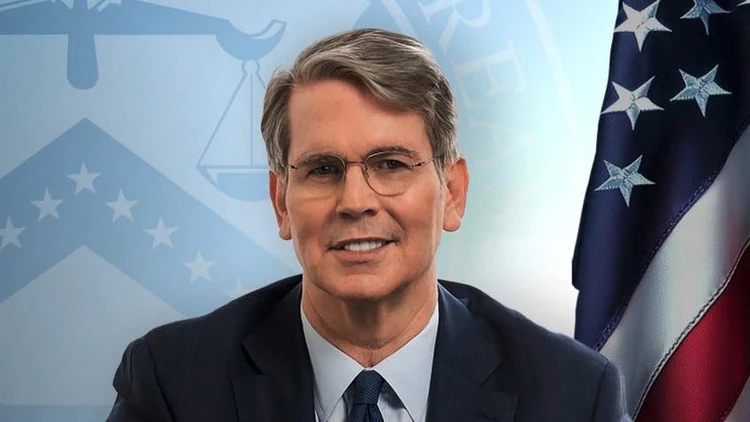
    Is the Consumer Financial Protection Bureau in its last days? Its director, Rohit Chopra, was dismissed earlier this week and Treasury Secretary Scott Bessent was named to head the bureau temporarily. The staff has been told not to enact any new regulations.

    Press reports say members of Elon Musk's Department of Government Efficiency (DOGE) have moved into the agency's headquarters to begin rifling through its records. 

    Musk limited himself to one word on his X site:

    CFPB RIP 🪦

    — Elon Musk (@elonmusk) February 7, 2025

    Musk, the world's richest person, has been tasked by President Trump to take on a massive downsizing of the federal government and the prime targets appear to be the agencies that have most annoyed conservatives over the years.

    That would certainly include the CFPB, which has been reviled by banks and other financial services institutions. Under Chopra, the bureau has passed regulations calling for lower interest rates, more accurate credit reports, fewer "junk fees" and better disclosure of the terms of financial transactions large and small.

    Musk has been calling for the CFPB's elimination since November and three Musk aides are now listed as "senior advisor" in the CFPB's directory, Reuters reported.

    Musk has also called for the elimination of USAID and on Friday, workers began removing signs from the agency's building. A judge temporarily block the Trump team's efforts to close the agency and place its 2,200 employees on leave. 

    Article Image

    State attorneys general block Trump funding freeze, warn federal employees about buyout

    A coalition of 22 attorneys general are celebrating a court victory that led to a temporary block of President Trump's attempt to cut off many federal agency grants, loans, and other forms of financial assistance. They also warned federal employees about Trump's "misleading" buyout offer.

    The Trump plan was put on hold after a federal judge issued a temporary restraining order (TRO) halting its implementation.

    Judge John J. McConnell of the U.S. District Court for the District of Rhode Island granted the TRO, siding with the coalition that argued the policy was an illegal overreach by the executive branch. The attorneys general had filed the lawsuit in response to the administration's attempt to freeze or cancel critical funding programs that support a wide range of services in their states.

    “The power of the purse belongs to Congress – not the President of the United States,” said Attorney General Letitia James. The ruling came as a relief to those who rely on federal funding for essential services, including health care, disaster relief, public safety, and education.

    The lawsuit, which was backed by the attorneys general of 22 states, including California, Illinois, Massachusetts, New Jersey, and Rhode Island, highlights a growing resistance to federal policies that the coalition believes undermine essential services for citizens. As the legal process continues, the attorneys general are committed to defending the availability of vital public services and ensuring that state laws protecting citizens' rights are upheld.

    This victory for the coalition marks a critical step in blocking what they see as an overreach of executive power, ensuring that federal funding for essential programs remains intact while the lawsuit proceeds in court.

    Beware the buyout offer

    Eleven of the AGs also had a word of advice for federal employees considering Trump's buyout offer: don't accept it blindly.

    “President Trump’s so-called buyout offers are nothing more than the latest attack on federal workers and the services they provide. These supposed offers are not guaranteed. Federal employees should be cautious and follow the guidance of their unions to protect their rights," James said. 

    "Attacking our federal workforce will only cause more chaos and confusion for Americans, and will diminish the quality of services our government provides," James said.

    On January 28, the Office of Personnel Management (OPM) sent an email to millions of federal employees detailing a new "deferred resignation" program.

    Employees were told that if they accept the offer and resign, they would continue receiving all pay and benefits, and be exempt from in-person work requirements until September 30, 2025. The OPM sent another email to federal employees on January 30 reiterating the offer and urging them to find “higher productivity” jobs outside of government.

    February 6 deadline

    The OPM emails instructed employees that they have until February 6 to decide to remain in their position or resign under the deferred resignation program, and warned that those who did not resign were not guaranteed to keep their jobs.

    Supporters of the buyout offer argue that it provides federal employees with a generous financial cushion, facilitating a smoother transition to new employment opportunities or retirement. They view it as a strategic move to modernize and optimize government operations, potentially leading to a more efficient and effective federal workforce.

    But unions representing federal employees warned their members against accepting the offer. The American Federation of Government Employees, the largest federal employees union, released information for its members warning them that employees who accepted the offer were not guaranteed its benefits. The National Federation of Federal Employees similarly warned its members against accepting the offer.

    Article Image

    Trump fires consumer protection chief Rohit Chopra

    Rohit Chopra lasted longer as director of the Consumer Financial Protection Bureau (CFPB) than expected. Observers anticipated the incoming Trump administration would fire him immediately after the Jan. 20 inauguration. Instead, he lasted nearly 12 days. 

    In a letter published on social media, Chopra reviewed some of the agency's more significant actions. "We have returned billions of dollars from repeat offenders and other bad actors ... and given more freedom and bargaining leverage to families navigating a complex and confusing financial system."

    Chopra was openly despised by many on Wall Street for his aggressive regulation of bank fees, auto loans, mortgages and other products that nearly all consumers buy. 

    Consumer advocates rushed to Chopra's defense after his firing became known.

    “Chopra exposed and penalized lending practices that disproportionately harmed consumers of color, and made clear that discrimination is unfair in any financial service,” said Richard Dubois, executive director of the National Consumer Law Center. 

    “With Trump’s payback to his billionaire Wall Street supporters, the nation now loses the vital, energetic, compassionate, and intelligent services of a great American," said Lisa Gilbert, co-president of Public Citizen. "The CFPB under Chopra eliminated many junk fees, capped credit card late charges, reformed reporting of medical debt, sued giant corporations, and elevated the total relief to consumers beyond $21 billion."

    After his appointment by President Biden in 2011, Chopra lost no time launching a whirlwind of regulations that cut and capped industry "junk fees," sued big players, prosecuted lenders and enforced privacy laws.

    Here are a few recent examples reported by ConsumerAffairs:

    • Cash App fined $120 million
    • Sued Capital One for "cheating" customers out of more than $2 billion
    • Closed a "loophole" that netted big banks billions in overdraft fees
    • Threatened to require banks to reimburse victims of the Zelle scam

    Banks fight back

    When the CFPB proposed capping bank overdraft charges at $14 for larger banks, the financial sector was quick to claim that the effect would be higher checking account fees and less service to consumers. An army of lobbyists descended on Congress to spread that message.  

    Brent Tjarks, executive director of the Mid-size Bank Coalition of America which represents more than 100 midsize banks, wrote that the loss of a "meaningful source of revenue to support the cost of deposit products" left institutions with no choice but to pull back from products "that benefit lower-income and underbanked consumers," The American Banker reports.

    Former Sen. Pat Toomey, R-Pa. once called the CFPB "a rogue, unaccountable, anti-business agency." 

    Chopra's five-year term was scheduled to run through 2026 but a Supreme Court decision in 2020 ruled the president was free to fire the CFPB director without cause. 

    Chopra said after Trump's election that he would not resign but would leave peacefully if Trump fired him, as he did today. 

    The CFPB was created in 2011, largely through the efforts of Sen. Elizabeth Warren (D-Mass.), who in an earlier career as a college professor had authored an academic paper showing that medical debt was a primary cause of consumer bankruptcy. 

    The agency's fortunes have waxed and waned as Presidents come and go. It grew in importance and enacted tough regulations during the Obama and Biden administrations but was weakened and nearly eliminated during the first Trump term.

    Warren vowed in November that the bureau would survive Trump's presidency. “The CFPB is here to stay,” she said in a Washington Post report. 

    “So I get there’s big talk, but the laws supporting the CFPB are strong, and support across this nation from Democrats, Republicans, and people who don’t pay any attention at all to politics, is also strong,” Warren said.

    Article Image

    Dems call on Trump to take action on grocery prices

    During his presidential campaign, Donald Trump promised that he would work to lower food prices "immediately" once he took office. Now, some members of Congress are calling on him to follow through on that pledge.

    A group of 21 Democratic congressmen and women sent a letter to Trump on Sunday evening, urging him to take swift action to address the high cost of groceries that continue to burden American families, according to a Supermarket News report.

    The letter directly addresses Trump’s first week in office, accusing him of focusing on issues like birthright citizenship and pardoning individuals involved in the January 6th Capitol riot, instead of tackling the rising cost of food.

    "Americans are looking to you to lower food prices," the letter states. "Instead of working to lower their grocery bills, however, you spent the first week of your administration attempting to end birthright citizenship, pardoning individuals who attacked the U.S. Capitol on Jan. 6, and renaming a mountain." The lawmakers express disappointment, urging the president to fulfill his campaign promise to make food more affordable for families.

    Six recommendations

    To help achieve this goal, the letter outlines six key recommendations for action. First, the lawmakers propose that Trump encourage the Federal Trade Commission (FTC) and the U.S. Department of Agriculture (USDA) to prohibit exclusionary contracting practices in the food industry. These practices, they argue, make it easier for major food retailers and brands to squeeze out smaller suppliers, contributing to rising prices at smaller stores.

    They also recommend that the FTC issue guidance on potential violations of antitrust laws in the food industry, with a particular focus on the Robinson Patman Act, which prohibits discriminatory pricing practices.

    Additionally, the letter calls for increased government support for small businesses in the food industry. They propose that the USDA increase the number of contracts awarded to very small businesses and consider the long-term costs of food industry consolidation in its contracting decisions.

    The letter also suggests that Trump work with the DOJ and FTC to block problematic mergers and acquisitions in the food and agriculture sectors, as well as prosecute individuals engaged in price-fixing and other anticompetitive behaviors.

    Another key recommendation is the formation of a joint task force between the Commodity Futures Trading Commission (CFTC) and the FTC to investigate price manipulation throughout the food supply chain. The lawmakers hope that these actions will help address the underlying factors driving up food costs, ensuring that consumers aren't unfairly impacted by corporate greed.

    Food prices vexing consumers

    The issue of rising food prices has been a growing concern for Americans, especially with the sharp increases in the price of eggs, which have surged due to a severe bird flu outbreak. The USDA has predicted that egg prices will continue to rise by over 20% in 2025. Prices for beef, veal, dairy, fresh fruits, and nonalcoholic beverages are also expected to increase in the coming months.

    When asked about the surge in food prices during her first press conference, White House Press Secretary Karoline Leavitt placed the blame on the policies of the previous administration. She pointed to the increase in egg prices under President Biden's administration, which saw a 65% increase in 2024, as evidence of ongoing inflationary pressures.

    Article Image

    FTC chair trashes DEI, 'a scourge on our institutions'

    Newly-installed Federal Trade Commission Chairman Andrew N. Ferguson has announced that the agency is stamping out efforts to build diversity at the agency, saying he was "delivering on the promise that President Trump made to the American people." 

    Ferguson said that DEI -- diversity, equality and inclusion -- "is a scourge on our institutions." He said it "denies to all Americans the Constitution’s promise of equality before the law.

    "It divides people into castes on the basis of immutable characteristics, and treats them as caste members rather than as individuals. It stokes tensions by elevating race and other immutable characteristics above merit and excellence. It promotes invidious discrimination. And it violates federal and natural law," Ferguson said in a prepared statement.

    Ferguson, a Republican who has served on the commission since 2024, was officially designated FTC chair by Trump on January 20. He replaces Lina Kahn, a Democrat who built a reputation for aggressively prosecuting antitrust cases.

    "I am dedicated to protecting all Americans from monopolists, from fraudsters, and from illegal online censorship," Ferguson said in a posting on X. 

    He has a long history in law and government, including roles such as:

    • Solicitor General of Virginia: From 2022 to 2024
    • Chief Counsel to U.S. Senator Mitch McConnell: A key role advising the Republican leader in the Senate.
    • Republican Counsel on the U.S. Senate Judiciary Committee
    • Lawyer at various Washington, D.C. law firms

    Ferguson earned his undergraduate and law degrees from the University of Virginia. He is a former clerk for U.S. Supreme Court Justice Clarence Thomas. 

    "Dangerous ideology"

    In his statement, Ferguson said the Biden-Harris Administration "reveled in this pernicious ideology. They encouraged it, and it has festered within the federal government for four years."

    Ferguson said he has taken the following actions to "protect the FTC’s employees and the American people from DEI:"

    • Closed the FTC’s DEI office—the Office of Workplace Inclusivity and Opportunity—and has placed all employees within that office on administrative leave.
    • Terminated the Diversity Council.
    • Removed materials promoting DEI on the Commission’s website.
    • Ordered a review of all FTC contracts, which concluded that no FTC contracts currently in force contained DEI ideology.
    • Ordered the heads of the Commission’s Bureaus and Offices to conduct an internal audit by tomorrow to ensure total compliance with President Trump’s orders, and to terminate any noncompliant programs immediately.
    • Ordered an immediate review of all Commission orders to ensure that the Biden Administration’s DEI dictates did not make their way into formal Commission decisions.
    • Forbid the Commission from promoting DEI in any internal or external operations, rules, law-enforcement decisions, or hiring decisions.

    Article Image

    Trump Administration hits 'pause' on public health messages

    Noticing fewer health alerts from government agencies lately? That may be because of a government-issued pause in official health alerts.

    The Trump Administration issued the pause on a variety of health communications going out from some of the nation’s top health and science agencies, according to reporting from The Washington Post.

    The pause may in part be driven by the process of installing new appointees for senior management positions at departments such as the U.S. Department of Health and Human Services (HHS). 

    “HHS has issued a pause on mass communications and public appearances that are not directly related to emergencies or critical to preserving health,” a spokesperson from the Centers for Disease Control and Prevention (CDC) confirmed in an email to ConsumerAffairs. “This is a short pause to allow the new team to set up a process for review and prioritization. There are exceptions for announcements that the HHS divisions believe are mission critical, but they will be made on a case-by-case basis.” 

    "A dark harbinger"

    The Center For Science in the Public Interest (CSPI) said the pause "will stifle the speech of government science and scientists, and is very likely a dark harbinger of what’s to come from this administration."

    Public Citizen, a consumer advocacy group, also expressed its concerns about the pause.

    “There is zero reason for standard public health communications that people rely on to stay safe to be paused, and for scientific meetings to be postponed or cancelled,” according to a statement released by Public Citizen on January 23. “The public needs and should expect a seamless transition between administrations for the timely communication of all essential public health information. A pause in these vital communications should never have happened and must fully end by February 1.”

    In a memo the AP obtained, Dorothy Fink, acting secretary of the U.S. Department of Health and Human Services (HHS) discussed with her staff leaders an “immediate pause” that the Trump administration had enacted on guidance, regulations, press releases, announcements, and social media posts — in addition to other communications — until they could be approved by a political appointee. The pause would be in effect until the end of the month, according to the memo, the AP reported.

    HHS oversees the Food and Drug Administration (FDA), the CDC and the National Institutes of Health (NIH), and presumably communications from all those agencies are impacted by the pause. 

    Which publications are affected?

    A CDC spokesperson who responded to ConsumerAffairs initially did not respond to a follow-up question about which CDC publications are impacted by the pause. 

    However, according to reporting from The Washington Post, the public messaging interruption also applies to the scientific publication of the Centers for Disease Control and Prevention (CDC) — Morbidity and Mortality Weekly Report (MMWR) — as well as what is published in the Federal Register, the official daily publication for notices, rules and proposed rules of federal agencies as well as presidential documents such as executive orders.

    This pause may be an opportunity for a strategic look at federal agency messaging to better engage people and protect health for everyone in our communities,” Dr. Ali Khan, former CDC outbreak investigator who currently works as dean of the University of Nebraska’s public health college, said in an email.

    Khan added that the Trump administration is “very adept” at communicating with the American public and one of the criticisms of the COVID response was the “mismatch” between CDC and FDA messages to the public “and how those messages were delivered and interpreted.”

    “The only concern would be if this was a prelude to a repeat of another major reason for the failed COVID response — disinformation,” he said.

    Khan said that he was concerned about “manipulation of scientific communiques for partisan purposes.”

    The Washington Post was the first to report the pause. A reporter from the publication spoke with close to 12 current and former officials and others familiar with the matter, at least some of whom spoke on the condition of anonymity.

    ConsumerAffairs contacted a spokesperson for the FDA who directed us to contact HHS, however HHS did not respond to a request for comment and neither did NIH.

    ConsumerAffairs was unable to contact the Office of Public & Media Affairs at The White House because the website is not currently operational (“Page not found”). 

    Article Image

    The U.S. turns a page with Trump inauguration

    President Trump emphasized the border, economic growth and energy independence in his inaugural messages Monday but his administration's policies will reach far into the lives of consumers throughout the land in areas ranging from auto safety to credit card lending regulations.

    "I return to the presidency confident and optimistic that we are at the start of a thrilling new eara of national success," Trump said after taking the oath of office. 

    Unlike most recent presidents, Trump does not adhere to a rigid ideology. He tends to act on a per-case basis, sometimes coming down on the side of big business through standard Republican policies, other times taking a more libertarian stance. And sometimes, as in the case of TikTok, evolving from one position to another.

    TikTok fans and content creators have had moments of hope and dejection over the last few days as they have waited to see if Trump will indeed grant an exemption to the banned network. It's the first time a major decision affecting billions of dollars and millions of consumers has been played out in real time.

    Real time presidency

    Most federal decisions stretch out for months if not years, following seeminglessly endless reports, studies and hearings. Lobbyists are accustomed to working at a snail's pace, billing ruthlessly for their labors many hours a day for as many days as possible.

    But Elon Musk appears to have Trump's ear on the TikTok issue and many others, giving perhaps unintended meaning to his Department of Government Efficiency by threatening to make lobbying a hyperspeed profession.

    Consumer agencies

    While nearly all government departments and agencies can be said to affect the everyday lives of consumers, the Federal Trade Commission (FTC) and the Consumer Financial Protection Bureau (CFPB) deal with the products and services that consumers buy and use on a regular basis.

    Republican administrations generally favor a light touch in their dealings with big business and the FTC and CFPB are expected to reflect that. Although Trump has expressed admiration for the antitrust efforts of FTC Chair Lina Khan, he has nevertheless decided to replace her with Andrew Ferguson, who he said will be "the most America First, and pro-innovation FTC Chair in our Country's History." 

    Khan has not disputed the decision.

    It's a different story at the CFPB though. The agency's director, Rohit Chopra, has indicated he will leave if Trump fires him, as he is expected to do, but he apparently does not plan to step down voluntarily.

    Chopra has come down hard on the financial services industry, imposing new consumer protection rules on banks, mortgage lenders, credit card providers, payday lenders and others and is reviled by many in the banking business. Bankers argue that the regulations imposed by Chopra's CFPB drive up the cost of doing business and ultimately cost consumers money. 

    During Trump's first term, a report by the Consumer Federation of America found that enforcement activity at the CFPB had "dropped precipitously" under the Trump Administration’s leadership.

    Consumer agencies that deal with safety -- chiefly the National Highway Traffic Safety Administration (NHTSA) and the Consumer Protection Safety Commission (CPSC) -- are traditionally slow-moving and bogged down by Congressionally imposed restrictions that hamper their effectiveness. Will that change under Trump? We shall see.

    What about the FDA?

    The Food and Drug Administration (FDA) polices food and drug safety and is currently frozen in its tracks as it waits to see whether Robert F. Kennedy Jr. prevails in the nomination process and becomes Secretary Health & Human Services, the FDA's parent agency.  

    Kennedy has unorthodox views about vaccines and other aspects of public health that run counter to the by-the-book policies of the FDA. 

    He has been particularly critical of the speed at which the COVID-19 vaccines were developed and distributed during Trump's first term, suggesting that the process was rushed and that regulatory oversight was inadequate. Kennedy has also alleged that there is a lack of transparency in vaccine data, and he has questioned the influence of pharmaceutical companies in shaping public health decisions.

    The pharmaceutical industry is watching Kennedy's progression nervously, fearing that if confirmed, he will be reluctant to approve new drugs and vaccines. Kennedy's beliefs don't always jibe with established medical practice and could be hotly disputed if he pursues them aggressively.

    Whether Trump's reign truly produces a new "Golden Age," as he promised Monday, remains to be seen but the next four years should be nothing if not interesting.