How ConsumerAffairs uses cookies

This website utilizes technologies such as cookies to enable essential site functionality, as well as for analytics, personalization, and targeted advertising. To learn more, view the following link:

2020 Food and Beverage Industry Trends

Article Image

Restaurants are in economic ‘free-fall,’ industry group warns

The National Restaurant Association (NRA) has issued an urgent appeal to Congress for aid to restaurants that have been forced to close or to sharply curtail operations. Citing a survey the group recently completed, it warns that the future is grim for these businesses.

"What these findings make clear is that more than 500,000 restaurants of every business type—franchise, chain, and independent—are in an economic free fall," said Sean Kennedy, executive vice president for public affairs in a letter to Congress. "And for every month that passes without a solution from Congress, thousands more restaurants will close their doors for good."

The NRA surveyed 6,000 restaurant operators and 250 businesses that support the industry. It found that 87 percent of full service restaurants have experienced a 36 percent drop in sales revenue on average. 

Worst yet to come

For an industry with an average profit margin of no more than 6 percent, the NRA warns that these conditions are simply unsustainable. Eighty-three percent of full service operators expect sales to be even worse over the next three months. 

Independent and franchise owners are feeling the most pain. While sales are down, their costs are not. Fifty-nine percent of operators told the NRA that their total labor costs, as a percentage of sales, are higher than they were pre-pandemic.

While hope is on the horizon in the form of vaccines that will help the world get back to normal, the NRA warns that restaurants -- including many local favorites across the country -- probably won’t be there when the pandemic is a distant memory.

Not only will that affect owners of these businesses, but the NRA says people who depend on them for employment will also feel the pain. Fifty-eight percent of chain and independent full service operators expect continued furloughs and layoffs for at least the next three months.

Grim statistics

In its appeal to Congress for help, the NRA presented these grim statistics:

  • About 17 percent of restaurants -- more than 110,000 establishments -- are closed permanently or for the foreseeable future.

  • The majority of permanently closed restaurants were well-established businesses that were fixtures in their communities. On average, these restaurants had been in business for 16 years, and 16 percent of them had been open for at least 30 years.

  • Only 48 percent of these former restaurant owners say it is likely they will remain in the industry in any form in the months or years ahead. 

Congress has debated additional aid to businesses and individuals for months because lawmakers have been unable to get past two key sticking points.

Democrats have insisted on additional money for state and local governments, and Republicans have refused. Republicans have insisted on protecting businesses from lawsuits by people who get sick, and Democrats have refused.

Article Image

Chipotle to open first ‘digital kitchen’ to cater to coronavirus trends

Chipotle Mexican Grill is set to open its first digital-only restaurant on Saturday.

The company recently reported that its digital sales more than tripled in the third quarter, suggesting consumer demand for online ordering isn’t losing any steam as the pandemic continues.

To accommodate the rise in demand for minimal contact food service, Chipotle has come up with a new restaurant design for urban areas. The first digital-only restaurant will open Saturday in Highland Falls, New York. 

The new restaurant won’t have a dining room or even a front service line for customers to place their order. Instead, customers will order in advance on Chipotle’s app, website, or a third-party delivery platform. 

Orders can be picked up from a lobby that Chipotle says is “designed to include all of the sounds, smells and kitchen views of a traditional Chipotle restaurant.” The restaurant will also be able to accomodate large catering orders, which can be picked up at a designated lobby. 

"The Digital Kitchen incorporates innovative features that will complement our rapidly growing digital business, while delivering a convenient and frictionless experience for our guests," Curt Garner, Chief Technology Officer of Chipotle said in a news release. "With digital sales tripling year over year last quarter, consumers are demanding more digital access than ever before so we're constantly exploring new ways to enhance the experience for our guests."

Increasing low-contact options

The COVID-19 pandemic has led to an increase in digital ordering and drive-through options in the restaurant industry as a whole. 

In September, Burger King unveiled two new “Restaurant of Tomorrow” designs that would include coronavirus-friendly features, including multiple drive-thru lanes, curbside pickup, lockers for mobile and delivery orders, and walkup options for carryout orders.

Starbucks said recently that it plans to add more mobile pickup cafes in the year ahead than it planned to before the pandemic began. 

Over the summer, Chipotle announced the addition of more “Chipotlanes” at its restaurants. The fast-casual chain said it’s aware that customers “want convenience and appreciate the ability to personally retrieve their orders without leaving their car.” 

Article Image

Consumers dependence on food carryout and delivery continues to grow

The COVID-19 pandemic has turned the food industry on its ear. Restaurants have had to either find a way to cope with significantly diminished traffic or go out of business, change their menus to deal with the shift in carryout, or completely retool. A new study from the National Restaurant Association (NRA) shows that consumers have increased their usage of takeout and delivery, and this trend will likely continue during the winter months.

The NRA says the upward movement in the frequency of takeout and delivery has spread across the three major dayparts -- breakfast, lunch, and dinner -- over the last few months. 

Breakfast showed the biggest growth. The percentage of consumers picking up a breakfast meal or beverage from a restaurant or coffee shop took a big hit during the first several weeks of the pandemic as workers stayed home, but that has flipped in recent months, reaching a pandemic high of 35 percent last week. 

Dinnertime was the overall big winner, with 66 percent of consumers saying they ordered takeout or delivery for dinner last week, up from 58 percent during the last week of February. The lunch trend mirrored dinner, with about 47 percent of consumers ordering noontime takeout or delivery for lunch last week, up 10 points from February. 

An age thing

Older consumers get the nod for the largest increase in off-premises frequency. Sixty percent of baby boomers said they ordered takeout or delivery for supper last week, nearly 20 points up from late-February. Gen-Xers have also added to the uptick, with 66 percent of that age group purchasing takeout or delivery for dinner last week – up 8 percentage points from the last week in February.

Millennials and Generation Z adults continue to prefer takeout or delivery for dinner at higher rates than their older counterparts, but both groups were already using those options at pretty close to the same rate as they were before the pandemic. 

Delivery’s time has come

Even though the consumer world has heard about DoorDash, GrubHub, and UberEats for the last few years, the delivery sector has actually been biting its nails and losing money for some time. “The business model of delivery platforms has sparked discussion and criticism. Many delivery aggregators are struggling to make profits, with most of them losing money every year," said Marjolein Hanssen of Rabobank.

Hanssen says the crossroads is squarely on how food delivery platforms are able to engineer a win-win with restaurants that might be struggling with the commissions charged by the platform.

“Platform economics benefit from scale, but making delivery economics work remains a complex puzzle. As users of food delivery platforms might be price sensitive, consolidation in combination with the development of extra revenue streams seems to be the only way forward for food delivery platforms,” Hanssen concluded.

Article Image

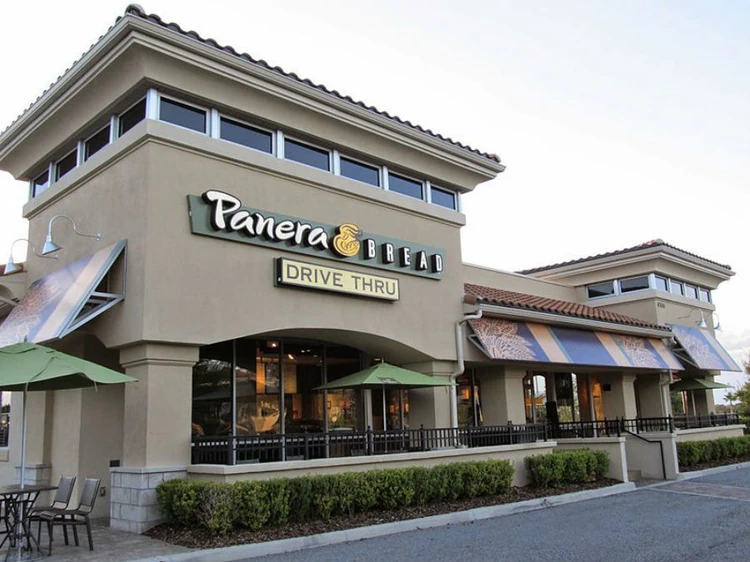
Panera Bread adds pizza to its menu

Panera Bread has added flatbread pizza to its menus to give customers more options during the COVID-19 pandemic. 

The restaurant chain said it’s seen a steady increase in takeout, delivery, and drive-through orders this year. Many customers are choosing delivery and carryout options for safety reasons. Eduardo Luz, Panera’s chief brand and concept officer, said Panera doubled its delivery business in 2020. 

Luz said Panera had already started testing the new menu item before the pandemic. 

"Our guests have been asking for this for years. We think Panera's bread heritage and outstanding ingredients meet both the desire for high quality, crafted pizza as well as a growing customer off-premise behavior," Luz said in a statement.

As of Wednesday, the company has added Cheese, Margherita and Chipotle Chicken & Bacon flatbread pizzas to its menus nationwide. Prices for the new flatbread pizzas will start at $7.99. 

The fast casual bakery-cafe chain has been aiming to boost its dinner sales in recent years by expanding its menu offerings. The addition of pizza is part of that move. 

"As restaurant traffic across the industry increasingly shifts to later in the day, Flatbread Pizzas allow Panera to further compete across dayparts and appeal to off-premise consumer preferences," the company said in a press release.

Article Image

Consumers increasingly turn to convenience stores during the pandemic

Restaurants have been hammered by the coronavirus (COVID-19) pandemic but in many cases, their loss has been gained by convenience stores -- especially those that have emphasized grab-and-go food.

For starters, convenience stores haven’t had to change their business models much in order to adapt to the new environment. Many chains, such as Wawa, have always had sections of prepackaged sandwiches and wraps. All they’ve had to do is increase inventory.

Consumers seem to like the grab-and-go concept at a time when the alternatives are mostly fast-food drive-thrus. And some in the industry believe this trend may last beyond the pandemic.

"We are seeing more consumers opt for something prepackaged for safety reasons," Tim Powell, managing principal at consulting and insights firm Foodservice IP, told Convenience Store News. "The thinking is the food handling by the staff is eliminated."

Powell says research has shown that the pickup in business is coming from consumers who used to frequent restaurants but now avoid the few that are open. He sees only a portion of the current grab-and-go customers returning to restaurants once the danger has passed.

7-Eleven leans on delivery

7-Eleven has expanded beyond grab-and-go and is leaning more heavily on delivery now that the virus is into its second wave. The convenience store chain became Instacart’s first convenience store client in September. 

Last week, 7‑Eleven added two more U.S. ordering platforms – Uber Eats and Grubhub – to its delivery portfolio. In addition to sandwiches, users can order milk, bread and eggs, pizza with a Slurpee drink, and some 7-Select chips, coffee and a pastry, cold medicine, grocery items, and even energy shots.

“When 7‑Eleven began offering delivery in 2017, we certainly didn’t foresee a pandemic accelerating on-demand ordering platforms from convenient to essential,” said 7‑Eleven COO Chris Tanco. “This year we’ve doubled our delivery footprint and quadrupled our daily delivery orders because customers know they can count on us for their necessities in about 30 minutes. We look forward to continuing to respond as our customers’ shopping behaviors rapidly change.”

Article Image

Consumers are stressed out by low supplies of fresh food in grocery stores, survey finds

American consumers have gotten past shortages of some grocery essentials during the pandemic, but the wrath of COVID-19 is still playing a huge role in how consumers shop for fresh food. According to a report from professional services company Deloitte, the majority of the stress is coming from consumer anxiety around safety.

According to Deloitte’s “The Future of Fresh” report, a hefty 54 percent of consumers feel stressed when they’re doing their in-store grocery shopping, with many respondents saying they’re going to the grocery store less often than they were prior to the pandemic.

Adding to a grocery shopper’s misery is that hoarding and supply chain disruptions have resulted in stock depletions for everything from toilet paper to meat. Deloitte’s survey results found that two-thirds of grocery shoppers have had little to no luck in buying the fresh food they wanted simply because it was out of stock. 

When that happens, consumers are forced to decide what they want to buy instead. Most of the people in that situation -- 40 percent -- say they decided to buy an alternative fresh food item. More than a quarter of the respondents bought a processed or frozen alternative or bought nothing at all. 

Fresh food makes us happy

It might be purely psychological, but 90 percent of the respondents said that being able to buy fresh food in the midst of the pandemic “makes them happy.” 

“How customers buy food is changing,” Deloitte stated in a video overview of its study. “The promise of freshness has not.” 

Article Image

Colder temperatures this fall and winter may take a toll on restaurants

Restaurants have suffered terrible losses during the coronavirus (COVID-19) pandemic, but a new report suggests that the worst may be yet to come when the weather in most of the country turns cold.

A study by The Freedonia Group, a market research firm, says outdoor seating has helped full-service restaurants mitigate COVID-19 losses, but these establishments face the prospect of losing at least some of that revenue source when the temperature plunges.

The study also suggests that the market for many restaurant supplies will be greatly reduced as restaurants curtail operations or close completely. 

It predicts a reduced need for disinfecting products, including surface disinfecting wipes and liquid disinfectants and sanitizers. Restaurants will also need fewer single-use foodservice products -- including containers and lids, beverage cups, sleeves, service ware, and bags and other flexible packaging.

Limited indoor dining

The arrival of fall and the coming of winter may coincide with an increase in coronavirus cases in much of the U.S., making it more difficult for restaurants to reopen their dining rooms. These establishments that have reopened are limited, in most cases, to no more than 50 percent capacity, making it harder to be profitable.

The National Restaurant Association recently reported that nearly 100,000 restaurants had closed during the pandemic, either because they shut down permanently or closed for the foreseeable future. Nearly 3 million restaurant employees are still out of work.

According to the survey, 40 percent of restaurant operators think it is unlikely that their restaurant will still be in business six months from now if there are no additional relief packages from the federal government.

New York City will continue outdoor dining

Despite frigid winter weather, diners in New York City will continue to be seated outdoors. Last week, New York Mayor Bill de Blasio announced that outdoor seating would become a permanent, year-round feature.

Before the announcement, outdoor dining in the city, which began in July during the second phase of reopening, was scheduled to end on October 31. Indoor dining, on a limited-capacity basis, is scheduled to resume in New York this week.

Many restaurants that hope to extend the outdoor seating period, or make it permanent, are planning to add industrial-strength heaters to their outdoor dining areas. Some are enclosing their heated dining areas in a tent, which almost makes it an indoor space -- a move that may be questioned by health officials should cases of the virus continue to spike.

Despite difficulties faced by full-service restaurants, fast-food chains have been better able to adapt to more drive-thru and delivery business. Pizza chains like Dominoes and Papa John’s have actually thrived during the pandemic because their delivery business model was already in place.

But Pizza Hut has not taken part in that prosperity. The company recently announced that it is closing 300 restaurants. A spokesperson for parent company NPC International said “a substantial majority” of the locations targeted for closing have dining rooms. 

Article Image

Mars Food changes Uncle Ben’s brand name to Ben’s Original

Mars Food said it is changing the name and imagery used to market its Uncle Ben’s brand rice products “to create a more inclusive future.” The product will be renamed Ben’s Original.

The current brand came under review in the wake of the nationwide protests over the death of George Floyd, who died while being arrested by Minneapolis police. 

Uncle Ben’s, along with some other food brand names and logos such as Aunt Jemima pancakes, was criticized for allegedly reflecting racially insensitive images. The new branding will appear on products beginning in January.

"Over the last several weeks, we have listened to thousands of consumers, our own associates, and other stakeholders from around the world," said Fiona Dawson, a top executive with Mars Food. "We understand the inequities that were associated with the name and face of the previous brand, and as we announced in June, we have committed to change."

‘More equitable iconography’

The company said it has also committed to removing the image on the packaging to create “more equitable iconography.” The company said it is taking the action to “enhance inclusion and equity and setting out its new brand purpose to create opportunities that offer everyone a seat at the table.”

The Uncle Ben’s logo features a rendering of an elderly black male wearing a bow tie, an image some social critics compared to the image of a house servant during the time of slavery in the U.S. 

Additionally, during the Jim Crow era following slavery African American men were often called “uncle” instead of “mister,” and black women were often referred to as “auntie.” 

Wide-ranging input

In deciding to drop the name of its brand, Mars Food reached out to a number of civil rights organizations, including the National Urban League, for advice.

"Brands have an important role to play as we continue to navigate this moment of reconciliation regarding racial justice, diversity, and inclusion," said Marc Morial, the Urban League’s CEO.

According to The Wall Street Journal, Uncle Ben’s rice dates back to 1937, when a Texas rice broker came up with the name for a parboiled rice product. He reportedly named the company for an African American farmer in Houston who was known as Uncle Ben.

Article Image

Kroger speeds up its use of AI to counter checkout losses

To combat the hit Kroger is taking from items passing through its self-checkout stations without being scanned, the country’s largest grocery chain is bringing in an artificial intelligence (AI) firm to help solve the problem.

While the domestic restaurant industry continues to rebound and is seeing sales accelerate at near a 4 percent clip, major grocers are seeing the curve trending the other way and at double the speed. One industry watcher calculates the losses to grocers in the billions of dollars.

Kroger felt it had personally seen enough of that red ink. To help stem that tide, the company is bringing in Irish AI company Everseen to try and halt the losses it sustains when shoppers and store employees alike either mistakenly or intentionally fail to scan items during checkout.

Shoppers take note

Going forward, shoppers in some 2,500 Kroger stores can expect an extra eye watching their checkout process. Everseen’s system employs cameras to spot when a shopper fails to scan an item, then quietly lets a store employee know. At that point, the employee is supposed to intervene -- in what looks to be a friendly manner -- before the customer picks up their bags and walks out without paying for the merchandise.

Kroger is not alone in trying to make sure it gets paid for what the customer has in their cart. Sam’s Club also uses computer-vision systems, and Walmart recently experimented with eliminating traditional checkout aisles as a way to reduce friction and clogged-up checkout processes. The COVID-19 pandemic has also had a hand in the situation thanks to stores rerouting customers to self-checkout stations to help maintain social distancing from store employees.

In interviews with Wired, Walmart workers familiar with Walmart’s loss prevention programs said their top concern with Everseen was false positives during the self-checkout process. These employees say Everseen’s computer-vision regularly misreads innocent behavior as possible shoplifting, which only frustrates customers and store workers while leading to longer lines. 

“It’s like a noisy tech, a fake AI that just pretends to safeguard,” said one worker.

Article Image

Nearly 100,000 restaurants have closed in the last six months

After six months of a “new normal” amid a deadly coronavirus (COVID-19) pandemic, the restaurant industry is still reeling. “Devastated” might not be too strong a word, according to the National Restaurant Association (NRA).

A new NRA survey shows about 100,000 restaurants -- nearly one in six -- have either shut down permanently or closed for the foreseeable future. Nearly 3 million restaurant employees are still out of work.

For consumers worried about the fate of their favorite eateries, the survey results are grim indeed. Despite a rapid shift to take-out and delivery sales, most restaurants say they are still struggling to survive.

Sales were still a third lower in August

Consumer spending at restaurants was well below normal in August with restaurant sales down an average of 34 percent. Together, the nation’s restaurants are projected to lose $240 billion this year.

NRA research estimates that more than 100,000 restaurants will have closed their doors by the end of this year, though it could be worse. The scope of the damage won’t be known until government statistics are released in the months ahead.

Making matters worse, restaurant operators are having to spend more money to serve fewer customers. About 60 percent of operators say costs as a percentage of sales are higher than before the pandemic.

Even those restaurants that are still open and appear to be successfully navigating the pandemic are far from full strength, with staffing levels only 71 percent of what they were in February.

Survival hinges on creativity

"For an industry built on service and hospitality, the last six months have challenged the core understanding of our business," said Tom Bené, CEO of the National Restaurant Association. "Our survival for this comes down to the creativity and entrepreneurship of owners, operators, and employees.”

From independent owners to multi-unit franchise operators, Bene says restaurants are losing money every month, and they continue to struggle to serve their communities and support their employees.

If that sounds grim, NRA says it could get worse in the months ahead. In the early days of the pandemic, Congress provided trillions of dollars in help for both consumers and businesses. That help has expired and, with an election looming, there seems to be little momentum in Washington to extend it.

According to the survey, 40 percent of restaurant operators think it is unlikely their restaurant will still be in business six months from now if there are no additional relief packages from the federal government.

Article Image

Diners are slowly returning to restaurants despite health and safety concerns

As restaurants continue to reopen for dine-in service, some consumers seem to be comfortable with an on-premise, sit-down meal. But a new study suggests that more than two-thirds would rather be at home, doing their own cooking, serving themselves, and -- most importantly -- staying safe from COVID-19.

A new study by consulting firm AlixPartners suggests that diners are raising their expectations as consumer confidence in restaurant safety grows. Adam Werner, AlixPartners managing partner, said during a Restaurants Rise webinar that the study’s results are indicative of a new relationship between restaurants and customers that is emerging during the pandemic.

He points out that while restaurant spending is far from rebounding back to normal, it remains the number one choice when consumers are asked how they’d like to spend their dining dollars.

“Consumers are looking to dine out. It’s not all doom and gloom. They want to go,” Werner said. “They need to leave the house, but they want to feel safe.”

The safety of eating at home

On the question of feeling safe, the AlixPartners study mirrors what similar studies have shown -- that health and safety is still the top priority for consumers. 

However, foodies appear to be lowering their guard when it comes to contact with other people. In April, 49 percent of the AlixPartners respondents said they ate at home so they could limit contact with other people. In July, that preference softened to 44 percent. 

While the percentage of consumers who said they prefer cooking at home held steady at 61 percent from April to July, their reasons for staying home also changed a bit. As an example, 45 percent of consumers said takeout/delivery was too expensive for their tastes in July, a metric that rose from 39 percent in April.

Digging a little deeper, AlixPartners researchers found that nearly 57 percent of consumers are now ordering delivery or takeout at least once a week. 

However, that metric comes with a warning from Werner. Even though the delivery business is starting to bounce back, he said that consumers would still prefer to pick up the food themselves. It’s not only because they can save a few bucks on delivery, but also because they’re concerned about health and safety.

Restaurants need to be patient

Werner laid down the law to restaurant operators by saying that they need to remain fluid in how they respond to customers while trying not to second guess them. “The consumer experience is suffering, and those that get it right will win,” he said.

“While contemplating how consumers will behave in the post-pandemic world is an interesting exercise, dealing in hypotheticals can be distracting and, worse, paralyzing at a time when decisive action is crucial. In recovery, they may have to make some decisions they don’t like. But operators need to embrace the unique opportunity to reset consumers’ relationship with the business,” AlixPartners told restaurateurs in a separate advisory.

Article Image

Pizza restaurants coping with a growing pepperoni shortage

Pizza parlors, especially those that deliver, have enjoyed a booming business during the coronavirus (COVID-19) pandemic. But that surge in popularity is apparently having negative consequences on supplies.

Bloomberg reports that pizza restaurants across the nation are now facing a growing shortage of pepperoni, and the cost of that popular topping has nearly doubled. The report attributes the shortage to two factors -- production problems at some meat plants that have reduced output and growing demand from consumers over the last five months.

Smaller “mom and pop” shops have been hit hardest. According to Bloomberg, Charlie’s Pizza House in Yankton, South Dakota was paying $2.87 a pound for its supplies of pepperoni in January. Now, the price is $4.12 a pound. One independent New York eatery has seen its pepperoni cost go from $4 a pound to $6.

Big chains not yet affected

So far, tighter supplies haven’t been a problem for the large pizza chains like Dominos and Papa John’s. These companies usually purchase all of their ingredients on long-term contracts, so it’s mostly the suppliers who are taking the hit.

In mid-July, Dominos reported that its U.S. comparable sales jumped 16 percent in its fiscal second quarter, the first full reporting period after the coronavirus lockdown. In 2019’s second quarter, Dominos barely posted a 3 percent gain.

“The second quarter marked a rather unprecedented acceleration for food delivery in the U.S., and we were certainly no exception,” Domino’s CEO Ritch Allison told analysts.

‘Golden age of pizza’

Industry publication QSR had already declared this to be “the golden age of pizza,” noting that Americans’ appetite for it was enjoying a resurgence. When the lockdown hit, the industry was uniquely equipped to respond.

“The why isn’t complicated: Pizza brands came into the crisis, on a broad scale, already equipped to deliver and fulfill carryout service,” the magazine reported. “No pivot needed.”

While food delivery services like Grubhub and UberEats gave nearly all restaurants a delivery option, consumers were already comfortable with the pizza delivery option since they had been using it for years. And for many, pizza is comfort food, making it an easy choice during a pandemic.

So far, most pizza restaurants have said they are not passing on the higher pepperoni cost to their customers, though that could change if the shortage persists. 

A YouGov survey conducted for a recent National Pizza Day confirmed that pepperoni is America’s favorite pizza topping, followed by sausage, mushroom, and bacon -- toppings consumers might need to get familiar with should the pepperoni shortage persist.

Article Image

Whole grain food labeling is confusing to many consumers, study finds

Understanding food labels can be tricky business for many consumers. Recent studies have found just how frequently labels are misunderstood, and researchers say the U.S. Food and Drug Administration (FDA) should make things clearer for shoppers. 

Now, a new study conducted by researchers from Tufts University is backing up those assertions. The researchers say whole grain food packaging is particularly hard to understand for many consumers, so they’re calling for changes in how food is labeled with the hope that clearer wording will prompt consumers to make healthier choices. 

“Our study results show that many consumers cannot correctly identify the amount of whole grains or select a healthier whole grain product,” said researcher Parke Wilde. “Manufacturers have many ways to persuade you that a product has whole grain even if it doesn’t. They can tell you it’s multigrain or they can color it brown, but those signals do not really indicate the whole grain content.” 

Confusion over whole grains

For the purposes of the study, the researchers showed whole grain food packages to over 1,000 U.S. adults. Some of the examples were actual labels while others were hypothetical renderings used to represent what many labels actually look like. In both instances, the exact amount of whole grain was hard to discern, and many products contained misleading or confusing words that led consumers to believe that products were healthier than they really are.  

The goal of the study was to assess consumers’ knowledge of healthy food products. Based on the results, the researchers wanted to see if there was a need for food labeling to change. 

Overall, when looking at both real and fake images of whole grain food packages, the researchers learned that most consumers overestimated how much whole grain is found in popular food items. In this study, they overestimated whole grain content over 50 percent of the time, regardless of whether it was a real or fake image. Though the participants were shown a wide range of whole grain foods, determining the correct whole grain content in bread was the trickiest out of all the foods. 

The importance of clear labeling

Eating diets high in whole grains can have countless health benefits for consumers, so it’s important that the labeling on these types of foods is straightforward and accurate. The researchers say that knowing exactly what’s in a food product can aid consumers in making the best choices for their desired diets and can lead to improved health overall. 

“With the results of this study, we have a strong legal argument that whole grain labels are misleading in fact,” said researcher Jennifer L. Pomeranz. “I would say that when it comes to deceptive labels, ‘whole grain’ claims are among the worst. Even people with advanced degrees cannot figure out how much whole grain is in these products.” 

Article Image

Consumers gain newfound interest in meat alternatives due to food shortages

As the pandemic unfolded deep into the consumer world, it forced some meat processing plants to shut down. That, in turn, took a toll on the overall food supply, which then put consumers at a loss in finding things like their favorite burgers. 

As a result of all of that, plant-based processors are finding themselves in the enviable position of being the next best go-to.

Interest in plant-based meat increases

Plant-based food companies like Beyond Meat, Impossible Foods, and Tofurky have turned the production setting to high and started selling their meat alternatives at a discount to try and win over a new batch of consumers, hopefully for the long-haul.

Many producers are already reaping the benefits. FoodMarket reports that sales for Before the Butcher, a maker of plant-based burgers and sausages, have climbed over the past two weeks thanks in part to the shortage of traditional meat products. 

Jaime Athos, chief executive of plant-based producer Tofurky, told FoodMarket that his company’s sales had risen 40 percent in the last three months. One of his biggest retail customers recently placed an order for 30 percent more than his usual purchase, he said, pointing out that imitation deli slices and Italian sausage have proved particularly popular.

“This is a peak moment for trial potential among regular meat eaters,” Pat Brown, Impossible Foods’ chief executive, told FoodMarket.

If the plant-based processors can convert a meat-eater to a plant-based one, the odds are good that those consumers might stick around. One recent study ConsumerAffairs found showed that almost 60 percent of consumers who try plant-based food lean towards making that a permanent shift in their diet.

Where’s the beef?

Meat lovers may need to chill for a while because it doesn’t look like real meat is coming back to their grocer’s shelves anytime soon. The domestic meat industry has been turned upside down, thanks to the pandemic. 

The Department of Agriculture said beef, pork, and other red meat production was down 28 percent versus where it was a year ago, and things aren’t looking good. 

“Expect to enter Memorial weekend with little to no boxed beef,” one national food-service distributor told its customers, according to FoodMarket. “Business as usual is nowhere in sight.”

Naturally, the beef industry says carnivores shouldn’t be alarmed. Colin Woodall, chief executive of the National Cattlemen’s Beef Association, told FoodMarket that any beef shortages are a temporary thing, and the data they’ve seen shows that beef remains the consumer’s top choice. “Beef demand, beef sales and overall beef satisfaction are up, proving that consumers continue to crave beef,” he said.

Empty shelves mean higher prices

If consumers can find their favorite red meat at a reasonable price, they should probably grab it because it’s not likely to last. Not only are the major grocery stores putting limits on meat purchases, but the price of beef keeps going up. 

Since the beginning of March, when COVID-19 kicked into high gear, wholesale ground beef prices have more than doubled to $4.68 a pound, according to the USDA. In the last 24 hours alone, the USDA reports that the price per 100 pounds went up $6.81.

Article Image

Tyson Foods Chairman says ‘food supply is breaking’

In a full-page ad in several newspapers, Tyson Foods Chairman John Tyson said his company plans to temporarily shutter U.S. plants due to health concerns after thousands of meatpacking workers tested positive for COVID-19. 

“The food supply chain is breaking,” Tyson said in the ad that ran in The New York Times, Washington Post, and Arkansas Democrat-Gazette on Sunday. 

Tyson Foods, one of the largest meat suppliers in the U.S., said the coronavirus outbreak will likely lead to millions of pounds of meat disappearing from the food supply due to the halt in production. Tyson, along with Smithfield and JBS, is temporarily closing U.S. facilities in the wake of the revelation that some workers contracted COVID-19. 

"There will be limited supply of our products available in grocery stores until we are able to reopen our facilities that are currently closed," Tyson said, adding that "millions of animals — chickens, pigs and cattle — will be depopulated because of the closure of our processing facilities.” 

"In addition to meat shortages, this is a serious food waste issue. Farmers across the nation simply will not have anywhere to sell their livestock to be processed, when they could have fed the nation.”

USDA predicts price increase

The United States Department of Agriculture (USDA) is forecasting that 2020 beef prices will rise 1-2 percent, poultry roughly 1.5 percent, and pork between 2 and 3 percent. The USDA plans to buy $3 billion in fresh produce, dairy, and meat from farmers to help drive down prices and reduce waste. 

The Centers for Disease Control and Prevention (CDC) on Sunday released guidelines for meat and poultry processing workers. The CDC said it recommended providing cloth face coverings for employees, checking workers’ temperatures before they enter the facility, adding more clock-in stations, and limiting carpooling. 

Researchers have noted that COVID-19 is not a foodborne virus. However, it’s always a good idea to practice safe food handling to protect against foodborne pathogens.