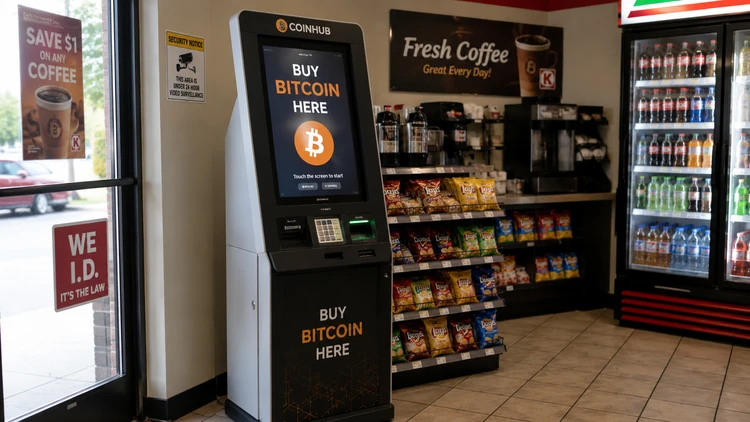

Cryptocurrency kiosk scams are rapidly increasing as fraudsters pressure consumers into depositing cash into crypto ATMs.
Scammers impersonate government agencies, tech support workers, romantic partners, and investment advisers to steal funds.
Consumer advocates say the best defense is recognizing red flags, slowing down, and never sending cryptocurrency under pressure.
Cryptocurrency kiosks — often called crypto ATMs — have become a favorite tool for scammers targeting consumers. Consumer protection agencies and law enforcement officials warn that criminals are increasingly directing victims to these machines because cryptocurrency payments are difficult to trace and nearly impossible to reverse once sent.
Lawmakers have begun to respond. This week, Mississippi Gov. Tate Reeves signed legislation that establishes statewide oversight and consumer safeguards for cryptocurrency kiosks.
The scams can leave consumers devastated financially, particularly older adults who are often singled out by fraudsters using fear, urgency, and emotional manipulation.
Crypto kiosks are commonly located in convenience stores, gas stations, grocery stores, and shopping centers. The machines allow users to insert cash and convert it into cryptocurrency such as Bitcoin, which can then be transferred to a digital wallet by scanning a QR code.
Scammers exploit that simplicity.
Government impersonation scams
One of the most common schemes involves criminals pretending to represent government agencies such as the IRS, Social Security Administration, FBI, or local law enforcement.
Victims may receive phone calls claiming they owe unpaid taxes, missed jury duty, or face arrest unless immediate payment is made. Instead of requesting conventional payment methods, the scammers direct consumers to withdraw cash from their bank accounts and deposit it into a cryptocurrency kiosk.
The victim is then instructed to scan a QR code controlled by the scammer, instantly transferring the funds.
Consumer advocates say legitimate government agencies never demand payment in cryptocurrency.
Tech support fraud
Another growing scam involves fake tech support representatives posing as employees of companies such as Microsoft, Apple, or antivirus providers.
Victims are told their computers or bank accounts have been compromised and that their money is at risk. The scammer convinces the consumer that transferring funds into cryptocurrency is a way to “protect” their savings.
In many cases, scammers remain on the phone while the victim drives to the kiosk and completes the transaction.
Romance and investment schemes
Romance scams frequently evolve into crypto fraud.
A scammer builds an online relationship over weeks or months before introducing a supposedly lucrative cryptocurrency investment opportunity. Victims are persuaded to deposit money into crypto kiosks to fund investments that do not exist.
Similarly, fraudulent investment advisers promise guaranteed returns or insider opportunities tied to cryptocurrency trading platforms.
By the time victims realize they have been deceived, the funds are usually gone.
Prize and employment scams
Fraudsters also use cryptocurrency kiosks in fake lottery, sweepstakes, and employment scams. Consumers may be told they won a prize but must first pay taxes or fees in cryptocurrency.
Others are recruited for bogus jobs and instructed to deposit funds through crypto kiosks after receiving counterfeit checks. These scams often rely on creating urgency and confusion before victims have time to verify the claims.
Here are the red flags
Consumer protection experts say several red flags appear repeatedly in cryptocurrency kiosk scams:
- Demands for immediate payment
Requests for secrecy
Instructions to pay only in cryptocurrency
Threats involving arrests, lawsuits, or account freezes
Promises of guaranteed investment profits
Pressure to stay on the phone while traveling to a kiosk
Requests to avoid speaking with family members or bank employees
Avoid becoming the victim
Experts recommend several steps consumers can take to avoid becoming victims:
- Slow down: Scammers rely on panic and urgency. Consumers should pause before making any financial transaction involving cryptocurrency.
- Verify independently: If someone claims to represent a government agency, bank, or technology company, consumers should contact the organization directly using official phone numbers or websites.
- Never send crypto to strangers: Cryptocurrency transactions are generally irreversible. Consumers should never transfer funds to someone they have not independently verified.
- Talk to someone you trust: Before making large payments or investments, consumers should consult a family member, financial adviser, or trusted friend. Promises of high or guaranteed profits are among the most common warning signs of fraud.
Consumers who believe they have been targeted should immediately stop communication with the scammer and report the incident to law enforcement and consumer protection agencies.
Experts recommend preserving receipts, transaction records, phone numbers, emails, and cryptocurrency wallet information.
Victims can also report fraud to:
The Federal Trade Commission (FTC)
The FBI’s Internet Crime Complaint Center (IC3)
State consumer protection agencies
The operator of the cryptocurrency kiosk used in the transaction
Authorities caution that recovering stolen cryptocurrency can be difficult, making prevention the most effective defense against these increasingly sophisticated scams.