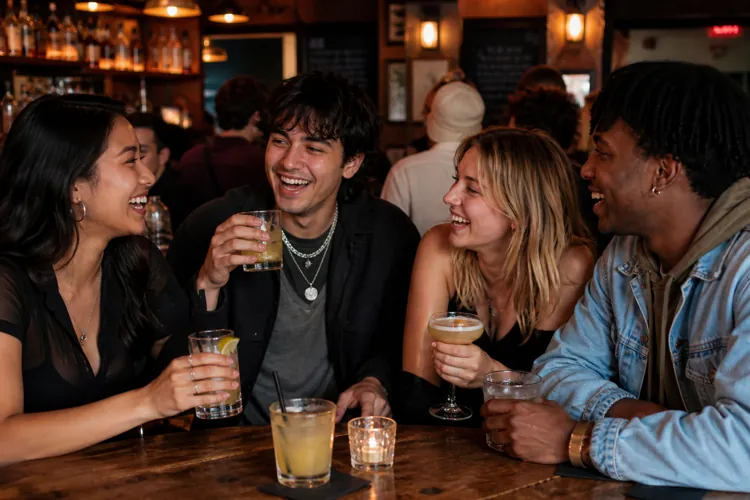

Nearly one in four Gen Z adults surveyed said they don't drink at all, but many others still enjoy alcohol occasionally or in moderation.
Health concerns, financial priorities, and changing social expectations are encouraging young adults to rethink their drinking habits.
Cutting back is influencing more than just alcohol consumption, with Gen Z embracing mocktails, daytime outings, and social activities that don't revolve around drinking.
For years, Gen Z has been labeled the “sober generation,” with younger adults seemingly moving away from the drinking habits of previous generations. But is that really the whole story?
While some young adults are choosing not to drink at all, others are simply being more selective about when they drink and how much they consume.
A new survey from Skyline Recovery Center offers a closer look at Gen Z's relationship with alcohol, revealing that the picture is more complicated than the sober-generation label suggests. Researchers found that nearly one in four Gen Z adults doesn't drink at all, but many others still enjoy alcohol in moderation.
Health concerns, financial priorities, and changing social expectations are all playing a role in these decisions.
ConsumerAffairs spoke with Sheldon Cohen, Clinical Director of Skyline Recovery, to better understand what these findings tell us about the generation's changing attitudes toward drinking.
How the survey was conducted
Skyline Recovery Center surveyed 766 Gen Z adults between the ages of 21 and 29 to better understand their relationship with alcohol.
Participants were asked about their drinking habits, how much they typically consume, how much they spend on alcohol, and whether they've changed their drinking patterns over time. The survey also explored why young adults are cutting back, which social situations make them more likely to skip a drink, and what strategies they use to moderate their alcohol consumption.
What the survey found
The findings suggest that Gen Z's relationship with alcohol is more complicated than the idea that an entire generation is choosing sobriety. While 24% of respondents said they don't drink at all, another 21% said they moderate their drinking by choice. Meanwhile, 40% described themselves as occasional drinkers, and 10% said they drink regularly.
Among those who do drink, the average consumption was 4.4 drinks per week. Health and finances were the biggest reasons respondents gave for cutting back, with 46% citing physical health or fitness and 37% pointing to saving money. In fact, nearly half of those who had reduced their drinking said they were saving an average of $1,200 per year as a result.
The survey also found that drinking is becoming less of an expectation in certain social situations. Daytime gatherings, such as brunches and day parties, were the most common occasions for skipping alcohol, cited by 35% of respondents. Additionally, 69% of Gen Z adults who date said they prefer dates involving little to no alcohol.
“Gen Z’s very open about their anxiety, sleep, and burnout, so if alcohol puts those sorts of things at risk, it’s pretty logical to cut back,” Cohen said. “Alcohol has typically been a way for people to connect or relax, but younger folks are asking ‘What’s this actually doing for me?’ and that question already restructures what a typical Friday night can look like.”
Getting control back
How does drinking less impact Gen Z? Cohen said the biggest change he sees is that people get a sense of control back.
“They stop planning their week around recovering from the last one,” he said. “Saving money is huge, especially since a lot of Gen Z are way quicker to spend once they’re intoxicated, and it hits them the next morning when they’re looking at their transactions. Better mornings, steadier moods, and more money in the bank account are what’s keeping people going.”
On top of that, social and peer dynamics are changing for the better.
“You're no longer met with the instant assumption that you're in recovery or have a religious reason,” Cohen said. “Gen Z also seems far more supportive of each other, celebrating the choice to drink less instead of implying you're less cool if you don't drink or even if you moderate.”
Changing behaviors
Additionally, this shift away from prioritizing alcohol has changed finances, social gatherings, and even what types of drinks young people are choosing instead.
Cohen noted a big shift toward nonalcoholic beers and mocktails, as you get the look and social side of drinking with your peers, but without the alcohol or the hangover.
When it comes to activities, he’s noticed an uptake in daytime and activity-based outings like group workouts, running clubs, hikes, coffee hangouts and movies.
“Essentially, they're activities where the focus isn't on drinking, but you can still be social,” he said.
Financially, Cohen said people think about what they're spending at the bar, but forget about everything else that comes with a night out.
“The Ubers, grabbing food afterward, buying drinks for friends – it all adds up,” he said. “If you're someone who goes out most weekends, even cutting back a little could mean a few hundred extra dollars in your pocket over the course of a year.”