
Consumer prices rose 0.6% in September, pushing the annual inflation rate to 3.7%, up from 3.4% in August.
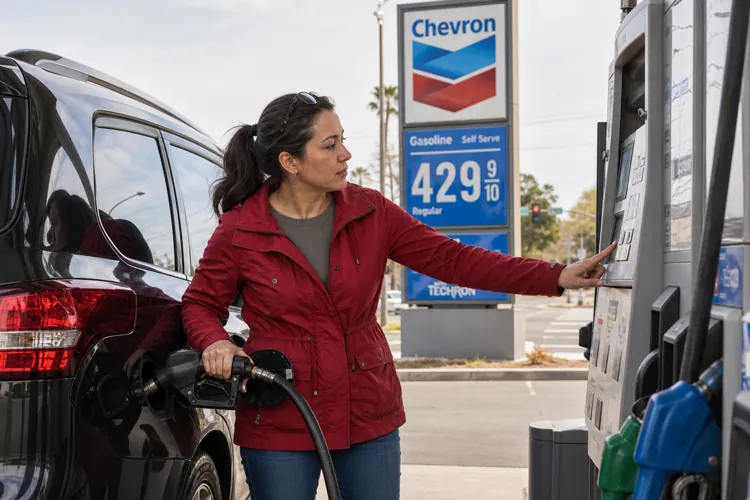
Gasoline prices surged 9.1% during the month, accounting for more than half of September's overall inflation increase.
Grocery prices declined slightly, but consumers continued to pay more for housing, airline tickets, used cars, and other services.
Inflation accelerated in September as sharply higher gasoline prices drove up the cost of living, presenting another financial challenge for American households already struggling with elevated prices.
The Consumer Price Index (CPI) rose 0.6% in September, following a 0.4% increase in August, according to a report released Wednesday by the U.S. Bureau of Labor Statistics (BLS).
Over the past 12 months, consumer prices increased 3.7%, up from August's annual rate of 3.4%. The increase suggests inflationary pressures are intensifying again after a period of more moderate price increases.
Gas leads the way
Much of September's increase was directly attributable to higher energy prices, particularly gasoline, which has become a growing expense for consumers.
The gasoline price index jumped 9.1% during September, accounting for more than half of the overall monthly CPI increase. Compared with September 2025, gasoline prices were 34.2% higher.
That means a household that spent $150 a month on gasoline a year ago would now be spending approximately $201 for the same amount of fuel, assuming its purchases followed the national price index.
The broader energy index rose 5.2% in September and was up 20.4% over the past year.
Other energy costs also showed substantial increases. Fuel oil prices jumped 15.3% in September and were 74.2% higher than a year earlier, potentially creating additional financial pressure for households that rely on heating oil.
Electricity prices rose a more modest 0.2% during the month but were 4.4% higher over the past year.
Some relief at the supermarket
One encouraging development for consumers was a slight improvement in grocery prices.
The food index was unchanged in September, while the index for food purchased at grocery stores declined 0.1%.
Several common grocery items became less expensive during the month. Beef prices fell 1%, milk prices dropped 2%, and the broader category of meats, poultry, fish, and eggs declined 0.5%. Dairy products as a group fell 0.9%.
However, consumers encountered higher prices in other grocery aisles. Nonalcoholic beverages increased 0.9%, including a 1.5% increase in carbonated drink prices. Fruits and vegetables rose 0.5%.
Despite September's modest improvement, grocery prices remained 1.8% higher than a year earlier.
Eating at restaurants also continued to become more expensive. Prices for food away from home rose 0.2% in September and 3.5% over the past year.
Full-service restaurant meals were 3.8% more expensive than a year ago, while limited-service meals, including fast food, increased 3.2%.
Housing costs continue to climb
Housing remained another significant source of inflation.
The shelter index rose 0.4% in September, accelerating from August's 0.3% increase. Over the past year, shelter costs increased 3.2%.
Rent increased 0.2% during the month, while owners' equivalent rent, a measure of what homeowners would theoretically pay to rent their homes, rose 0.3%.
Hotel and motel costs also increased, with the lodging-away-from-home index rising 2% in September after a 2.4% increase in August.
Higher shelter costs are particularly important because housing represents a substantial portion of the typical household budget.
Airfares, used cars, and recreation become more expensive
Consumers also encountered price increases in several discretionary spending categories.
Airline fares rose 1.2% in September and were a striking 22.4% higher than a year earlier.
Used car and truck prices increased 0.7% during the month, although they remained 1.5% below their September 2025 level.
Recreation prices rose 0.5%, education costs increased 0.6%, and apparel prices climbed 0.3%.
Medical care prices increased 0.1%, with hospital services rising 0.7%. Prescription drug prices, however, fell 1.2%.
Communication costs provided some relief, declining 0.2% after rising sharply in August.
Core inflation also moves higher
Economists closely monitor core inflation, which excludes the often-volatile food and energy categories, to gauge underlying price pressures.
The core CPI increased 0.3% in September, matching August's monthly increase. Over the past 12 months, core inflation rose 2.6%, compared with 2.4% in August.
Although the annual core rate remains below overall inflation, its increase suggests price pressures extend beyond the recent surge in gasoline costs.
The continued increases in shelter, transportation services, and other categories indicate that inflation remains a challenge even when food and energy are excluded.
What the latest numbers mean for consumers
September's inflation report presents a mixed picture for household finances. Consumers are seeing some improvement in grocery prices, but higher gasoline costs are absorbing much of that relief. Housing expenses and the cost of services also continue to rise.
The acceleration in inflation could complicate the Federal Reserve's efforts to bring inflation back toward its long-term 2% target. Although the central bank focuses primarily on a different inflation measure, the Personal Consumption Expenditures price index, the CPI provides an important indication of changing consumer costs.
For households, the immediate concern is purchasing power. An annual inflation rate of 3.7% means prices, on average, are still rising rather than falling. Consumers whose wages or retirement incomes fail to keep pace may find it increasingly difficult to maintain their standard of living.
The latest report also illustrates how quickly energy prices can affect the broader inflation picture. Even with stable grocery prices, a sharp increase in gasoline costs can significantly raise the overall cost of living.