
2025 Mortgage Trends and Foreclosure Rates

Article Image

Blacks 1.7 times more likely to be denied a mortgage, new study finds

After decades of attempts to level the housing playing field, Black Americans still face a harder path to home ownership than whites, with Black applicants being 1.7 times more likely to be turned down.

Detroit and Grand Rapids, Mich., had the highest denial rates in the nationwide survey conducted for LendingTree.

High mortgage denial rates — along with limited generational wealth, income disparities and discriminatory practices — are among the persistent challenges that keep the Black home ownership rate lower than that of other racial groups.

But these disparities aren’t uniform. Denial rates — and the gaps between Black and overall applicants — vary widely across the country.

LendingTree chief consumer finance analyst Matt Schulz says a higher denial rate for Black consumers means limited access to the benefits of owning a home.

“For generations, homeownership has been one of the most powerful tools for building wealth that Americans have. Home ownership isn’t cheap, and there are ongoing costs; however, the equity that you can build over the years can be incredibly helpful. Not only can it provide you funding when you’re in a financial pinch, but it can also be used in working toward other financial goals,” Schulz says.

Key findings

  • Black homebuyers are 1.7 times more likely to be denied a mortgage than all homebuyers. The denial rate for Black applicants across the U.S. was 19.00% in 2024, compared with 11.27% for all applicants — a gap of 7.73 percentage points.
  • Grand Rapids, Mich., Detroit, and Raleigh, N.C., have the widest denial rate gaps among the 50 largest metros. In the two Michigan metros, Black borrowers experience denial rates exceeding 20.00% — 9.75 and 8.54 points higher than each metro’s rate among all homeowners. In Raleigh, N.C., the gap is 8.44 points.
  • Salt Lake City’s Black denial rate is only 0.24 points higher than its overall rate. San Antonio (1.54 points) and Fresno, Calif. (2.02 points), are the next closest. Three metros each in California and Texas rank among the bottom 10 for the lowest gaps.
  • Black homebuyer denial rates are highest in Grand Rapids, Detroit and Miami, and lowest in Salt Lake City, Seattle and Portland, Ore. Although denial rates can vary across the 50 metros, they exceed 10.00% everywhere but Salt Lake City, at 8.94%.
  • Debt-to-income (DTI) ratio is the leading reason for mortgage denials for Black or all borrowers, but credit history is a prominent obstacle for Black applicants. In 2024, DTI ratios accounted for 34.02% of all denials, compared with 34.08% among Black applicants. However, credit history was the main reason in 24.85% of all denials, compared with 33.16% among Black borrowers, an 8.31-point gap.

Black homebuyer denial rate is 19.00% nationally

Black mortgage applicants are 1.7 times more likely to be denied a home loan than all homebuyers. In 2024, the mortgage denial rate for Black Americans was 19.00%, 7.73 percentage points higher than the denial rate for all applicants, 11.27%.

In what is perhaps a sign of progress, the denial rate disparity between Black and all mortgage applicants in the 50 largest metros decreased from 5.30 percentage points in 2022 to 4.80 percentage points in 2024.

Mortgage denial rates across 50 largest metros: All buyers vs. Black buyers

YearDenial rate, all borrowersDenial rate, Black borrowersSpread
20249.47%14.27%4.80
20229.14%14.44%5.30

Source: LendingTree analysis of 2024 Home Mortgage Disclosure Act (HMDA) data.

While the difference in denial rates between Black homebuyers and all buyers has narrowed slightly, the home ownership gap remains wide. The national home ownership rate in 2023 was 65.2%, yet it was 44.7% among Black consumers — significantly lower than the rate among white (72.4%), Asian (63.4%) and Hispanic (51.0%) households.

Homeownership rate grows, but so does gap

The home ownership rate among U.S. Black households has increased over the past decade, as it has for all racial groups. In fact, between 2022 and 2023, the homeownership rate among Black households saw a significant gain. Despite the increase, data shows that the gap between Black and white homeownership rates has grown over the past 10 years, from 27% in 2013 to 28% in 2023.

Article Image

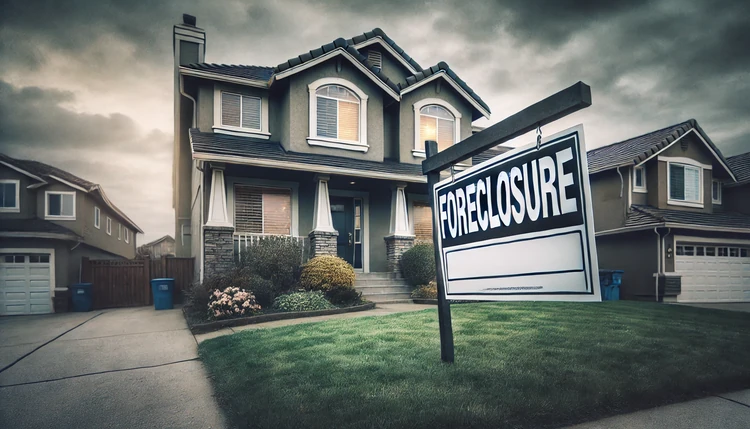
Home foreclosures made a surprising jump in January

During the housing market crash of 2009 there was a surge in foreclosures. Since then, foreclosures have been rare. Until last month.

ATTOM, a curator of real estate data, reports an 8% increase in foreclosure filings compared to the previous month, totaling 30,816 properties. While that’s a significant one-month jump, the company said the numbers reflect a 7% decrease from the same period last year, indicating a complex landscape for foreclosure activity as the year begins.

Rob Barber, CEO of ATTOM, commented on the findings, suggesting that the increase might partly be due to a post-holiday catch-up in filings. 

"It's too early to know if 2025 will shift from the general 2024 trends of a continued decline in foreclosure activity,” Barber said in a press release. “We will keep a close eye on the market to see how interest rates, inflation, employment shifts, and other market dynamics impact foreclosures in 2025." 

The report highlights a monthly increase in completed foreclosures (REO) in 30 states, with lenders repossessing 2,973 properties in January, marking a slight rise from the previous month but a significant 25% drop from the previous year. Notable increases in REOs were observed in Arizona (up 73%), Virginia (up 57%), and South Carolina (up 55%).

Cities with the most filings

Among metropolitan areas with populations over 200,000, Detroit led with 164 REOs, followed by Chicago and Riverside, Calif. The states with the highest foreclosure rates included Delaware, Nevada, and Indiana, with Delaware experiencing one foreclosure filing for every 1,839 housing units.

Foreclosure starts also saw an 8% increase from the previous month, with 20,994 properties entering the foreclosure process. However, this figure represents a 4% decrease from January 2024. Texas, California, and Florida led the nation in foreclosure starts, with significant activity also noted in major metropolitan areas like Chicago, New York, and Houston.

The foreclosures that caused the housing market crash were largely due to subprime mortgages and lax lending standards. It’s not clear what was behind January’s increase.