2024 Inflation and Cost of Living

Article Image

Consumers face rising utility bills, with costs up 3% in 2024

In many parts of the U.S. consumers are getting their first cold-weather heating bills. For some, it can be a shock. Fuel oil costs are down nearly 20% in the last 12 months, according to the Consumer Price Index, but other utility costs are up.

A newly released report from doxo shows the average U.S. household now spends $362 per month, marking a 3% increase from the previous year. This analysis, part of doxoINSIGHTS' U.S. Utilities Market Size and Household Spend Report for 2024, found that Americans collectively spend $451 billion a year on utilities, underscoring the growing financial burden on households across the nation.

The report draws on data from 97% of U.S. zip codes, providing a detailed look at household payments for utilities, which include electricity, gas, water, sewer, and waste services. According to the findings, 79% of U.S. households with utility bills spend an average of $362 monthly, equating to $4,344 over 12 months. When averaged across all U.S. households, the annual cost comes to $3,432.

This increase in utility costs coincides with a broader trend of rising electricity prices, which have outpaced inflation rates in 2024, as reported by the U.S. Bureau of Labor Statistics. The U.S. Energy Information Administration forecasts that retail electricity prices will continue to climb across all customer segments in 2025, suggesting that consumers may face even higher bills in the coming months.

An increasing monthly burden

"Americans continue to be hit with factors that impact their utility bills, whether that’s due to the inflation we’ve seen in recent years or the hot temps that drove higher prices over the summer,” said Liz Powell, senior director of INSIGHTS at doxo. “Giving consumers transparency to this data through doxoINSIGHTS empowers them to budget as we head into winter and another peak usage period."

The report also identifies the states and cities with the highest utility bills. Hawaii tops the list with an average monthly bill of $634, followed by Maine and Connecticut. Among U.S. cities, New York leads with a monthly average of $626, with Milwaukee and Pittsburgh also in the top five.

Overall, utility bills account for about 5% of consumers' annual income, highlighting the significant impact of these rising costs on household budgets. Some utility companies offer programs that average the monthly charge over a year, providing lower payments in the summer and winter.

Article Image

Coffee, eggs and toilet paper led inflation at the grocery store in November

Inflation continued at the grocery store in November, but at a slower pace than earlier in the year. The ConsumerAffairs Datasembly Shopping Cart Index, based on the cost of 25 commonly purchased grocery items, increased by 79 cents from October and by $1.50 from November 2023.

The index is based on price data gathered by Datasembly in real-time.

Five items led last month’s increase:

  • Coffee - Increased from $12.80 to $12.98

  • Eggs - Increased from $5.71 to $6.09

  • Frosted donuts - Increased from $5.31 to $5.52

  • Bread - Increased from $3.29 to $3.49

  • Toilet paper - Increased from $7.06 to $7.59

Some prices fell

These four items declined the most in price:

  • Honey nut cereal - Decreased from $5.58 to $5.33

  • Cheese slices - Decreased from $5.46 to $5.37

  • Cookies - Decreased from $6.85 to $6.16

  • Peanut butter - Decreased from $3.27 to $3.19

Several items showed little to no change in year-over-year or month-over-price, including paper towels, white rice and laundry detergent.

The November Shopping Cart Index

Product

Nov. 2023

 Oct. 2024Nov. 2024
Penne Pasta 16 oz.$1.87$1.96$1.91
Select-a-size paper towels$20.99$20.99$20.99
White Albacore tuna in water 5oz.$2.25$2.22$2.20
Chicken noodle soup 10.75 oz.$1.40$1.45$1.44
Cola 2-liter bottle$2.87$2.91$2.94
Whole milk half-gallon$2.61$2.67$2.68
Whole bean coffee 12 oz.$12.39$12.80$12.98
Organic eggs one dozen$5.24$5.71$6.09
Waffles 10 ct. 12.3 oz.$3.15$3.29$3.28
Frosted donuts 8 ct.$5.18$5.31$5.52
Tomato ketchup 20 oz.$3.86$3.90$3.96
Mayonnaise 30 oz.$5.84$6.29$6.29
Honey Nut cereal 18.8 oz.$5.34$5.58$5.33
American cheese single 24 ct.$5.33$5.46$5.37
Salted butter 1 lb.$6.39$6.22$6.21
Classic potato chips 8 oz. bag$4.12$4.01$4.05
Honey wheat bread 20 oz.$3.79$3.29$3.49
Cookies 14.3 oz.$6.50$6.00$6.16
Bacon 16 oz.$8.85$8.32$8.32
Liquid dish detergent 46 oz.$5.57$5.58$5.58
Spring water 16.9 oz. 32 ct.$7.07$7.06$7.59
1000 sheet toilet paper 12 ct.$12.58$12.33$12.70
Peanut butter 16.3 oz.$3.23$3.27$3.19
White rice 32 oz.$5.21$4.87$4.87
Laundry detergent 96 oz.$13.06$13.06$13.05
Cart Totals$154.69$155.40$156.19
Article Image

There was little relief from inflation in March

If you drove a car and paid rent last month, you felt the worst effects of inflation. The Consumer Price Index rose 0.4% in March, the same as February. But rent and gasoline accounted for half of the increase.

 The energy index, which includes gasoline, rose 1.1% – a significant one-month move. The price of gas rose 1.7% and is up 1.3% over the last 12 months.

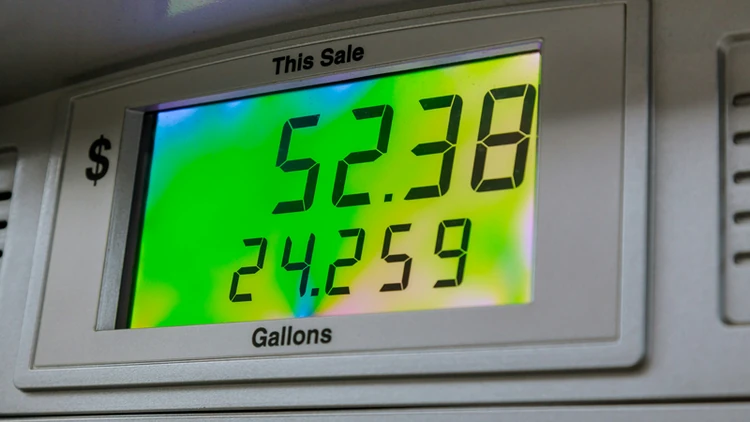
Gasoline prices are rising in concert with oil prices. According to AAA, the national average price of regular gas is $3.61 a gallon, seven cents higher over the last seven days and 22 cents higher than a month ago.

The cost of shelter has risen at least 0.4% per month since November and is 5.7% higher year-over-year. Most of that increase is the result of rising rent.

Some relief

Though it might not feel like it, there is some relief at the supermarket. The cost of groceries showed no increase for a second straight month in March and is up 1.2% over the last 12 months. But it all depends on what you buy.

The cost of fruits and vegetables fell 0.3%, the price of dairy and related products declined by 0.4% and cereal and grain prices fell by 0.6%. But meat, poultry, fish and egg prices jumped by 0.8%.

The cost of food consumed away from home, the government’s category for restaurant meals, continued to be a pain point for diners. Those costs rose 0.3% from February to March and are up more than 4% over the last 12 months.

 The index for limited-service meals rose 0.3% while the index for full-service meals increased 0.2%, suggesting fast food menu prices are rising faster than full-service restaurants.

Article Image

March's Shopping Cart Index fell slightly from February

For once, the story isn't about grocery items that have gone up the most but those that have come down in price.

The March ConsumerAffairs Datasembly Shopping Cart Index declined slightly from February but is up 3.6% over March 2023. The Index is composed of 25 commonly purchased grocery items. Datasembly tracks their price movements in real-time.

The March Shopping Cart checks out at a price of $160.99. That compares to $161.19, the cost of February's Shopping Cart.

Prices of white rice and peanut butter, which were up sharply in February, declined significantly last month. Also, butter and coffee prices were lower by at least 20 cents.

Many other items rose or fell by two or three cents and several items showed stable prices.

The price of cookies was sharply higher, hit by the high costs of sugar and cocoa. Bacon prices were 7% higher and the price of paper towels rose by 2%.

The FebruaryShopping Cart Index

Product

Mar. 2023

Feb. 2024Mar.  2024
Penne Pasta 16 oz.$1.98$1.92$1.93
Select-a-size paper towels$23.99$21.49$23.99
White Albacore tuna in water 5oz.$2.25$2.26$2.26
Chicken noodle soup 10.75 oz.$1.40$1.81$1.43
Cola 2-liter bottle$2.96$2.89$2.89
Whole milk half-gallon$2.73$2.73$2.73
Whole bean coffee 12 oz.$13.74$12.46$12.01
Organic eggs one dozen$6.05$5.45$5.45
Waffles 10 ct. 12.3 oz.$3.19$3.24$3.27
Frosted donuts 8 ct.$5.30$6.37$5.36
Tomato ketchup 20 oz.$3.86$3.79$3.78
Mayonnaise 30 oz.$5.82$6.30$6.33
Honey Nut cereal 18.8 oz.$5.37$5.55$5.57
American cheese single 24 ct.$5.54$5.48$5.49
Salted butter 1 lb.$5.81$5.94$5.73
Classic potato chips 8 oz. bag$4.12$3.90$3.93
Honey wheat bread 20 oz.$3.49$3.79$3.79
Cookies 14.3 oz.$4.01$7.93$9.92
Bacon 16 oz.$7.14$7.57$8.12
Liquid dish detergent 46 oz.$5.57$5.59$5.59
Spring water 16.9 oz. 32 ct.$7.52$7.67$7.67
1000 sheet toilet paper 12 ct.$12.23$12.27$12.26
Peanut butter 16.3 oz.$2.97$5.35$3.31
White rice 32 oz.$5.16$6.10$5.19
Laundry detergent 96 oz.$13.09$13.09

$13.09

Cart Totals$155.29$161.19

$160.99

Article Image

Gold prices continue their record run

After chip stocks, the best bet on Wall Street in the first quarter of 2024 has been the price of gold. The precious metal, which began to rally in mid to late 2023, breached a new record Monday at $2,262.19 an ounce.

SPDR Gold Shares, the ETF that tracks the price of gold and which many investors use to purchase gold, has risen 8.5% over the last three months.

What’s behind the rally? The same reason many stock prices are also climbing. The latest inflation data reinforces the belief that the Federal Reserve will cut interest rates as early as June. Analysts say lower interest rates make gold more attractive because fixed-income assets are less attractive.

Alex Ebkarian, COO and co-founder of Los Angeles-based Allegiance Gold, recently told ConsumerAffairs that gold also performs well in times of high inflation and the threat of recession – two other economic possibilities that can’t be completely ruled out. And then, there’s supply and demand.

“Gold’s finite supply and the worldwide demand for it by central banks, and even the perceived demand for it by BRICS nations, will keep the price of gold elevated in 2024,”Ebkarian said.

Optimism from the Fed

Gold investors also took heart from Fed Chairman Jerome Powell’s comments on Friday, when key inflation data came in a bit less than expected. Powell said the data for February was “more along the lines of what we want to see.”

Before rushing out to buy gold, however, it’s a good idea to do some research and get advice from a trusted and objective financial adviser. Robert Johnson, professor of finance at the Heider College of Business, at Creighton University, says there is an opportunity cost of investing in gold, since over time stocks tend to appreciate at a faster rate.

“While having a small position in precious metals may dampen portfolio volatility in the short-run, the tradeoff between slightly dampened volatility and the lost long-term return is certainly not a prudent one, particularly for Gen Z/millennials with long investing time horizons,” Johnson said.

Before selecting a gold broker, investors might want to check out what the experts at ConsumerAffairs found when they looked into the best gold brokers.

Article Image

Guess how much you're paying for just 10 essential items

The monthly Consumer Price Index (CPI) measures price movements for just about every consumer expense in the economy. But for the average family, how much has the price of essentials – the money you have to spend each month – gone up? Probably more than you think.

A recent report, doxo’s 2024 U.S. Household Bill Pay Report, shows the cost of living for the average family has risen 4% in the last 12 months, higher than the 3.2% measured by the February CPI.

The report found that the average U.S. household spends $25,513 per year, or 34% of income on the 10 most essential household bills, and also breaks out the household spending market size for each of these bill categories, percentage of households that pay each bill, and average monthly and annual bill pay costs by state.

The researchers estimate consumers spend $3.35 trillion annually on these 10 essential expenses. It is worth noting that neither food nor gasoline, things most families spend on each week, are included in the 10 essential items.

10 essential items

Here is doxo’s list of essential items, with the estimated total annual expenditure:

  • $885B Mortgage 

  • $656B Rent

  • $571B Auto Loan

  • $451B Utilities

  • $271B Auto Insurance

  • $180B Mobile Phone

  • $156B Cable & Internet

  • $133B Health Insurance (consumer-direct portion)

  • $34B Life Insurance

  • $17B Alarm & Security

The average monthly amount of each bill paid in each category is:

Bill Category

Average Monthly Bill Payment

Mortgage

$1,402

Rent

$1,300

Auto Loan

$496

Utilities

$362

Auto Insurance

$209

Health Insurance

$114

Cable & Internet

$122

Mobile Phone

$121

Alarm & Security

$85

Life Insurance

$87

“While we’re starting to see an overall cooling of inflation, American sentiment towards their own financial health remains bleak,” said Liz Powell, senior director of Insights at doxo. “Seventy percent of American consumers report they’re still worried about their financial well-being despite a stabilizing economy.”

Article Image

Five expenses are probably causing consumers the most pain

February’s Consumer Price Index (CPI) rose more than expected but inflation over the last 12 months has moderated, rising at a rate of 3.2%. But some things that consumers pay for regularly have gone up a lot more, and these expenses may be causing the most pain.

Car insurance, car repair and maintenance, renting or owning a home, pet care and child care are steadily increasing, putting a dent in most household budgets.

One of the biggest pain points is car insurance. Over the last 12 months, the cost of insuring a motor vehicle has shot up by 20%. It didn’t go down in February, rising 0.9%.

Industry experts point to several reasons for the increase. They say there are more serious traffic accidents and the costs of parts and labor to have risen. When vehicles are a total loss, the costs of replacing them are also higher.
And it costs more to keep them running

Not only is it costing more to insure cars and trucks, but repair and maintenance costs have risen 6.7% since February 2023. Those costs were up 0.4% in February.

Next is shelter, which rose in cost by 0.4% last month and is 5.7% higher than February 2023. Renters faced a 0.4% one-month increase with rents up 5.8% year-over-year. 

Shelter wasn’t any cheaper for homeowners. Owners’ equivalent of rent expense rose 0.4% for the month and is 6% higher than a year ago.

The cost of caring for a pet is also still rising. Veterinarian services rose 0.9% last month and are up 7.9% yearly.

Caring for children also costs more. Childcare services are lumped in with tuition and school fees, all of which went up 0.4% in February and are 3% higher on the year.

While it’s true that some costs have actually gone down – like airfares – they aren’t costs that consumers usually have to pay each month.

Article Image

The price of rice and peanut butter surged last month

If grocery shoppers avoided just a few items last month, they likely saved money. But if they stocked up on white rice, peanut butter and frosted donuts, they paid a lot more.

The February ConsumerAffairs Datasembly Shopping Cart Index rose from $157.65 in January to $161.19 in February, an increase of 0.02%. Three items accounted for most of the rise.

The price of peanut butter surged 33%, frosted donuts cost 20% more while white rice prices rose 17.3%. Datasembly collects retail grocery price data in real time.

But prices of other grocery items have begun to fall. Shoppers paid less for whole bean coffee, salted butter, potato chips and bacon.

The FebruaryShopping Cart Index

Product

Feb. 2023

Jan. 2024Feb.  2024
Penne Pasta 16 oz.$1.98$1.92$1.92
Select-a-size paper towels$21.34$21.49$21.49
White Albacore tuna in water 5oz.$2.26$2.26$2.26
Chicken noodle soup 10.75 oz.$1.40$1.42$1.81
Cola 2-liter bottle$2.91$3.11$2.89
Whole milk half-gallon$2.73$2.73$2.73
Whole bean coffee 12 oz.$14.20$12.56$12.46
Organic eggs one dozen$6.36$5.45$5.45
Waffles 10 ct. 12.3 oz.$3.14$3.18$3.24
Frosted donuts 8 ct.$5.28$5.28$6.37
Tomato ketchup 20 oz.$3.80$3.80$3.79
Mayonnaise 30 oz.$6.10$6.10$6.30
Honey Nut cereal 18.8 oz.$5.33$5.56$5.55
American cheese single 24 ct.$5.54$5.49$5.48
Salted butter 1 lb.$6.01$6.32$5.94
Classic potato chips 8 oz. bag$3.93$4.13$3.90
Honey wheat bread 20 oz.$3.49$3.79$3.79
Cookies 14.3 oz.$4.56$6.91$7.93
Bacon 16 oz.$7.85$7.84$7.57
Liquid dish detergent 46 oz.$5.59$5.59$5.59
Spring water 16.9 oz. 32 ct.$7.52$7.67$7.67
1000 sheet toilet paper 12 ct.$12.22$12.74$12.27
Peanut butter 16.3 oz.$2.97$4.02$5.35
White rice 32 oz.$5.15$5.20$6.10
Laundry detergent 96 oz.$13.10$13.09

 $13.09

Cart Totals$154.68$157.65

 $161.19

Article Image

Some grocery prices are still on the rise

Consumers are still spending more at the grocery store, and though inflation has cooled in recent weeks the latest Consumer Price Index (CPI) is still showing rising grocery prices. 

The CPI breaks down the cost of food into two categories – food at home, which accounts for groceries, and food away from home, which includes restaurants, fast food, take out, etc. 

Overall, the price of food at home has gone up 2.6% over the last 12 months. On top of that, the cost of food at home increased 0.4% between December 2023 and January 2024, which is the highest single-month increase in the last year. 

What prices have gone up?

The CPI has six categories under the “food at home” umbrella: cereals and bakery products; meats, poultry, fish, and eggs; dairy and related products; fruits and vegetables; nonalcoholic beverages and beverage materials; and other food at home, which consists of fats and oils, sugars and sweets, and other foods. 

As of January 2024, four of the six categories saw price hikes. One category saw a price decline – cereals and bakery products – while one category remained without a price change – meats, poultry, fish and eggs. 

That leaves four categories with price increases. Nonalcoholic drinks took the lead with price hikes, as this category went up 1.2% in January. This is a whole point higher from the previous month, when prices had gone up 0.2%. 

The CPI breaks down the categories even further to get specific about monthly cost changes of individual items. For instance, in the nonalcoholic drinks category, frozen noncarbonated juices and drinks had the biggest price increase at 9.9%. Instant coffee, at 1.8%, came in second, while carbonated drinks and juices saw 1.6% and 1.4% price hikes, respectively. 

Dairy and related products had the lowest price increase at 0.2%. Additionally, the “other food at home” category went up 0.6%, while fruits and vegetables went up 0.4% in January. 

More price increases over 1% in January include spices, seasonings, condiments, and sauces; soups; margarine; sugar and sweets; processed fruits and vegetables; fresh vegetables; tomatoes; lettuce; cheese and related products; eggs; and hotdogs. 

Is it all bad news?

While grocery prices went up overall in January, there were some areas where prices dropped throughout the month. Several categories saw price decreases over 1%, including: 

  • Flour and prepared flour mixes

  • Fresh cakes and cupcakes

  • Crackers, bread, and cracker products

  • Uncooked ground beef

  • Bacon and related products

  • Ham

  • Fish and seafood

  • Fresh whole milk

  • Ice cream and related products

  • Fresh fruits

Article Image

Mortgage rates are rising again. What are your options?

The months-long trend of falling mortgage rates has come to an end, at least temporarily. After bottoming around 6.5%, Freddie Mac has reported a recent reversal.

"On the heels of consumer prices rising more than expected, mortgage rates increased last week,” said Sam Khater, Freddie Mac’s chief economist. “The economy has been performing well so far this year and rates may stay higher for longer, potentially slowing the spring homebuying season. According to our data, mortgage applications to buy a home so far in 2024 are down in more than half of all states compared to a year earlier.”

The 30-year fixed-rate mortgage averaged 6.77% as of February 15, 2024, up from the previous week when it averaged 6.64%. A year ago at this time, the 30-year rate averaged 6.32%.

The 15-year fixed-rate mortgage averaged 6.12%, up from the previous week when it averaged 5.90%. A year ago at this time, the 15-year rate averaged 5.51%.

Rising rates make it more difficult to find a house with an affordable mortgage payment. Lenders appear to have hiked rates in response to January’s hotter-than-expected Consumer Price Index (CPI), which means the Federal Reserve may keep rates higher for longer.

The jump in mortgage rates comes just as the spring homebuying season is set to get underway, timing that is bad for both buyers and sellers. But buyers may have some options.

What to do

If the seller is highly motivated, they may be willing to “buy down” the mortgage rates by “paying points” at closing. This was common practice in the 1980s and 1990s, when mortgage rates were high.

Most states offer some type of homebuying assistance. You can check your state here. Some of these programs offer down payment assistance, as well as educational resources to find the right loan.

In a rising interest rate environment, it also is critically important to shop around for the best mortgage with the best term. The best mortgage lenders offer a well-rounded approach for customers. 

Competitive interest rates and fees, a variety of mortgage products, a straightforward process, and wide availability are a few of the qualities most helpful to homebuyers and those who are refinancing.

ConsumerAffairs has a buyer’s guide to help home buyers find the best lenders with the best rates.

Article Image

Rent and restaurants are keeping inflation ‘sticky’

Inflation is still “sticky” as the Labor Department’s Consumer Price Index (CPI) didn't fall as much as expected in January. Prices rose 0.3% last month for an annual inflation rate of 3.1%.

That’s down from December’s 3.4% inflation rate but economists were expecting the annual rate to drop below 3%. Two reasons it didn’t are rent and restaurant meals.

The cost of shelter rose 0.6% in January and is up 6% over the last 12 months. That increase accounted for two-thirds of January’s CPI increase.

While grocery prices are rising at a much slower rate the cost of food consumed away from home – mostly at restaurants – continues to rise at a faster pace. The cost of food consumed away from home increased 0.5% from December and is 5.1% higher year-over-year.

Some groceries are getting cheaper

Grocery shoppers saw higher prices for cereals, produce and bakery products last month but there were significant price declines for meat, poultry, fish, eggs and dairy products.

At restaurants, menu prices rose faster at fast food and fast casual places than at full-service restaurants.

A few things cost less last month. Consumers paid a lot less for energy in January. Natural gas prices are down more than 17% year-over-year while fuel oil prices have declined more than 14% during the same period.

Used car prices also declined, falling 3.4% in just 30 days. For the year, used vehicle prices are down 3.5%. New car prices were flat for the month and are up only 0.7% in the last 12 months.

Oliver Rust, head of Product at independent economic data provider Truflation, says the January CPI was a surprise.

“We expected a much more pronounced fall,” Rust said. “This small decline is out of line with the typical seasonal trend, which tends to see a spending slump following December’s exuberant consumption.”

Article Image

Inflation continued to cool at the grocery store in January

Inflation eased a bit at the grocery store in January. The ConsumerAffairs Datasembly Shopping Cart Index, based on 25 commonly purchased grocery items, rose just $0.67 from December.

But the Index was up $5.52 over January 2023. That's an annual increase of 3.6%.

Many grocery items didn't change much at all. Most of the increase can be traced to just three items.

The price of a 2-liter bottle of cola rose from $2.87 in December to $3.11 in January. It was $2.72  in January 2023.

A 30 oz. jar of mayonnaise cost $5.85 in December -- and in January 2023 -- but sold for $6.10 last month.

The price of a 16.3 oz. jar of peanut butter cost $3.31 in December but rose to $4.02 in January -- a 2.1% increase in just one month.

Meanwhile, the price of some items continued to fall. A 16 oz. package of bacon cost $7.84 last month, down from $8.26  in December. The price of a 12 oz. package of whole bean coffee last month was $12.56, down from $12.91 in December. It's down 1.2% from January 2023.

The Shopping Cart Index

Product

Jan. 2023

Dec. 2023Jan. 2024
Penne Pasta 16 oz.$1.97$1.93$1.92
Select-a-size paper towels$21.34$21.57$21.49
White Albacore tuna in water 5oz.$2.32$2.26$2.26
Chicken noodle soup 10.75 oz.$1.40$1.42$1.42
Cola 2-liter bottle$2.72$2.87$3.11
Whole milk half-gallon$2.73$2.73$2.73
Whole bean coffee 12 oz.$14.41$12.91$12.56
Organic eggs one dozen$3.53$5.36$5.45
Waffles 10 ct. 12.3 oz.$3.12$3.17$3.18
Frosted donuts 8 ct.$5.25$5.27$5.28
Tomato ketchup 20 oz.$3.46$3.84$3.80
Mayonnaise 30 oz.$5.85$5.85$6.10
Honey Nut cereal 18.8 oz.$5.31$5.56$5.56
American cheese single 24 ct.$5.52$5.49$5.49
Salted butter 1 lb.$6.09$6.43$6.32
Classic potato chips 8 oz. bag$3.90$4.13$4.13
Honey wheat bread 20 oz.$3.49$3.79$3.79
Cookies 14.3 oz.$4.67$7.04$6.91
Bacon 16 oz.$8.44$8.26$7.84
Liquid dish detergent 46 oz.$5.57$5.59$5.59
Spring water 16.9 oz. 32 ct.$7.57$7.65$7.67
1000 sheet toilet paper 12 ct.$12.27$12.29$12.74
Peanut butter 16.3 oz.$2.97$3.31$4.02
White rice 32 oz.$5.14$5.19$5.20
Laundry detergent 96 oz.$13.13$13.07

      $13.09

Cart Totals$152.13$156.98

   $157.65

Article Image

Grocery prices fell slightly in December

There was good news for grocery shoppers in December. The cost of groceries, as measured by the ConsumerAffairs Datasembly Shopping Cart Index, declined from November but remains above the December 2022 level.

The index tracks price movements of 25 commonly-purchased grocery products, including both food and non-food items. In December 2022, the 25 items cost $155.34. 

In December 2023, the index totaled $156.98, down from $157.19 the month before, a decline of less than 1%.

The December index would have been significantly lower if not for one item -- a 14.3 oz. package of cookies. The sweets rose in price from $5.67 in November to $7.04 in December, a jaw-dropping 24% increase. The price of that package of cookies is up 53% over December 2022.

Otherwise, price movements were fairly tame. The price of paper towels declined 1% from November to December.

Coffee prices continue to fall. A 12 oz. bag of whole-bean coffee cost $12.91 last month, nearly 2% less than the month before.

The Shopping Cart Index

Product

Dec. 2022

Nov. 2023Dec. 2023
Penne Pasta 16 oz.$1.98$1.92$1.93
Select-a-size paper towels$21.37$21.85$21.57
White Albacore tuna in water 5oz.$2.33$2.26$2.26
Chicken noodle soup 10.75 oz.$1.40$1.41$1.42
Cola 2-liter bottle$2.70$2.87$2.87
Whole milk half-gallon$2.73$2.73$2.73
Whole bean coffee 12 oz.$15.25$13.14$12.91
Organic eggs one dozen$6.16$5.32$5.36
Waffles 10 ct. 12.3 oz.$3.11$3.16$3.17
Frosted donuts 8 ct.$5.25$5.26$5.27
Tomato ketchup 20 oz.$3.43$3.86$3.84
Mayonnaise 30 oz.$5.82$5.86$5.85
Honey Nut cereal 18.8 oz.$5.30$5.56$5.56
American cheese single 24 ct.$5.51$5.49$5.49
Salted butter 1 lb.$6.07$6.42$6.43
Classic potato chips 8 oz. bag$3.89$4.12$4.13
Honey wheat bread 20 oz.$3.49$3.79$3.79
Cookies 14.3 oz.$4.60$5.67$7.04
Bacon 16 oz.$8.60$8.82$8.26
Liquid dish detergent 46 oz.$5.56$5.59$5.59
Spring water 16.9 oz. 32 ct.$7.52$7.59$7.59
1000 sheet toilet paper 12 ct.$12.23$12.92$12.29
Peanut butter 16.3 oz.$2.96$3.31$3.31
White rice 32 oz.$5.14$5.21$5.19
Laundry detergent 96 oz.$12.99$13.06

      $13.07

Cart Totals$155.34$157.19

   $156.98

Article Image

Gold prices slump to begin 2024

Just like stocks, gold priced in U.S. dollars has begun 2024 moving lower. The price has dipped after hitting record highs late last year.

But where does it go from here? No one has a crystal ball but the experts ConsumerAffairs consulted suggest price movement hinges on the geopolitical environment and several economic factors.

Alex Ebkarian, COO and co-founder of Los Angeles-based Allegiance Gold, believes conditions are ripe for gold prices to increase in 2024.

“Economic uncertainty may push gold higher,” Ebkarian told ConsumerAffairs. “Uncertainty makes investors nervous and when investors get nervous, the money goes to gold.”

Ebkarian says investors should look to the Federal Reserve for clues. If the Fed delays its expected rate cuts, he says that’s a sign that inflation is still a concern and that’s bullish for gold.

Liam Hunt. director and analyst at SophisticatedInvestor.com, says any rise in gold prices would likely be driven by continued geopolitical tensions or conflict spillovers in the Middle East, inflationary pressures, or unexpected Fed policies that would boost demand for the yellow metal as a safe-haven asset.

Buying opportunity ahead?

“On the other hand, a pullback in gold prices is more likely to occur than not,” Hunt told us.

“This is because interest rates are expected to start declining in the second quarter of the year, which would see easy money flowing back into more speculative asset classes. Central Bank monetary easing policies, which are anticipated in the months ahead, would likely have a bearish effect on gold prices in the immediate term.”

Robert Johnson, professor of finance at the Heider College of Business at Creighton University, prefers investing in stocks over other types of assets, pointing out their long-term consistent gains.

“Simply put, one should never consider investing in gold if you have a long-term time horizon, as the long-term returns are far below those of equities,” Johnson said. 

But very few personal finance advisors suggest putting all of your eggs in the gold basket. CNBC’s host of “Mad Money,” Jim Cramer, has advocated keeping some money invested in the precious metal as a hedge against inflation. He recently advised his followers to choose gold over cryptocurrency after the spike in Bitcoin drew investors to that digital currency.