Apple News

This living topic covers the latest updates and innovations from Apple, including new product launches, software updates, and security features. The content spans various aspects of Apple's ecosystem, such as the introduction of the iPhone 16 series, Apple Watch Ultra 2, and AirPods 4, as well as new features in iOS 17 and 18. It discusses Apple's advancements in health technology, privacy updates, and the company's efforts to enhance user security. Additionally, it covers issues and resolutions related to Apple products, such as overheating problems with the iPhone 15 Pro and class action lawsuits. The topic also touches on Apple's initiatives in artificial intelligence, digital payments, and consumer protection measures.

Latest

Product News: Apple & Logitech

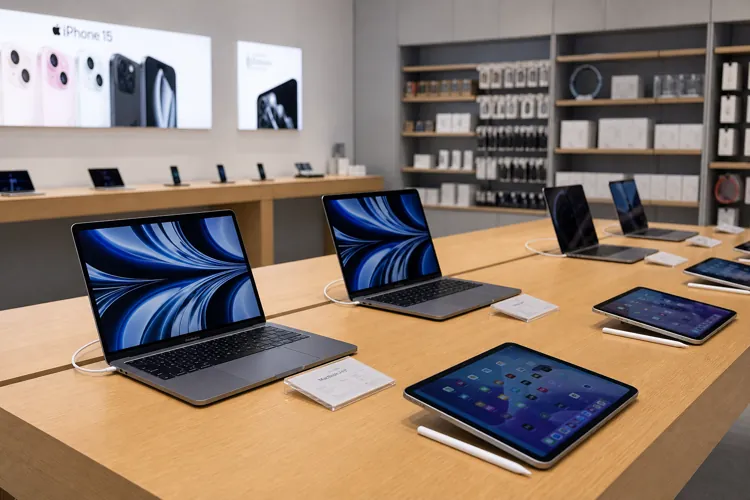
Apple unveils M5 MacBook and iPad; Logitech announces digital pencil

Featured Tech News photo

Apple also introduced the new iPad Pro featuring the M5 chip. Featuring a next-generation GPU with a Neural Accelerator in each core, M5 delivers a big boost in performance for iPad Pro users, whether they’re working on cutting-edge projects or tapping into AI for productivity. The new iPad Pro delivers up to 3.5x the AI performance than iPad Pro with M41 and up to 5.6x faster than iPad Pro with M1.2 N1, the new Apple-designed wireless networking chip, enables the latest...

Read Article
Featured Tech News photo

Article Timeline

Newest
  • Newest
  • Oldest
2025
Article Image

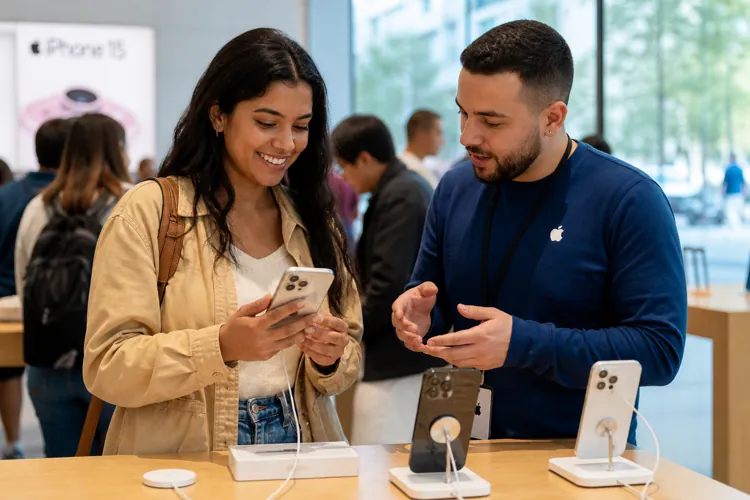
Apple releases new, more affordably-priced iPhone 16e

Apple has announced the latest addition to its product lineup – the iPhone 16e. 

With the new phone, the company is offering a more affordably-priced option for consumers with the same updated features – like a high-quality camera, extended battery life, Apple Intelligence, and more – as the higher-priced iPhones.

“iPhone 16e packs in the features our users love about the iPhone 16 lineup, including breakthrough battery life, fast performance powered by the latest-generation A18 chip, an innovative 2-in-1 camera system, and Apple Intelligence,” Kaiann Drance, Apple’s vice president of Worldwide iPhone Product Marketing, said in a news release.  

“We’re so excited for iPhone 16e to complete the lineup as a powerful, more affordable option to bring the iPhone experience to even more people.”

Is it more affordable? 

The new iPhone 16e will be available in 59 countries starting Friday, February 28, but consumers can begin preordering it as early as Friday, February 21. 

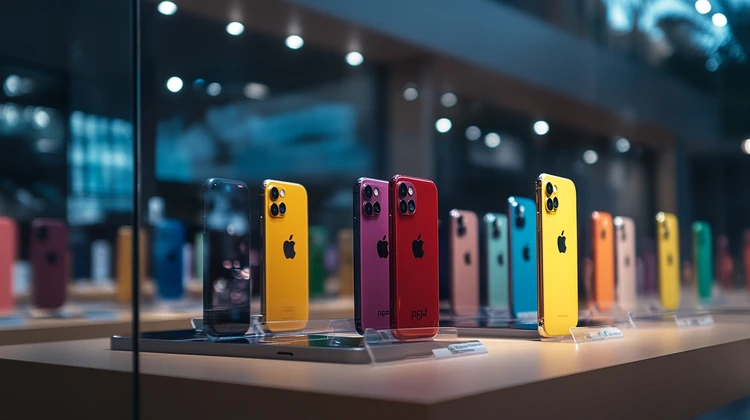
The phone will be available in two matte colors – white and black – and three different storage capacities – 128GB, 256GB, and 512GB. 

The starting price for the iPhone 16e is $599 or $24.95/month for 24 months. Comparatively, the most recently released iPhone 16 starts at $799 or $33.29/month for 24 months, and the iPhone 16 Pro starts at $999 or $41.62/month for 24 months. 

What can consumers expect? 

For many years, Apple had its SE iPhone models, which were smaller, cheaper options for customers. The iPhone 16e builds off of that, while incorporating many of the newer features consumers have come to expect from Apple products. 

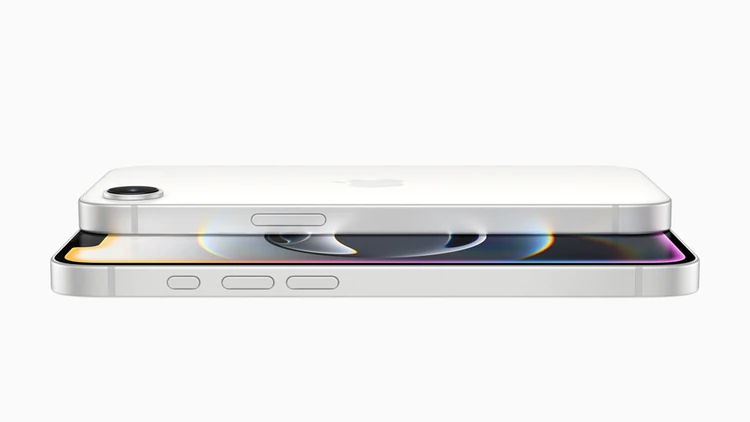
The iPhone 16e has a 6.06-inch screen, which is nearly the same as the traditional iPhone 16, which has a 6.1-inch screen. The updated model also has Face ID, rather than the Home Button, and will operate with the USB-C charging port. 

The new phone will also feature the Action Button, which was a new release on the iPhone 16. Users can customize the Action Button to do a number of things with the tap of a button – switch between ring and silent modes, activate voice memos, quickly open the camera or flashlight, and more. 

Also similar to the latest iPhone releases, the iPhone 16e is built with the A18 chip, which makes it compatible with Apple’s latest artificial intelligence features and satellite features when the user is out of cell reception range. 

The new phone has only one camera on the back, as opposed to two or three like some of the other new releases, and it doesn’t have the camera activation button. However, users will be able to access Portrait Mode and Night Mode with the iPhone 16e. 
Apple has announced the latest addition to its product lineup – the iPhone 16e. With the new phone, the company is offering a more affordably-priced op...

Article Image

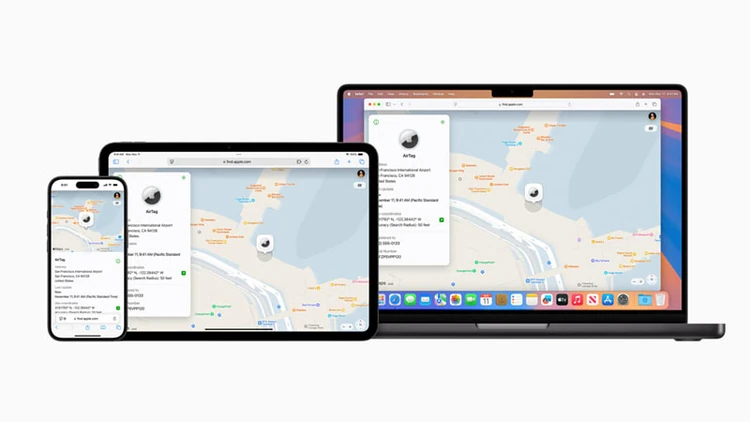
Apple AirTags add battery warning after violation

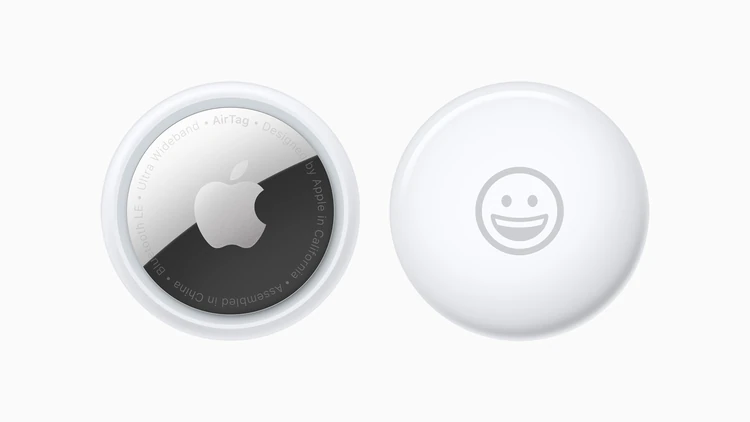
Apple added a warning label to its AirTag tracking devices on the dangers of children swallowing them, following a violation of the law, the Consumer Product Safety Commission said Thursday.

Since Oct. 2023, Reese's Law and CPSC regulations requires that all products with coin or button-cell batteries ensure the batteries are kept secure from children and carry warnings that they can be fatal if swallowed.

The tiny batteries can burn through a child's throat or esophagus in as little as two hours after being swallowed, the CPSC said.

From 2011 through 2021, the CPSC said swallowing the batteries caused around 54,300 injuries treated in emergency rooms and 27 deaths.

The CPSC said that Apple AirTags, which can be kept with luggage, bags or electronics to track their location, imported before March 19, 2024 didn't have the required warnings, but did meet requirements on keeping the batteries secure.

Apple has now added a warning symbol inside the battery compartment and changed its box to include the required warning statements and symbols, the CPSC said.

The CPSC said Apple has also updated the instructions in its Find My app each time a user is asked to change the battery to include a warning about the dangers of coin or button-cell batteries.

Apple didn't immediately respond to ConsumerAffair's request for comment.

Apple added a warning label to its AirTag tracking devices on the dangers of children swallowing them, following a violation of the law, the Consumer Produ...

2024
Article Image

Porch pirates are swiping iPhones almost as fast as they are delivered

If a new iPhone is on your Christmas list, there’s something you should know. Porch pirates may have hacked into AT&T tracking data to swipe the devices almost as soon as they are delivered.

CNET, a technology website, reports there appears to be a correlation between iPhones ordered from AT&T and delivered by FedEx and the rash of iPhone thefts. According to the report, the thefts have mostly occurred on the East Coast in New York, Massachusetts, Florida, Texas, Virginia, Georgia and Pennsylvania.

In a few cases, the thieves – mostly teens and young adults – have been nabbed. They reportedly followed the delivery vehicle and grabbed the packages seconds after they were delivered.

It’s not clear how they knew what was in the package or if it continued something valuable, but CNET says there could be two ways. 

“First, these thieves are somehow getting tracking numbers or similar tracking information for iPhone deliveries, so they get real-time updates about when and where packages are delivered, allowing them to swoop in the moment the package status changes,” CNET said in its report.

The second way could be just as important. AT&T apparently does not require a signature for high-value items that are delivered to doorsteps. The driver drops off the package and leaves.

How to protect yourself

AT&T hasn’t commented on the speculation but consumers ordering an iPhone or anything of value should take steps to protect their purchases. The best protection is to have the package delivered to a secure location, such as where you work.

If possible, request that the delivery company obtain a signature and not simply drop it off on the porch.

Some retailers, such as Walgreens and Dollar General, accept packages delivered by FedEx. If there is a store near you, that could be an option.

Installing a security camera may not provide that much protection. Thieves usually cover their face and cameras don’t seem to deter them. And if they are able to track the delivery with inside information, they – and the package – are gone in a flash.

If a new iPhone is on your Christmas list, there’s something you should know. Porch pirates may have hacked into AT&T; tracking data to swipe the devices a...

Article Image

Feds fine Apple, Goldman Sachs for problems with Apple Card

Today, the Consumer Financial Protection Bureau (CFPB) took action against Apple and Goldman Sachs for problems that affected hundreds of thousands of Apple Card users.

The CFPB found that Apple didn’t properly forward tens of thousands of customer complaints about disputed Apple Card transactions to Goldman Sachs. When Apple did send complaints, Goldman Sachs didn’t follow federal rules for investigating them.

Apple and Goldman Sachs launched the Apple Card even though Goldman Sachs had been warned about technical problems with the system. As a result, many consumers had to wait a long time to get their money back for disputed charges, and some had incorrect negative information added to their credit reports.

Both companies fined

The CFPB is ordering Goldman Sachs to pay at least $19.8 million to affected customers and a $45 million fine. Apple is being fined $25 million. The CFPB is also banning Goldman Sachs from launching a new credit card unless they can prove they will follow the law.

The CFPB also found that Apple and Goldman Sachs misled customers about interest-free payment plans for Apple devices. Many customers thought they were automatically getting interest-free payments when using Apple Card to buy Apple devices, but instead, they were charged interest. Sometimes, the interest-free option wasn’t even shown on Apple’s website, depending on the browser being used.

Additionally, Goldman Sachs misled some customers about how refunds would be applied, which resulted in extra interest charges.

"Apple and Goldman Sachs broke the law by failing to meet their obligations to Apple Card customers," said CFPB Director Rohit Chopra. "Big Tech and big Wall Street companies must follow the law like everyone else."

Goldman Sachs is one of the largest financial institutions globally, mostly focusing on investment banking. Apple Card was its first major step into credit card lending. Apple, a multinational tech company, began offering financial services in 2014, including Apple Card, which launched in partnership with Goldman Sachs in 2019. This partnership helped Apple boost sales of its expensive devices by offering financing options.

Goldman Sachs was warned

Before the Apple Card launched, Goldman Sachs was warned that the system for handling customer complaints wasn’t ready, but both companies pushed ahead anyway. This led to serious issues with how customer disputes were handled, such as Apple not passing along some disputes to Goldman Sachs and Goldman Sachs failing to investigate others properly. Misleading marketing also caused confusion about the interest-free payment plan for Apple devices.

The CFPB is holding both companies accountable for their actions by fining them and demanding better practices in the future.

Today, the Consumer Financial Protection Bureau (CFPB) took action against Apple and Goldman Sachs for problems that affected hundreds of thousands of Appl...

Article Image

Apple's new AirPod hearing health feature getting good reviews

In Apple’s September product rollout, it introduced a new set of AirPods, the AirPods Pro 2. Among the new features, the company promised clinical-grade hearing aid functionality, a user-friendly hearing test, and better hearing protection.

Those new features will be activated next week and the media outlets that got a sneak listen are in near agreement that the features live up to the billing. According to The Verge, a technology website, the release could “mark a watershed moment for hearing health awareness.”

“Apple is about to instantly turn the world’s most popular earbuds into an over-the-counter hearing aid,” the Verge reviewer wrote.

Ashley Capoot wrote at CNBC.com that she tested the technology and it “saved me a long-overdue trip to the audiologist.”

The Airpods Pro 2 is the latest version of Apple’s Bluetooth headphones introduced two years ago. The latest version sells for $249. Apple calls it “the world’s first all-in-one hearing health experience” and says it will be available with a free software update to iOS18.1.

Here’s how Apple says it will work

Pro-level Active Noise Cancellation and the in‑ear seal on your AirPods Pro 2 simulate the conditions needed to evaluate and provide you with insights into your hearing. Just find a quiet, comfortable place and launch the test from your AirPods settings or the Health app. The system will automatically check the fit of your AirPods Pro 2 and assess background noise levels before getting started.

When you hear the tones, you tap the screen. Some animations, tap‑back effects, and progress indicators guide you through the experience, which takes about five minutes. 

You will get immediate results. After completing the test, you will see a personalized profile with results and insights about your hearing. If you have little to no loss, but could still benefit from hearing certain frequencies more clearly, you’ll be able to adjust your Media Assist settings for enhanced audio on media and calls. And if you have mild to moderate hearing loss, you’ll be prompted to set up the Hearing Aid feature.

The National Institute on Deafness and Other Communication Disorders estimates that only 25% of Americans who could benefit from hearing aids actually use them. Over-the-counter hearing aids were approved last year, but according to the Wall Street Journal, these low-cost options are being returned at high rates, due to a lack of satisfaction.

In Apple’s September product rollout, it introduced a new set of AirPods, the AirPods Pro 2. Among the new features, the company promised clinical-grade he...