2024 Apple News

Article Image

Porch pirates are swiping iPhones almost as fast as they are delivered

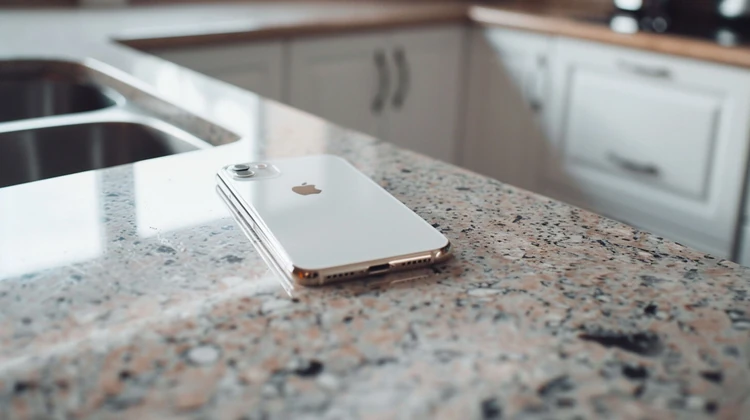
If a new iPhone is on your Christmas list, there’s something you should know. Porch pirates may have hacked into AT&T tracking data to swipe the devices almost as soon as they are delivered.

CNET, a technology website, reports there appears to be a correlation between iPhones ordered from AT&T and delivered by FedEx and the rash of iPhone thefts. According to the report, the thefts have mostly occurred on the East Coast in New York, Massachusetts, Florida, Texas, Virginia, Georgia and Pennsylvania.

In a few cases, the thieves – mostly teens and young adults – have been nabbed. They reportedly followed the delivery vehicle and grabbed the packages seconds after they were delivered.

It’s not clear how they knew what was in the package or if it continued something valuable, but CNET says there could be two ways. 

“First, these thieves are somehow getting tracking numbers or similar tracking information for iPhone deliveries, so they get real-time updates about when and where packages are delivered, allowing them to swoop in the moment the package status changes,” CNET said in its report.

The second way could be just as important. AT&T apparently does not require a signature for high-value items that are delivered to doorsteps. The driver drops off the package and leaves.

How to protect yourself

AT&T hasn’t commented on the speculation but consumers ordering an iPhone or anything of value should take steps to protect their purchases. The best protection is to have the package delivered to a secure location, such as where you work.

If possible, request that the delivery company obtain a signature and not simply drop it off on the porch.

Some retailers, such as Walgreens and Dollar General, accept packages delivered by FedEx. If there is a store near you, that could be an option.

Installing a security camera may not provide that much protection. Thieves usually cover their face and cameras don’t seem to deter them. And if they are able to track the delivery with inside information, they – and the package – are gone in a flash.
Article Image

Feds fine Apple, Goldman Sachs for problems with Apple Card

Today, the Consumer Financial Protection Bureau (CFPB) took action against Apple and Goldman Sachs for problems that affected hundreds of thousands of Apple Card users.

The CFPB found that Apple didn’t properly forward tens of thousands of customer complaints about disputed Apple Card transactions to Goldman Sachs. When Apple did send complaints, Goldman Sachs didn’t follow federal rules for investigating them.

Apple and Goldman Sachs launched the Apple Card even though Goldman Sachs had been warned about technical problems with the system. As a result, many consumers had to wait a long time to get their money back for disputed charges, and some had incorrect negative information added to their credit reports.

Both companies fined

The CFPB is ordering Goldman Sachs to pay at least $19.8 million to affected customers and a $45 million fine. Apple is being fined $25 million. The CFPB is also banning Goldman Sachs from launching a new credit card unless they can prove they will follow the law.

The CFPB also found that Apple and Goldman Sachs misled customers about interest-free payment plans for Apple devices. Many customers thought they were automatically getting interest-free payments when using Apple Card to buy Apple devices, but instead, they were charged interest. Sometimes, the interest-free option wasn’t even shown on Apple’s website, depending on the browser being used.

Additionally, Goldman Sachs misled some customers about how refunds would be applied, which resulted in extra interest charges.

"Apple and Goldman Sachs broke the law by failing to meet their obligations to Apple Card customers," said CFPB Director Rohit Chopra. "Big Tech and big Wall Street companies must follow the law like everyone else."

Goldman Sachs is one of the largest financial institutions globally, mostly focusing on investment banking. Apple Card was its first major step into credit card lending. Apple, a multinational tech company, began offering financial services in 2014, including Apple Card, which launched in partnership with Goldman Sachs in 2019. This partnership helped Apple boost sales of its expensive devices by offering financing options.

Goldman Sachs was warned

Before the Apple Card launched, Goldman Sachs was warned that the system for handling customer complaints wasn’t ready, but both companies pushed ahead anyway. This led to serious issues with how customer disputes were handled, such as Apple not passing along some disputes to Goldman Sachs and Goldman Sachs failing to investigate others properly. Misleading marketing also caused confusion about the interest-free payment plan for Apple devices.

The CFPB is holding both companies accountable for their actions by fining them and demanding better practices in the future.

Article Image

Apple's new AirPod hearing health feature getting good reviews

In Apple’s September product rollout, it introduced a new set of AirPods, the AirPods Pro 2. Among the new features, the company promised clinical-grade hearing aid functionality, a user-friendly hearing test, and better hearing protection.

Those new features will be activated next week and the media outlets that got a sneak listen are in near agreement that the features live up to the billing. According to The Verge, a technology website, the release could “mark a watershed moment for hearing health awareness.”

“Apple is about to instantly turn the world’s most popular earbuds into an over-the-counter hearing aid,” the Verge reviewer wrote.

Ashley Capoot wrote at CNBC.com that she tested the technology and it “saved me a long-overdue trip to the audiologist.”

The Airpods Pro 2 is the latest version of Apple’s Bluetooth headphones introduced two years ago. The latest version sells for $249. Apple calls it “the world’s first all-in-one hearing health experience” and says it will be available with a free software update to iOS18.1.

Here’s how Apple says it will work

Pro-level Active Noise Cancellation and the in‑ear seal on your AirPods Pro 2 simulate the conditions needed to evaluate and provide you with insights into your hearing. Just find a quiet, comfortable place and launch the test from your AirPods settings or the Health app. The system will automatically check the fit of your AirPods Pro 2 and assess background noise levels before getting started.

When you hear the tones, you tap the screen. Some animations, tap‑back effects, and progress indicators guide you through the experience, which takes about five minutes. 

You will get immediate results. After completing the test, you will see a personalized profile with results and insights about your hearing. If you have little to no loss, but could still benefit from hearing certain frequencies more clearly, you’ll be able to adjust your Media Assist settings for enhanced audio on media and calls. And if you have mild to moderate hearing loss, you’ll be prompted to set up the Hearing Aid feature.

The National Institute on Deafness and Other Communication Disorders estimates that only 25% of Americans who could benefit from hearing aids actually use them. Over-the-counter hearing aids were approved last year, but according to the Wall Street Journal, these low-cost options are being returned at high rates, due to a lack of satisfaction.

Article Image

Apple faces antitrust suit, claiming its policies harm consumers

The U.S. Justice Department and several states have filed an antitrust lawsuit against Apple, claiming the tech giant is monopolizing the smartphone market.

Specifically, the complaint claims Apple has stifled competition through a number of means, such as highly restrictive app store rules, excessive fees and keeping competitors at bay with its own technology that is not that competitive with products from other brands.

As for Apple, the company denied the charges in the lawsuit and said it would fight them in court.

“At Apple, we innovate every day to make technology people love – designing products that work seamlessly together, protect people’s privacy and security, and create a magical experience for our users,” the company said in its statement. “This lawsuit threatens who we are and the principles that set Apple products apart in fiercely competitive markets.”

Ironically, when Steve Jobs introduced the iPhone in 2007 he never envisioned that there would be any competitors. During his announcement, he stressed that the company had nailed down all the patents and that Apple’s product would be unique.

Apple filed suit when Google introduced the Android system but did not prevail in court. Even so, the current suit claims Apple’s dominance in the market is not good for consumers.

The charges

“Apple undermines apps, products, and services that would otherwise make users less reliant on the iPhone,” the Justice Department said in a statement. “Apple exercises its monopoly power to extract more money from consumers, developers, content creators, artists, publishers, small businesses, and merchants.”

As an example, the Justice Department said iPhone users are able to send sharp, high-resolution photos and videos to other iPhone, but when the same messages are sent to an Android device they are grainy and take longer to send. When Apple changed how images were sent, the Justice Department said the improvements did not go far enough.

California one of the states filing suit

“Apple’s anticompetitive conduct intentionally leaves consumers bearing the cost of sky-high smartphone prices at a time when smartphones are now essential to so much of our day-to-day lives,” said California Attorney General Ron Bonta, one of the parties to the lawsuit. California’s economy thrives on entrepreneurship, serving as a driving force behind its innovation and growth. Consumers, innovation, and the competitive process — not Apple alone — should decide what options consumers should have.” 

The lawsuit alleges Apple violated Section Two of the Sherman Antitrust Act, which prohibits monopolization and attempted monopolization. Monopolization occurs when a single firm maintains a monopoly unlawfully, by using its control of the market to exclude rivals and harm competition. 

The complaint alleges that Apple protects its monopoly by delaying, degrading, or outright blocking technologies that would bring competition by decreasing barriers to switching to another smartphone. 

Article Image

Apple Sports is a new, free app for sports fans

iPhone users have a new app at their disposal the next time they want to check the score of their favorite team’s game. 

Apple has released a new, free sports app, Apple Sports, that features real-time score updates, stats, and more. 

“We created Apple Sports to give sports fans what they want – an app that delivers incredibly fast access to scores and stats,” said Eddy Cue, Apple’s senior vice president of Services. “Apple Sports is available for free in the App Store, and makes it easy for users to stay up to date with their favorite teams and leagues.”

What’s featured in the new app?

Apple Sports is currently available to download for free on all iPhones using iOS 17.2 or later. Apple is prioritizing simplicity and speed with the new app; its biggest goal is getting sports fans the information they want as quickly and easily as possible. 

Currently, the app will have score and stats updates for all professional leagues in-season, including: 

  • MLS

  • NBA

  • NCAA Basketball (men’s and women’s)

  • NHL

  • Bundesliga

  • LaLiga

  • LigaMX

  • Ligue 1

  • Premier League

  • Serie A

Fully customizable

In the upcoming seasons, iPhone users can expect to also get updates on: MLB, NFL, NCAAF, NWSL, and WNBA. 

Within the app, users will be able to customize their view based on their preferences. They’ll be able to follow their favorite leagues, teams, and tournaments, which puts all of the latest content for their favorites front and center. 

Apple Sports will also feature information on specific plays, lineup details, live betting odds – which can be turned off, and stats. Users will be able to get live play-by-play analysis, and get information on current and upcoming games. 

The app will also connect with other Apple apps, like News and and Apple TV, allowing users to easily navigate between all of them. 

iPhone users in the U.S., U.K., and Canada can download Apple Sports in the App Store now.