2022 Apple News

Article Image

The new iPhones are here. Are they worth the time and trouble? ConsumerAffairs gets an expert’s opinion.

The new Apple iPhones (14, 14 Plus, and 14 Pro) have landed. Do they meet all the “magical,” “groundbreaking,” “innovative” superlatives that Apple promised? Does anyone really care?

ConsumerAffairs asked DealNews’ Consumer Analyst, Julie Ramhold, to give us her takeaway – from pricing to when the right time to buy is. Here’s what she had to say…

Lackluster interest pre-event

Headed into the event, a recent DealNews.com poll found that a slim 6.6% of readers planned to buy the new iPhone 14 the moment it dropped, but 70% said they probably wouldn’t buy it at all. Why is that?

“Technology has definitely improved over where it was several years ago, but the leaps from one generation to the next aren't necessarily anything groundbreaking anymore. Because of that, and the fact that phone carriers aren't subsidizing purchases anymore, many consumers are finding it easier and more affordable to just continue to use the model they already have as long as it's in good working condition,” Ramhold said.

“Many are trying to refrain from upgrading unless their device is seriously outdated (as in, no longer receiving security updates) or has been broken beyond repair as a new smartphone routinely costs closer and closer to $1,000 for many now.”

Pricing turned out to be a relief

No surprises here, Ramhold said, adding that the prices were right on target with what her team expected. 

“These are the starting prices we see with new gadgets released every year, and while it would be nice to see them start at lower prices, at least they aren't priced even higher. This is especially good considering the iPhone 14 will start at $799, and top out at $1,099 for the iPhone 14 Pro Max,” she said.” In her opinion, while the iPhones appear to be pricey, they’re not exorbitantly so.

What are the best times to purchase the latest Apple gadgets?

“Black Friday is often the best time of year to purchase new Apple devices, period,” is Ramhold’s opinion. From her experience, when a new generation of devices first comes out, the previous generation (iPhone 13) will typically see a permanent price cut and satisfy the desires of most iPhone lovers.

“But even so, Black Friday usually brings additional savings that are hard to beat and rarely pop up at other times of the year. I would say that occasionally in the summertime around back-to-school season, Apple itself will offer things like new MacBooks with a free pair of Beats headphones or something like that for those that may be headed off to college. However, even then, you may want to look elsewhere to find better deals on a new computer.”

However, for consumers who embrace the trade-off of “free” vs. “long-term contractual commitment,” they might find what AT&T is offering attractive. Beginning Friday, the carrier is offering the iPhone 14, Pro, and Plus for free, and the iPhone Pro Max for $99 -- a cool $1,000 -- off if they trade in an eligible smartphone, or sign up for a qualifying installment and a qualifying Unlimited plan.

About those previous generation phones

When asked for her tips on how consumers can save on previous generation phones, Ramhold offered these two points:

Shop around. Gotta get while you can, apparently, because Apple will only offer previous generation iPhones for so long. And you should be prepared to look elsewhere, including at stores like Target and websites like eBay where you may need to shop via third-party sellers to find good deals.

Consider refurbished. The rule of thumb for refurbished is that the older the model, the harder it may be to find a brand-new version of it.  So if you can find an unboxed older generation iPhone, you should grab it. Even "factory-refurbished" phones are good deals because while they’ve seen some action, it’s a safe bet that they were refurbished to the point where they might have nothing more than minor cosmetic issues. Otherwise, they should work like new. 

The important thing is to buy refurbished devices from reputable sellers who have good ratings, offer returns, etc. Ramhold suggested that platforms like eBay are sticklers when it comes to how sellers define “refurbished,” and it’s always smart to read those particulars.

“Test before you buy a refurbished model, if possible. If you're shopping in person, you should ask if you can see the device in action before you buy it. That is, ask to plug it in, turn it on, make sure there aren't any dead pixels and that it's actually charging before you walk out of the store with it,” are her recommendations.

“If the seller won't allow you to check the status of the item before buying it, consider it a red flag and walk out on the sale."

Where are the best places to buy the new Apple products?

From having tracked these new releases before, Ramhold says that more often than not, big box retailers like Target or Best Buy are ideal places to shop. “Even Amazon and Walmart can be worthwhile retailers to shop for the latest gadgets.”

Interestingly enough, though, she says that consumers should avoid buying directly from Apple online or at an Apple store. “Basically the biggest reason to not shop at Apple is that it rarely offers discounts –  in fact, it's notorious for not having a Black Friday sale. It may offer surface-level savings, but overall you're going to find better deals and potentially better perks by shopping elsewhere,” she concluded.
Article Image

Apple goes all in on privacy with new Lockdown Mode

In the never-ending battle to keep threat actors at bay, Apple is bringing a new “lockdown” mode to its devices to protect certain users from highly targeted “mercenary spyware.”

Those keywords – “certain” and “mercenary” – carry a lot of weight in this rollout. Apple’s main goal for this new protection is having the backs of a small number of users who may be targeted by cyberattacks from private companies that develop state-sponsored spyware. The tech company said it is providing details about its $10 million grant to bolster research exposing such threats.

When it’s launched later this fall as part of software updates for Macs, iPads, and iPhones, Lockdown Mode will include built-in protections like blocking message attachments and disabling link previews. It will even go as far as blocking FaceTime calls if the user has not previously sent the initiator a call or request. Apple said it will also block wired connections with a computer or accessory when someone’s iPhone is locked.

“Apple makes the most secure mobile devices on the market. Lockdown Mode is a groundbreaking capability that reflects our unwavering commitment to protecting users from even the rarest, most sophisticated attacks,” said Ivan Krstić, Apple’s head of Security Engineering and Architecture. 

“While the vast majority of users will never be the victims of highly targeted cyberattacks, we will work tirelessly to protect the small number of users who are. That includes continuing to design defenses specifically for these users, as well as supporting researchers and organizations around the world doing critically important work in exposing mercenary companies that create these digital attacks.”

Staying one step ahead

In a world where personal privacy seems to be challenged and cyberattacks happen on almost a daily basis, it can't be said that Apple is asleep at the wheel. Earlier this year, the company took steps to protect AirTag users from unwanted tracking.  

With this latest Lockdown add-on, Axios’ Ina Fried said Apple did itself another huge favor.

“Product design is all about tradeoffs, and tech companies are always trying to navigate them amid a cacophony of voices demanding they prioritize privacy, or security, or simplicity, or other concerns,” Fried commented in an email to readers.

“Apple deserves the plaudits for its effort to help users who fear high-end attacks. But it's also very much in the company's interest to protect its devices and be known as the ‘safer’ choice in the smartphone market.”

John Scott-Railton, a senior researcher at Citizen Lab, agrees.

"Lockdown Mode is [a] radical reduction of the threat surface of an iPhone,” he said in a tweet on Thursday. “Cannot overstate how big a change this is for Apple.”

Article Image

Apple steps into BNPL with introduction of Apple Pay Later

The annual Apple developers conference saw a wide range of announced innovations this week, but one of the most significant may be the tech giant’s foray deeper into financial services.

The company announced that it is expanding its Apple Pay digital wallet to include a buy now, pay later (BNPL) function called Apple Pay Later. Annie Millerbernd, one of NerdWallet’s financial experts, says the company that is most known for the iPhone is moving deeper into financial services.

“Apple Pay Later will present heavy competition for existing BNPL brands because now every Apple Pay user can split up their payments without the help of a specific BNPL app,” Millerbernd said in an email to ConsumerAffairs. 

Familiar ecosystem

Apple Pay Later takes advantage of an ecosystem that is familiar to millions of consumers who won't have to learn how different BNPL platforms behave. They won’t have to guess about late fees or what happens if a purchased product is returned.

“If you have just one service helping you split payments and it’s the same one every time, you might be able to better understand the product,” Millerbernd said. “In a 2021 NerdWallet survey, one-third of BNPL users said they used this option to afford multiple items they wouldn’t have been able to get otherwise.” 

But there could be a downside to that. As we’ve recently reported, a growing number of BNPL users have fallen behind on payments, even to the extent of putting financial pressure on lenders.

“Given Apple Pay’s wide availability, there’s a good chance that more people will opt for BNPL and that could create a lot of headaches for those who struggle to keep track of their expenses,” Millerbernd said.

Stiff competition

Apple is taking on some pretty stiff competition that has had several years to accrue a head start. According to the Wall Street Journal, the five most popular app providers downloaded through Apple’s App Store and the Google Play Store, including Affirm and Klarna, counted an estimated 7.5 million monthly active users in May. That’s a breathtaking 44% increase from a year earlier.

Apple says the Apple Pay Later function will be available wherever Apple Pay is accepted online or in-app through the Mastercard network. Apple said users will have the ability to spread out the cost of a purchase into four equal payments over six weeks. As a plus to users, Apple said there will be no fees or interest.

Article Image

Consumers can now purchase Apple parts, tools, and guides to fix iPhone devices

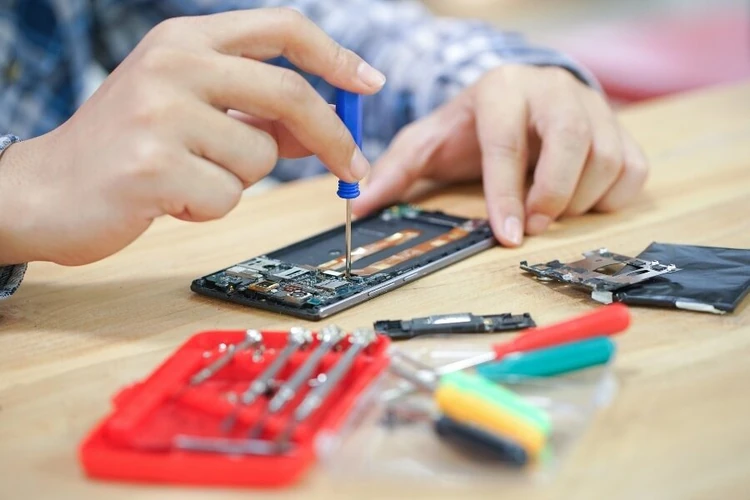
Do you have a broken Apple product and think you could fix it yourself? Apple’s Self Service Repair is finally available, so have it.

The company announced on Tuesday that genuine Apple parts, tools, and repair guides can now be purchased by U.S. customers who wish to do their own repairs. However, there may be limits to what consumers will be able to do.

While Apple’s new online store offers more than 200 individual parts and tools to complete repairs on iPhone 12, iPhone 13, and iPhone SE (3rd generation) lineups, Mac owners will have to wait a while. The company says repair options for those products will come later this year.

Apple device repair steps

Apple is trying to keep things as simple as possible, but there are a few steps everyone will have to take to perform their own self-service repair.

To start, a customer should first review the repair manual for the product they want to fix by visiting the company's support page. Note: You can’t skip this step. To purchase the genuine Apple parts and tools, you have to have the repair manual ID, which can only be found in the manual’s introduction.

Once that’s done, consumers can then visit the Apple Self Service Repair Store and order the necessary parts and tools.

“Every genuine Apple part is designed and engineered for each product, and goes through extensive testing to ensure the highest quality, safety, and reliability,” the company vowed. “The parts are the same ones — at the same price — as those available to Apple’s network of authorized repair providers.” The company added that as thanks for returning a replaced part for recycling, customers will receive a credit “for certain repairs.”

Article Image

Apple moves forward with security improvements for AirTags

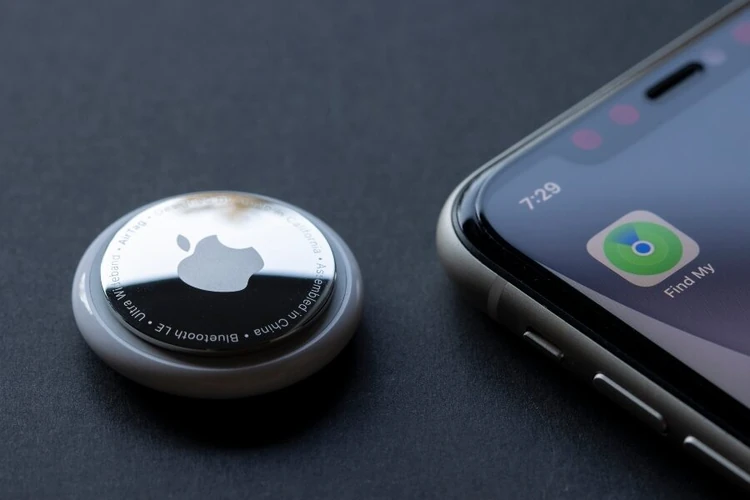
Apple hasn’t wasted any time following up on its promise to AirTag users that it has their back. In the company’s latest beta for its iOS 15.4 operating system, new anti-stalking alerts have been added to AirTags and other Find My accessories.

9to5Mac reports that users will now see a new message when setting up an AirTag. The message informs the user that the accessory is connected to their Apple ID, the data container where their personal data is kept.

Apple points out that stalking or tracking someone without their knowledge or consent is a crime in many regions of the world, and doing so with an AirTag will trigger law enforcement officials to respond.

There are also two additional upgrades that should make AirTag users a little more comfortable: for one, notification settings in the Find My app update now allow users to modify specific options for Find My and Tracking separately. Secondly, Apple is making it clearer exactly which type of accessory was detected moving with someone.

If these improvements sound like something you want ASAP, you’re probably going to have to wait until later this spring. For now, the iOS 15.4 update is in beta and only available to developers and public beta users. 

Article Image

Apple gets serious about protecting AirTag users from unwanted tracking

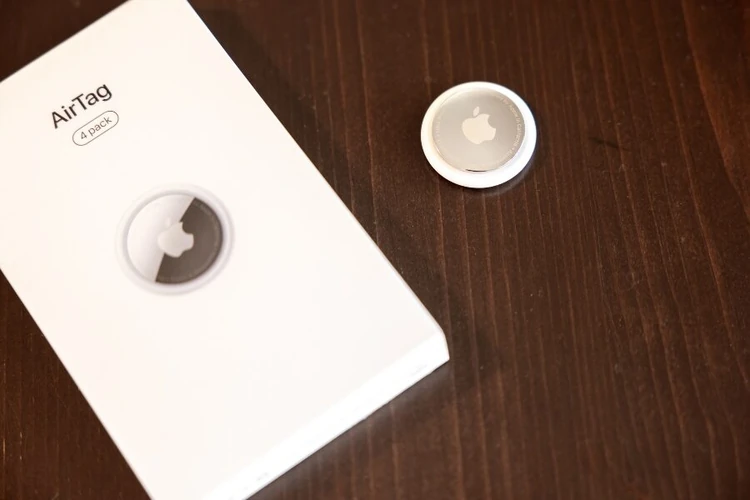
After receiving reports of people stalking others and engaging in unwanted tracking, Apple is proactively making efforts to modify its AirTag product.

The company admitted that it has “seen reports of bad actors attempting to misuse AirTag for malicious or criminal purposes.” By collaborating with safety groups and law enforcement agencies, the company has identified additional ways it can update AirTag safety warnings and help prevent further unwanted tracking.

“AirTag was designed to help people locate their personal belongings, not to track people or another person’s property, and we condemn in the strongest possible terms any malicious use of our products,” the company said in a statement. 

“Unwanted tracking has long been a societal problem, and we took this concern seriously in the design of AirTag. It’s why the Find My network is built with privacy in mind, uses end-to-end encryption, and why we innovated with the first-ever proactive system to alert you of unwanted tracking.”

What is being done

As far as working with law enforcement is concerned, the company said it can provide account details on who a certain AirTag is connected to if the company is subpoenaed or receives a valid request from law enforcement.

“We have successfully partnered with them on cases where information we provided has been used to trace an AirTag back to the perpetrator, who was then apprehended and charged,” Apple said.

As far as users are concerned, Apple said there are updates coming to both AirTag and its "Find My Network" tool. Forthcoming software updates will include the following: 

New privacy warnings during AirTag setup: Each and every user setting up their AirTag for the first time will see a message clearly stating that AirTag is meant to track their own belongings. There will be a stern warning that using AirTag to track people without consent is a crime in many regions around the world. The company will also warn any potential perpetrator that law enforcement can request identifying information about the owner of the AirTag.

Updated support documentation about safety: Apple has also updated its unwanted tracking support article on its website to communicate the safety features built into AirTag, AirPods, and Find My network accessories. AirTag users now have access to additional explanations and visuals of which Find My accessories may trigger an unwanted tracking alert. They'll also find updated information on what to do after receiving an alert, including instructions for disabling an AirTag, AirPods, or Find My network accessory. 

In that support article, Apple offers links to resources individuals can use if they feel their safety is at risk, like the National Network to End Domestic Violence and the National Center for Victims of Crime.

Future updates

Apple says it’s working on a series of updates that it plans to introduce later this year. Some of those updates include:

Precision Finding: This capability allows recipients of an unwanted tracking alert to locate an unknown AirTag with precision. 

Display alert with sound: This is designed to help in cases where the AirTag may be in a location where it is hard to hear, or if the AirTag speaker has been tampered with.

Refining unwanted tracking alert logic: “Our unwanted tracking alert system uses sophisticated logic to determine how we alert users,” Apple said. “We plan to update our unwanted tracking alert system to notify users earlier that an unknown AirTag or Find My network accessory may be traveling with them.”

Tuning AirTag’s sound: As things currently stand, iOS users who receive an unwanted tracking alert can play a sound to help them find an unknown AirTag. The company said it is working on adjusting the tone sequence to use more of the loudest tones to make an unknown AirTag easier to find.