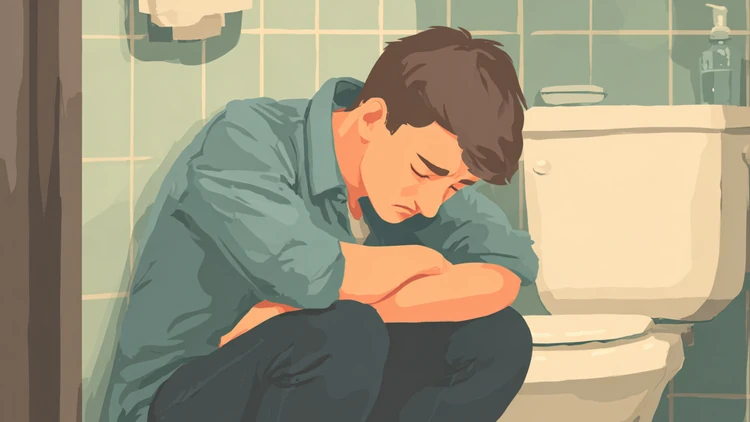

- Americans worry about the safety of their food supply, wiith public confidence at its lowest ebb ever.
- It's estimated that one in six Americans fall ill with food-related illnesses every year.
- Recent government cutbacks have reduced the number of food safety inspections.
Food recalls dominate the headlines and Americans gravitate to stories about food safety. In the last two weeks, the most widely read news stories on ConsumerAffairs have dealt with frozen shrimp recalls, fishy products at Costco and tainted meals at Trader Joe's.
The list goes on: Frozen strawberries tainted with hepatitis A. Deli meats recalled over Listeria. Bags of salad greens pulled for E. coli. It’s no wonder Americans are anxious about what’s on their plates.
In fact, in the latest Food & Health Survey from the International Food Information Council, foodborne illness topped the list of consumer worries, overtaking pesticides, additives, and chemicals. Confidence in the U.S. food supply, meanwhile, has sunk to a record low.
Each recall seems to confirm what people already feel: that the food system isn’t as safe as it should be.
Consumers aren't alone. Experts are sounding the alarm, especially after cutbacks and layoffs resulting from the government shutdown and earlier staff reductions. "Our federal food safety system is teetering on the brink of a collapse," said Sarah Sorscher, a policy expert at the Center for Science in the Public Interest, in a recent NPR report.
The real toll of foodborne illness
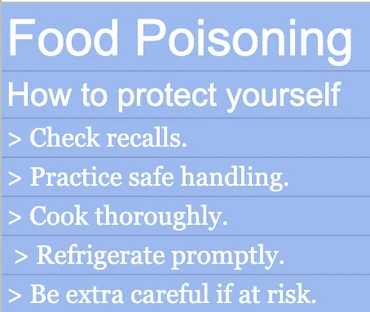
Behind the headlines lies a persistent reality. The Centers for Disease Control and Prevention (CDC) estimates that about 9.9 million illnesses, 53,000 hospitalizations, and nearly 1,000 deaths each year can be traced to seven common foodborne pathogens.
Earlier CDC estimates, using broader methods, put the toll higher — as many as 1 in 6 Americans sickened annually, with 128,000 hospitalizations and 3,000 deaths. The discrepancy reflects changes in surveillance, not a sudden drop in illness.
The bottom line: foodborne illness is a fact of life in America, and millions of consumers have lived through it. Even mild cases of vomiting, cramps, or diarrhea leave an impression, and those personal stories ripple through families, workplaces, and social media.
Is food getting more dangerous?
Experts say it’s complicated.
On one hand, food may appear riskier because detection has improved. Whole-genome sequencing now allows health departments to link scattered illnesses to a single contaminated batch. Companies are required to announce recalls more quickly, and the internet amplifies every alert.
On the other hand, modern food systems do carry new vulnerabilities. Centralized processing plants and globalized supply chains mean that one contaminated batch can sicken people across dozens of states. Recalls have shifted in character too: more than 90% now stem from biological contamination or undeclared allergens.
And recent years have brought an uptick in the most serious, “Class I” recalls — those involving products likely to cause severe illness or death.
Why the fear feels personal
Surveys and surveillance data suggest that most adults have had at least one episode of foodborne illness in their lifetime, whether or not it was officially diagnosed.
That lived experience, combined with relentless news coverage, fuels public anxiety. Unlike abstract risks such as chemical residues, food poisoning is visceral — painful, disruptive, and sometimes life-threatening.
The road ahead
The U.S. food safety system has improved in many ways, with better testing, stricter standards, and faster recalls. But challenges remain.
Budget cuts have already reduced active surveillance by health agencies. From tracking eight pathogens, CDC is down to just two.
Consolidation in food processing means contamination can affect millions of units at once.
Climate change may expand the range and seasonality of pathogens, adding stress to the system.
For now, outbreaks and recalls are likely to remain a fact of life — and public unease, grounded in both statistics and experience, will not fade easily.