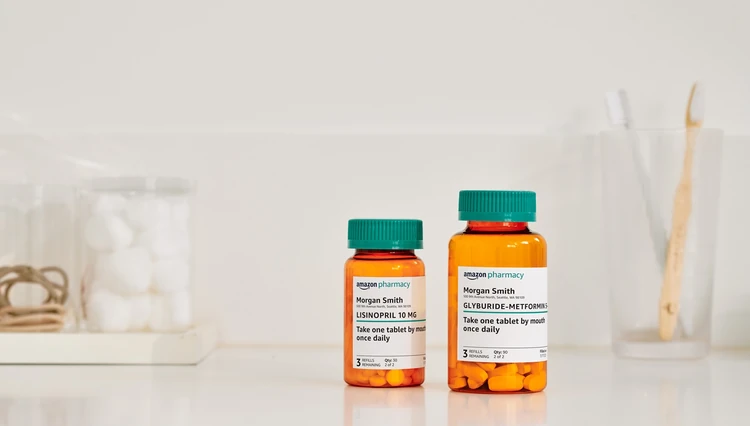

Amazon Pharmacy lets you order prescriptions online, compare prices upfront, and get medications delivered. There's no Prime membership required, but Prime members get extra savings and perks.
The biggest savings come from generic drugs and programs like RxPass, where pricing can often beat traditional pharmacies if you know where to look.
It makes the most sense for ongoing medications and convenience — but for urgent needs or complex care, your local pharmacy may still be the better option.
Amazon didn’t just dip a toe into health care to test the waters. They built a full-service pharmacy that can realistically replace your regular stop at CVS or Walgreens.
But like most things that promise “easy savings,” the real value isn’t automatic or guaranteed. It comes from understanding when it makes sense to use it, when it doesn’t, and how to maximize your savings in the process.
Let’s break it down in a practical, real-world way so you can decide if it’s actually worth adding to your routine.
What Amazon Pharmacy actually is (and isn’t)
At its core, Amazon Pharmacy is an online prescription service that allows you to order your medications the same way you would order anything else on Amazon. Most recently, this also includes the GLP-1 drug Foundayo, with options for same-day delivery and even in-person pickup at Amazon Pharmacy kiosks.
You do not need to be a Prime member to use it, but if you are a member, you’ll get access to discounted generic drugs via the RxPass program, as well as free Prime shipping (more on this below).
But what really separates it from your local pharmacy is the level of transparency and control you get before you ever spend a dollar.
Instead of walking up to a counter and being told your price, you can:
- See your insurance price ahead of time.
- Compare it to the discounted cash price.
- Decide which option makes more sense before committing.
And then, instead of making a trip, waiting in line, and potentially dealing with delays, your medication simply shows up at your doorstep.
That convenience matters more than most people realize, as pharmacy trips often turn into extra spending, not to mention the extra gas used. You grab a drink, a snack, maybe a random household item you don’t necessarily need, and suddenly a simple Rx pickup turns into an extra $10–$20.
What it’s not: It’s important to realize right off the bat that Amazon Pharmacy isn’t always the cheapest option across the board.
It’s also not built for those urgent, same-day Rx needs, and it doesn’t fully replace the value of in-person pharmacist interactions for more complex situations.
How Amazon Pharmacy works (step-by-step)
Step 1: Transfer or send your prescription
You can have your doctor send your prescription directly to Amazon, or you can transfer it from your current pharmacy, which is usually a simple process, but it can take a day or two depending on how responsive your current pharmacy is.
Because of that delay, this system works best for ongoing medications that you take regularly, rather than anything you need immediately.
Step 2: Compare pricing (this is where you win)
This is where Amazon really separates itself from traditional pharmacies.
You’ll typically see:
- Your insurance copay.
- The discounted cash price.
- Any savings already applied automatically.
At most pharmacies, you don’t get this level of side-by-side comparison. You’re often just told what you owe and are expected to accept it.
Here, you can pause, compare, and choose the better deal before spending anything.
Step 3: Choose how to pay
You can pay using insurance, out-of-pocket pricing, or even FSA/HSA funds, which gives you flexibility depending on your situation.
You’d be surprised how often the cash price is actually cheaper than your insurance copay, especially with generic medications.
Step 4: Delivery (where it really pays off)
Once you place your order, Amazon handles everything:
- Free two-day delivery for Prime members.
- Faster delivery options in some areas.
- Discreet packaging.
- Auto-refill options to keep things consistent.
Pro tip: Be sure to turn on auto-refill. Not only does it help you avoid running out of medication, but it also removes one more thing you have to think about every month.
Where the real savings actually comes from
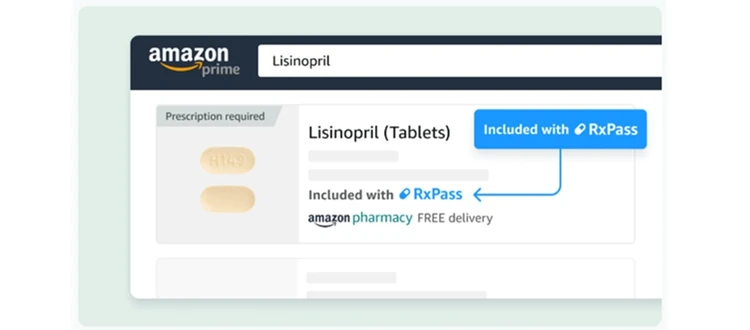
Generics (this is the sweet spot)
Amazon Pharmacy is strongest when it comes to generic medications, which include treatments for things like blood pressure, cholesterol, and other common conditions.
Because these medications are more common and there’s a lot of competition, Amazon can often offer significantly lower pricing than your traditional pharmacies.
RxPass ($5/month strategy)
Amazon’s RxPass is one of the most underrated features.
For a flat $5 monthly fee, Prime members get access to a range of common generic medications. Doesn’t matter how many generics you need, you only pay $5/month with free delivery included.
Here’s the full list of RxPass medications so you can see if yours is included.
Even if you’re only taking one medication, it can still be super helpful. But if you’re taking two or more, the value becomes very obvious quite quickly.
Pro tip: Always use Amazon as your price baseline. Even if you end up not buying from Amazon, it gives you a reference point so you know if your local pharmacy is priced competitively.
When Amazon Pharmacy makes the most sense
Amazon Pharmacy works best when you:
- Take regular, ongoing medications.
- Don’t need immediate, same-day access to something like antibiotics.
- Prefer delivery over running errands.
- You want predictable pricing and fewer surprises.
It’s especially useful for people managing chronic conditions, busy families trying to simplify their routines, or anyone who wants to reduce the number of weekly errands they have to deal with.
Pro tip: If you take multiple medications, or are caring for an elderly family member, be sure to sign-up for the free service, PillPack. Amazon Pharmacy will sort your meds by date and time, and put them in handy individual packets. It will greatly simplify your routine, and more importantly, it will reduce mistakes.
When it doesn’t make sense
There are still situations where a local pharmacy like Costco or CVS is the better option.
If you need medication immediately, want in-person guidance from a pharmacist, or have insurance that offers better local pricing, it makes more sense to stick with what you’re already doing.
The key here is to not assume Amazon is always better, but be ready to use it when it makes sense and when it can save you money.