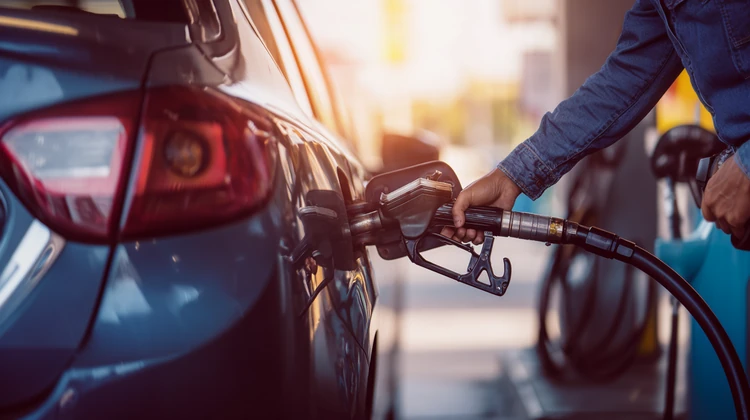

Using AI, “The Gas Index” is solving a real pain point: Delivering accurate, real-time gas prices across the U.S. — crucial when nearby stations can vary by up to $1 per gallon.
The standout feature isn’t just price tracking, it’s the “is it worth the drive?” calculator — This helps you avoid the classic mistake of burning gas chasing a slightly cheaper fill-up.
Stack your savings: Tools like The Gas Index can help you find the cheapest station. Then layer in cash back apps, fuel rewards, and a 3%–5% gas credit card.
Gas prices are climbing again, and for most drivers, it feels like there’s no good way to consistently find the cheapest option nearby.
Now, a new AI-powered tool is trying to change all of that.
The Gas Index is a real-time gas price tracker built by two AI engineers over a single weekend. It claims to offer a more complete and accurate look at gas prices across the U.S. and it even calculates whether it’s worth driving farther to save a few cents per gallon.
Here’s what’s happening, and more importantly, how you can actually use it to save money.
What exactly is The Gas Index?
The Gas Index is an online tool that tracks fuel prices at more than 170,000 gas stations nationwide and currently has 93,000 verified prices.
Unlike traditional gas apps, it combines multiple data sources to show:
- Nearby gas prices.
- Price trends over time.
- Personalized savings based on your car and driving habits.
It also includes a feature that estimates how much rising gas prices are costing you per fill-up.
Right now, the national average sits around $4.16 per gallon according to AAA, which is more than $1 higher than earlier levels tied to recent global events.
For a typical driver, that translates to about $15 more per tank, and significantly more in high-cost states like California.
What makes it different
Most gas apps rely on user submissions or partial datasets. This tool takes a different approach.
The creators actually built an AI voice agent that calls gas stations and ask attendants for their current prices. In a clever side-note, they use the voice of a grown-up Bobby from the TV show King of the Hill to make their calls.
So far, they’ve:
- Dialed more than 19,000 stations.
- Completed over 12,000 calls.
- Logged more than 75 hours of conversations.
One of the creators, Matt Cortland, told ConsumerAffairs, “AI calling was always designed to be the kickstarter — not the long-term strategy.”
Long-term, they want crowdsourcing. And they’re trying to get it by allowing users to snap a photo of a gas pump or price sign and their AI tool does the rest. It will actually read the price and geolocate them to the exact station, at which point the station’s price gets updated.
Their goal is to fill in all the gaps, especially at smaller stations that often don’t show up in apps like Google Maps.
The feature that actually matters: 'Is it worth the drive?'
One of The Gas Index’s most useful tools is a built-in calculator that answers a simple question:
Is it actually worth driving farther for cheaper gas?
To make it happen for your particular situation, you enter the following on their website:
- Your vehicle
- MPG
- Tank size
And it tells you whether the savings outweigh the extra fuel used getting there. The tool also allows you to set up your “Garage” so you can track all your vehicles.
This is useful information to have as many drivers chase cheaper gas… and accidentally cancel out the savings by driving too far.
What the data is showing right now
The numbers highlight just how much prices have shifted:
- National average: About $4.16 per gallon.
- Increase: Roughly $1+ per gallon compared to earlier levels.
Additionally, about 98% of stations are now above those previous prices. That means almost every driver is paying more, and small savings per gallon matter more than they used to.
What you should actually do to save
1. Always check prices before filling up
Gas prices can vary dramatically within a few miles. A quick check can save you 10–30¢ per gallon without changing your routine.
But the problem is that it’s often hard to check the price. Cortland told ConsumerAffairs that many stations have “company-wide policies against sharing their gas prices over the phone at all, which means they're withholding pricing information from consumers.”
This lack of transparency makes it much harder for a driver trying to figure out the best place to fill-up. It also makes a service like The Gas Index that much more needed right now.
2. Do the math before you chase cheap gas
Use tools like “Is it worth the drive?” that factor in distance. Driving 10 extra minutes to save 50¢ often isn’t worth it.
But often it is worth the extra drive. Cortland told us that the “biggest savings come from areas with high price variation in a small radius, which is surprisingly common.” He added that there are areas in New Jersey showing a $1+ per gallon difference in stations less than 10 miles apart.
The math on that is significant. A 14-gallon tank in a Honda Civic equates to $14 savings by driving a few extra miles to a cheaper station.
3. Stack your savings
Combine lower gas prices with:
- Cash back apps like Upside.
- Gas rewards programs.
- Grocery store rewards programs that include gas savings (Safeway and Kroger).
- Credit cards offering 3%–5% back on gas.
That’s where the real savings start to stack up.
Why this matters for consumers
The bigger story here isn’t just one AI tool — it’s more about what it represents.
For years, drivers have relied on incomplete or outdated gas price data. Now, AI is making it possible to:
- Collect real-time pricing faster.
- Cover more locations.
- Personalize savings calculations.
And perhaps as important — it gives smaller, independent gas stations more visibility, as they are often cheaper, but harder to find.