


Key insights
Complete installation costs range from $4,500 for basic setups to over $55,000 for complex installations with large generators and extensive site work.
Jump to insightEquipment costs include the generator unit ($3,000 to $51,900), automatic transfer switch ($600 to $1,200) and optional propane tanks ($500 to $2,000+).
Jump to insightInstallation location significantly affects total cost, with placement near existing gas lines and electrical panels reducing trenching and labor expenses dramatically.
Jump to insightWhole-house generator installation cost ranges
Most homeowners looking for a whole-house generator install a standby generator, which averages between $10,000 and $25,000. You could pay as little as $4,500 if you have a small home or just want backup for specific items, like appliances, lights and medical equipment. Whole-house generator costs can climb to over $50,000 if you need to power large estates.
Project size, coverage and cost range
Here’s a quick breakdown of what you can expect based on the size and complexity of your project.
| Project size | Project details | Typical cost range |
|---|---|---|
| Small | Emergency backup only (lights, fridge and medical equipment), or whole-home backup for a very small house | $4,500 to $10,600 |
| Average | Whole-home coverage for an average, 1,800-square-foot home | $5,000 to $19,700 |
| Large | Whole-home coverage for a large, 3,000-square-foot home | $7,600 to $25,400 |
| Very large | Whole-home coverage for a luxury estate, including pool pumps, pool heaters, luxury appliances and more | $15,800 to $56,900 |
» DISCOVER: Best whole-house generators
Whole-house generator installation cost breakdown
Understanding where your money will go when installing a whole-home generator and which components you’re likely to need can help you get a more accurate estimate for your project.
In addition to the primary unit and installation labor, you may need or want a few things for a safe installation and maximum value.
Main generator unit
An average generator will cost you between $5,000 and $23,500 for the materials alone, but prices can range from $3,000 to $50,000 or more, depending on the size.
Installation labor
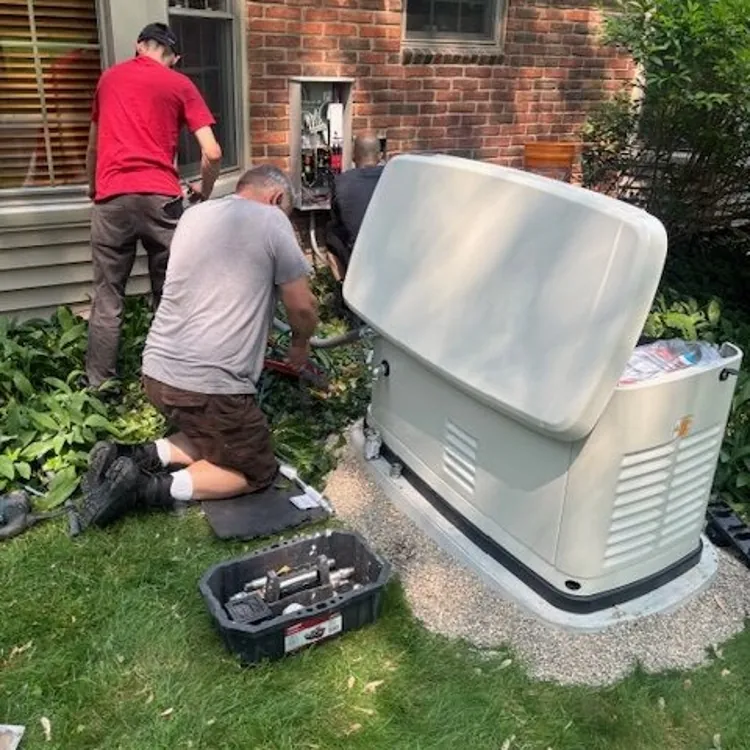
Installation labor for a generator averages between $1,500 and $5,000, according to Matt Kovalik, licensed Journeyworker electrician in Minnesota with experience installing and servicing generators. These numbers reflect a typical home with a fuel source already available nearby, but can vary based on the complexity of the installation.
Automatic transfer switch
Standby generators work using an automatic transfer switch that allows your home to switch to backup power automatically and without interruption during a power outage. Expect between $600 and $1,200 of your total to go toward the materials and labor, according to Kovalik.
Permits
Most municipalities require permits for any project that involves pouring a foundation, so you’ll almost always need a permit to install a standby generator. Kovalik confirmed that permit fees usually add anywhere from $80 to $500 to your total, depending on where you live and the fee schedule your building department uses.
Generator installation cost factors by home
As with other home improvement projects, the best way to estimate your whole-house generator installation costs is to have a professional installer come to your home for an inspection and to provide a formal estimate. The cost of most line items in a quote can vary based on your specific home and property.
Generator size
Generator size is a major contributing factor to total cost, with large residential generators often costing more than 10 times as much as small ones suitable for emergency backup power only.
The best way to make sure your unit is sized properly is to have a professional help you decide.
You can estimate the generator size you need based on property size or by calculating the power draw of the items you want on backup power, then choosing a unit that matches that output.
Generator output and typical unit costs
The table below shows typical price ranges for generator units by power output.
| Output (kW) | Typical cost (unit only) |
|---|---|
| 7 to 10 | $3,000 to $5,600 |
| 12 to 20 | $3,500 to $14,700 |
| 22 to 30 | $6,100 to $20,400 |
| 30 to 80+ | $14,300 to $51,900 |
Existing utility connections
The utility connections available on your property can influence costs for two key reasons.
First, installing a natural gas line to the utilities in the street or installing propane tanks and connecting lines on your property can add between $500 and $2,000 to your total, on average, according to Kovalik. But costs can climb significantly for longer fuel line spans. Ask your professional to estimate costs based on your specific property.
Second, if you have an older home with 100-amp electrical service, you’ll likely need to upgrade your panel to 200 amps to support modern generators. This can add between $1,000 and $2,200 to your total, according to Kovalik.
Property layout
Some homeowners won’t need site prep at all, but if you need additional work to level or clear space for your generator installation, this will add to your costs.
Consider the following for your lot, and note that you might see higher installation costs if any of these apply.
- You have a sloped lot: A slope on your lot will complicate the generator foundation installation, and your installer may need to do additional excavation to complete the work. This will add significantly to your costs.
- You have hardscaping or landscaping features in the way: You’ll see higher costs if your professional needs to remove or work around patios, decks, walkways, stoops or other landscaping features, as this adds to the required prep work.
- You need to install your generator far from your home: If you have limited space immediately around your home, or you don’t want the noise of the generator’s maintenance cycles to be a nuisance, you may need to install your standby generator further from your house. This will increase trenching costs for your utility lines.
- Your gas and electrical connections aren’t close to each other: The generator connects to the electrical panel and the gas source. If these are far from each other, you’ll have to pay to route underground utility lines to your unit. According to Kovalik, distance to utility connections causes the biggest swings in installation pricing.
» READ: Our KOHLER generator review
Whole-house generator quotes and savings tips
There are a few things you can do to help keep costs down and help the installation go as smoothly as possible.
- DIY what you can: It’s not wise and usually not legal to install a standby generator yourself, but you can potentially save money by prepping the installation site yourself. Consider removing landscaping features, clearing vegetation and leveling the land.
- Be smart about where you place the unit: Try to place your unit as close to your fuel source and electrical meter as possible. If it’s not possible to get it close to both, speak with your professional about the most affordable installation site.
- Install in the off-season: Most homeowners install generators in the spring and summer, so waiting until the winter may mean discounts on labor due to lower demand.
- Think about your warranty: Choose your generator unit carefully, and consider the warranty that comes with the equipment. Units with longer warranties are often more expensive, but the added coverage could save you money over time.
- Consider financing options: Many professionals offer financing to lower the upfront cost of installing a whole-home generator. Consider financing through your installer or look into home equity lines of credit and other options for paying over time.
- Get multiple quotes and compare: Get at least three estimates for your generator installation to find the best value. Compare them based on total cost, generator brand, unit size, installer experience, equipment quality and the warranty you get.
» FIND OUT: What customers say about Generac



FAQ
How much does a whole-house generator cost for a 2,000-square-foot house?
On average, a whole-home generator for a 2,000-square-foot house costs between $10,000 and $25,000 to install. Generator installation costs vary widely based on many factors. While home size contributes to the total, the cost doesn’t correlate directly to square footage.
For an accurate estimate, have a professional size your generator based on the equipment and appliances you need to run during outages.
Is a home generator a tax write-off?
Home generators might provide a partial tax write-off if you use a portion of your square footage for a home office, but you’ll need to speak with your tax professional to confirm. If you can’t write off any portion of the total, you may qualify for incentives and tax credits. Check the Database of State Incentives for Renewables and Efficiency (DSIRE) to see if your installation qualifies.
What is the labor cost to install a whole-house generator?
On average, labor costs to install a whole-house generator range from $1,500 to $5,000. This includes clearing and leveling the installation site, laying a foundation, installing the unit and connecting it to your electrical system and fuel source.
Costs can climb if anything complicates the process, like sloped land, landscaping features in the way or the need for long trenches to route utilities to your unit.
Are whole-house generators worth the investment?
Whole-house generators can be worth the investment, but it depends on your needs and circumstances.
They’re especially worthwhile if you or a family member relies on electricity for medical or life-saving equipment, or if your area experiences frequent power outages that could disrupt daily life. Even in regions with more stable power grids, a standby generator offers assurance that you won’t be left in the dark during unexpected storms or grid failures.
Whole-house generators also protect perishable food, help maintain heating and cooling systems and keep essential electronics running. In all cases, whole-house generators provide convenience, comfort and peace of mind, so they’re often worthwhile even if you don’t often need backup power.
Article sources
ConsumerAffairs writers primarily rely on government data, industry experts and original research from other reputable publications to inform their work. Specific sources for this article include:
- Federal Reserve Bank of St. Louis, "Housing Inventory: Median Home Size in Square Feet in the United States." Accessed July 10, 2026.
- NC Clean Energy Technology Center at North Carolina State University, "DSIRE." Accessed July 10, 2026.
- Discovery Energy, "Home Generator Products." Accessed July 10, 2026.
- Generac, “Standby Generators.” Accessed June 15, 2026.
- Champion Power Equipment, “Portable Generators.” Accessed June 15, 2026.