


Key insights
From consultation to final inspection, professional installation typically averages three to eight weeks.
Jump to insightMost municipalities require permits before installation and inspections afterward.
Jump to insightTotal installation costs average between $10,000 and $25,000.
Jump to insightStandby generator installation process overview
Standby generators require professional installation, as the process is complicated and demands experience and, in most states, licenses for utility connections.
Here’s a breakdown of everything you can expect as part of the process, from your initial inspection to unit testing.
Make a list of appliances and systems you want to run during an outage. This will help your installer recommend a generator size.
- Home assessment and generator sizing: The first step is having a professional generator installer come to assess your home. They’ll look at square footage, average power draw and peak power draw. They’ll also discuss what you want backup power for and what your expectations for emergency preparedness are. They’ll use that information to determine what size generator you need and recommend a fuel type. If you choose propane, they’ll also recommend a tank size.
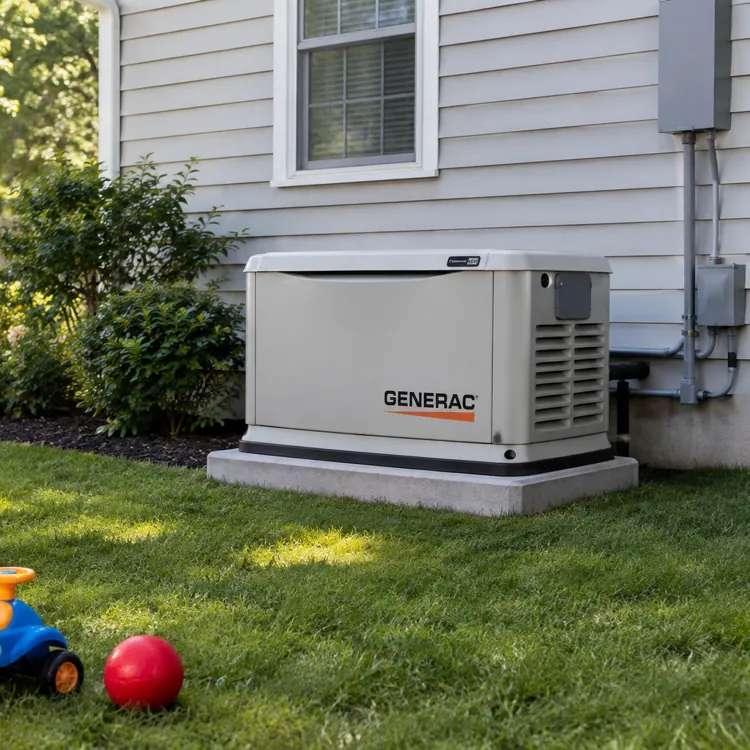
- Site selection: Next, a professional will help you choose a site to install your generator. Standby generators typically sit on a permanent concrete pad for even and level support, and you ideally want them in a location where they won’t detract from your usable outdoor space. The installer will also make sure they aren’t in areas prone to flooding or other damage.
- Permits: Once the details are finalized, your installer will pull permits. Permits are required for standby generator installations in most municipalities, and they help ensure a safe installation. Your installer will file for permits and schedule inspections after the installation is complete.
- Unit installation: Once permits are approved, your installer will pour the concrete pad and install the exterior unit. The generator connects to your home’s electrical system and usually runs on natural gas or propane, so the installer may need to trench for electrical and fuel lines.
- Electrical work and transfer switch installation: Your installer will connect the generator to your home’s electrical system and install an automatic transfer switch (ATS). The ATS is central to how a standby generator works. It detects an outage and automatically transfers your home to backup power, usually within 30 seconds.
- Fuel line connection: A plumber will need to connect your unit to a fuel line. For natural gas, they’ll need to tap into your main supply line. If you don’t have gas running from the street to your property, expect to pay extra to have a supply line installed. For propane, you may need to pay extra to have tanks installed if you don’t already have them.
- Start-up testing and owner walkthrough: Finally, your installer will start your unit to test it, and they should walk you through how to use it.
Keep in mind that this process is only applicable for standby generators. If you’re instead purchasing a portable generator, you won’t need any formal installation. Instead, you just roll the unit out when you need backup power, add fuel, start it and plug in the appliances or devices that need power.
» COMPARE: Our top picks for whole-house generators
Standby generator installation requirements and permits
Standby generators are considered permanent improvements to your land and home, as they link to your utilities and require a permanent foundation. Safe and legal installation demands that you and your professional consider permitting requirements, setback regulations, HOA rules, utility approvals and more.
Permits and utility approvals
Most municipalities require one or more permits for generator installation, and all of the permit fees together can add an average of between $80 and $500 to your total. Depending on where you live and the permit structure your local building department uses, you may need one or more of the following:
- General building permit for the foundation
- Electrical permit for the electrical work
- Plumbing permit for the gas line connection
- Propane tank installation permit
Your gas and electric utility companies will usually need to approve your design before a professional can proceed with the installation. Your installer should provide designs to both to get approval before moving forward.
There’s also a chance you may have to pay nominal fees for the plan review, but your installer should let you know.
Setback requirements and HOA rules
Your building department will have setback laws for safety and conformity in your area, which will dictate how far from your main structure your generator can sit and how far away from fences and property lines it can be. These regulations vary widely and can even include noise restrictions and concrete pad size limits, so ask your installer or local building department for details.
If your home is part of a homeowners association (HOA), check its rules before choosing a location. The HOA may restrict where you place a generator or prohibit standby generators altogether.
Utility inspections and pressure testing
Some utility companies will require inspections after the installation and before testing to make sure the connections are safe and up to code. This is common with both electrical and gas companies. Your installer should schedule any required inspections before turning on your unit.
Most gas companies will also require results of a pressure test to ensure your gas line doesn’t have any leaks. Your plumber should handle the pressure test and send results to the gas provider to get your gas turned back on.
Standby generator installation costs
The average cost to install a standby generator ranges from $10,000 to $25,000, including the unit itself and installation labor. Prices can sit as low as $4,500 and climb to over $55,000, though, depending on a few key factors:
- Generator size: The size of your generator is one of the most influential cost factors to consider. Small standby generators with a capacity of around 7 kilowatts (kW) for emergency backup only can cost as little as $3,000 for the unit alone. Most homes require 12- to 20-kW generators for whole-home backup, which cost between $3,500 and $14,700 for the unit. Luxury properties or homes with high energy demands may need even larger and more expensive units.
- Distance from unit to utility connections: Your unit’s location and proximity to existing utility connections will determine how much trenching your installer needs to do and how long the underground conduits need to be to connect your unit. Longer distances can drive material and labor costs significantly higher.
- Site preparation requirements: Standby generators need a flat, level and clear piece of land for safe installation. Your costs can increase significantly if you need to level out slopes, remove existing landscaping features or remove trees and brush.
- Fuel type and availability: The fuel type you want for your generator can influence utility connection costs. For example, costs can increase by thousands of dollars if you don’t have a gas connection but want to install one or if you don’t have propane tanks but want a propane-fired generator.
- Geographic location: Local labor rates affect your total generator installation cost.
Standby generator installation costs by unit size
The following table shows estimated generator and labor costs by size, measured in kilowatts. The totals don’t include permits, site preparation or electrical upgrades.
| kW | Unit | Labor | Total |
|---|---|---|---|
| 7 to 10 | $3,000 to $5,600 | $1,500 to $5,000 | $4,500 to $10,600 |
| 12 to 20 | $3,500 to $14,700 | $1,500 to $5,000 | $5,000 to $19,700 |
| 22 to 30 | $6,100 to $20,400 | $1,500 to $5,000 | $7,600 to $25,400 |
| 30 to 80 or more | $14,300 to $51,900 | $1,500 to $5,000 | $15,800 to $56,900 |
Standby generator installation cost breakdown
Here’s a quick breakdown of where your money typically goes when you have a professional install a standby generator:
| Item | Typical cost |
|---|---|
| Automatic transfer switch installation | $600 to $1,200 |
| Electrical panel upgrades | $1,000 to $2,200 |
| Fuel line or tank installation | $500 to $2,000 |
| Labor | $1,500 to $5,000 |
| Permits | $80 to $500 |
| Site prep | $150 to $600 |
| Unit | $3,000 to $51,900 |
Standby generator installation timeline
On average, standby generator installation will take several weeks from initial home inspection to the finalized installation and testing. There are a few factors at play that can play a role in your installation timeline.
- Permitting lead times: Most standby installations will require permits, but the time it takes to get approval can vary based on where you live and how backed up your local building department is.
- Site preparation needs: If you already have a flat, clear piece of land that meets positioning requirements, you may not need any site prep. On the other hand, leveling slopes, removing trees and cutting out brush can add days to your timeline.
- Utility line requirements: Generators that you’re installing near your electrical breaker and your main gas supply line or propane tanks won’t need much or anything in the way of trenching. Projects that require installation further from utilities can take much longer.
- Additional work: If your project requires a propane tank, a new gas service line or an electrical panel upgrade, allow extra time for permits and installation.
- Inspection requirements: Some utility companies and municipalities require post-installation inspections before you can formally connect your system and turn it on. You may have to wait days or even weeks for inspections and approval, depending on where you live.
How long does standby generator installation take?
Here’s a quick breakdown of how long the process takes, according to Matt Kovalik, a licensed journeyworker electrician in Minnesota.
| Item | Expected timeframe |
|---|---|
| Consultation to formal estimate | Several days to 2 weeks |
| Permitting lead time | Several days to 2 months |
| Installation and utility connections | 1 to 3 days |
| Final inspections and testing | Several days to two weeks |
Here are some things that can affect your timeline:
- Getting a formal estimate: “The site visit itself is an hour or two,” said Kovalik, “(and) the lag is scheduling, not the work.” The actual assessment and estimate should take just a few hours, but you could wait weeks for an appointment. “This stretches badly after a major storm, when everybody in a region calls at once.”
- Permit delays: Permit reviews and approvals depend heavily on where you live and how backed up your local building department is. “You're often pulling two permits, electrical and mechanical or gas, and sometimes they're separate departments on separate clocks,” Kovalik said. Delays on either end can add weeks to your timeline.
- Delivery and installation: There are a few things that can delay the installation once everything is on site. According to Kovalik, concrete pad curing, long gas line runs or meter upgrades can extend this step.
- Inspections: The inspections themselves are quick, but scheduling can take longer. Kovalik said most places require separate electrical and gas inspections, and waiting for either one can delay completion.
You should expect a timeline of “about three to eight weeks from first call to a running generator for a typical job, with permitting and equipment availability driving most of the spread,” said Kovalik.



FAQ
Can I install a standby generator myself?
It’s usually not possible to install a standby generator yourself safely, and even if it was, it’s almost always illegal. Standby generators connect to your electrical system and either to a natural gas supply line or to propane tanks. These utility connections are dangerous and can be deadly if you make mistakes, and making them legally requires help from a licensed professional.
Do I need a concrete pad for my standby generator?
Standby generators do need a permanent foundation that’s perfectly flat and level, and a concrete pad is the most common option. However, professionals can also install standby generators on existing concrete or even paver foundations in some cases. Speak with your installer to get a sense of what’s possible for your project.
How far from the house should a standby generator be installed?
Clearance requirements vary by generator model and local code. For example, some approved Generac units can be installed 18 inches from an exterior wall, but they need 5 feet of clearance overhead and 3 feet at the front and sides. Keep the unit at least 5 feet from doors, windows, vents and other openings. Ask your installer to check the manual for your model and local requirements.
What size generator do I need for a 2,000-square-foot house?
Most homes that are 2,000 square feet need a standby generator that’s between 12 and 20 kilowatts. Your exact power needs depend on what you want backup power for, how large your home is, the overall efficiency of your home and more. Always have a professional size your system to ensure you have the power you need for starting and running your appliances and devices.
Article sources
ConsumerAffairs writers primarily rely on government data, industry experts and original research from other reputable publications to inform their work. Specific sources for this article include:
- Generac Power Systems, "What Should I Know About Clearance Requirements When Installing My Generator?" Accessed Sept. 11, 2026.
- Village of Scarsdale, "Generator Setbacks." Accessed Sept. 11, 2026.
- Miami-Dade County Department of Regulatory and Economic Resources, "Checklist for Permanent Installation of Generators." Accessed Sept. 11, 2026.