
SimpliSafe vs. Xfinity: Quick comparison
 |  | |
| Coverage |  |  |
|---|---|---|
| Plan | ||
| Starting equipment cost | $250 | $150 |
| Starting monitoring fee | $9.99/month | $10/month |
| Contract terms | No contract required | 24 months |
| Trial period | 60 days | Not stated |
| Installation | DIY or professional ($99+) | Professional |
| Camera options | Indoor, outdoor and doorbell | Indoor, outdoor and doorbell |
| Home automation | | |
| Monitoring options | Professional or self-monitored | Professional |
| Availability | Nationwide | 39 states |
| iOS rating | 4.8 | 4.3 |
| Android rating | 4.5 | 4 |
SimpliSafe vs. Xfinity: What's the difference?
SimpliSafe has carved out a strong position in the affordable DIY security space. It offers a wide range of sensors that cover both security threats and environmental hazards, and its top-tier plans include advanced features like live agent intervention that most budget providers don't offer.
Xfinity Home is Comcast's security and smart home offering, built to work alongside its internet and cable services. It's designed for existing Comcast customers who prefer a single bill and a system installed by a professional technician.
What we like about SimpliSafe
- Active Guard technology: The highest-tier plans pair live security agents with AI to actively deter intruders through two-way audio and camera-triggered sirens — a capability typically found only with premium providers.
- Scalable affordability: The low upfront cost and month-to-month service structure make it easy to start with a basic setup and expand the system as your needs change.
What to consider: SimpliSafe's professional monitoring plans carry higher monthly fees than some comparable DIY options like Ring and Cove. Because it's a DIY system, you're also responsible for placing and setting up sensors correctly — though the process is designed to be simple and tool-free.
What we like about Xfinity
- Service integration: Existing Xfinity customers benefit from a single monthly bill covering internet, cable and home security, which simplifies account management.
- Widespread availability: Because it operates across Comcast's existing service footprint, Xfinity Home is accessible to millions of households nationwide.
What to consider: Xfinity Home is effectively unavailable to non-Comcast customers, since the security service requires an active Xfinity Internet subscription. You'll need to maintain a minimum internet package to keep the security system running.
SimpliSafe vs. Xfinity: System and installation
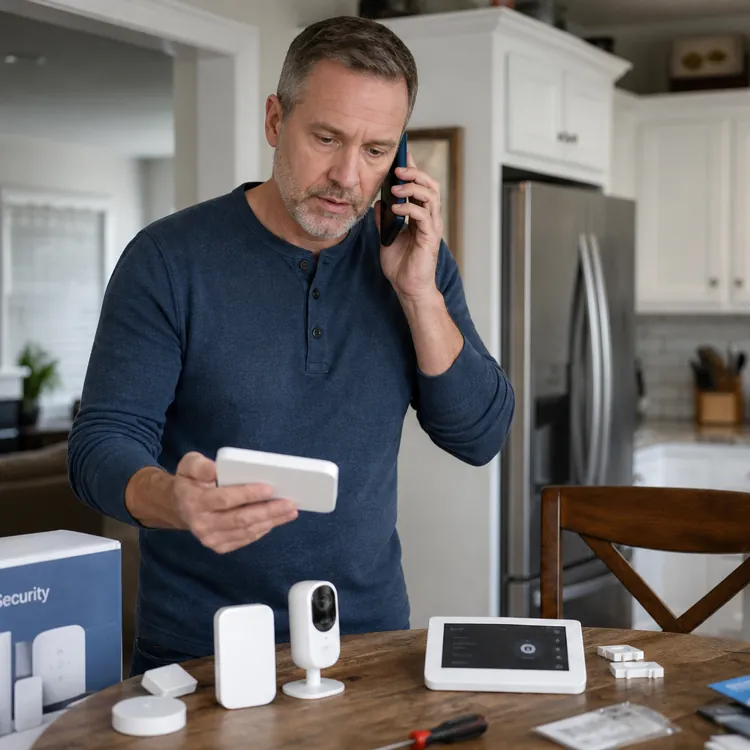
SimpliSafe is designed for quick self-installation with no tools needed, while Xfinity sends a technician to handle setup. Here's how each system is built and what installation looks like for each.
SimpliSafe system and installation
- System type: SimpliSafe runs on a wireless, modular platform anchored by a base station equipped with a cellular chip and a 24-hour backup battery. The system is built to stay operational during power outages or physical tampering.
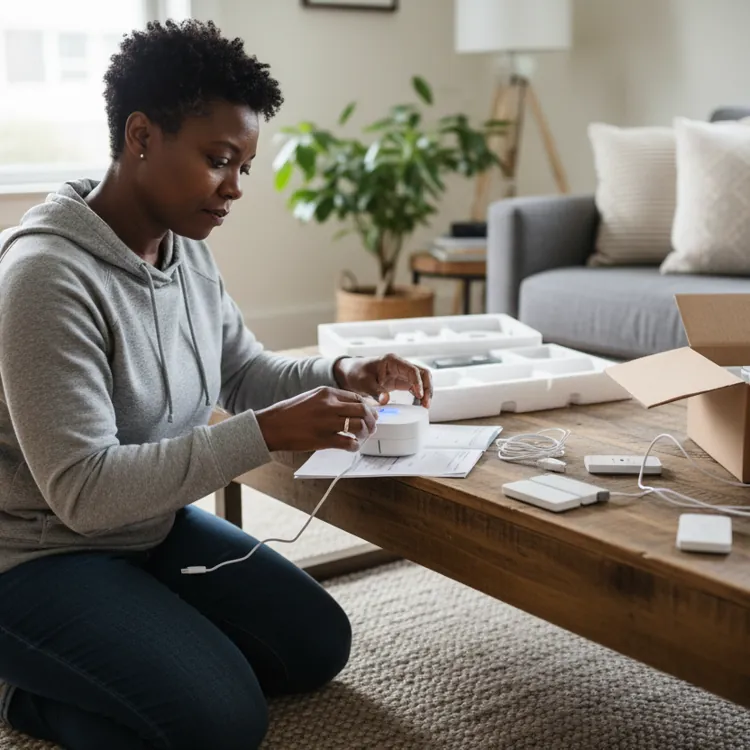
- Installation options: The system is designed for DIY setup — no tools required and most sensors attach with adhesive strips. If you'd prefer hands-on help, professional installation is available through third-party services like OnTech, typically starting around $125.
SimpliSafe equipment costs
SimpliSafe is competitively priced and frequently runs sales. Pre-built packages begin around $250 for the entry-level Foundation kit and can exceed $700 for larger configurations with multiple cameras and environmental sensors. You can also build a custom system by selecting individual components.
Xfinity system and installation
- System type: Xfinity Home uses a wireless system with cellular backup. Smart devices like lights, locks and thermostats connect through the Xfinity Home app, and automation is handled through the xFi Gateway and a touchscreen control panel.
- Installation options: A professional Xfinity technician handles all installation — self-installation is not an option. Installation fees vary but are frequently waived or discounted as part of promotional offers.
Xfinity equipment costs
Starter kits are priced between $150 and $300 upfront. Equipment comes bundled in packages and may require a down payment if you choose to finance the hardware.
SimpliSafe vs. Xfinity: Monitoring plan costs
SimpliSafe gives customers a range of contract-free monitoring tiers, while Xfinity ties its monitoring service to a broader package of home network features.
| | |
| Coverage | | |
|---|---|---|
| Plan | ||
| Monitoring price range | $9.99 to $79.99/month | $10 to $65/month |
| Monitoring options | Professional or self-monitored | Professional |
| Self-monitoring | | |
| Upgraded self-monitoring | Not offered | Not offered |
| 24/7 professional monitoring | $49.99/month | $65/month |
| Upgraded professional monitoring | $49.99 to $79.99/month | $65/month |
SimpliSafe monitoring plans
- Standard Monitoring: $21.99 per month. Covers 24/7 police dispatch and cellular backup, but does not include video verification or camera recording.
- Core (formerly Fast Protect): $31.99 per month. Adds visual alarm verification, unlimited camera recording and "Intruder Intervention" for indoor cameras.
- Pro / Pro Plus: $49.99 to $79.99 per month. Unlocks "Active Guard Outdoor Protection," which lets live agents monitor outdoor cameras overnight (Pro) or around the clock (Pro Plus) and engage potential intruders via two-way audio.
Contract commitment: SimpliSafe does not require a long-term contract. Every plan runs month-to-month, and you can cancel or switch tiers at any time with no penalty.
Xfinity monitoring plans
- Xfinity Smart Home: $10 per month. With 24/7 continuous video recording for up to six cameras but does not include police dispatch.
- Xfinity Home Security: $65 per month. Includes professional monitoring and cellular backup.
Contract commitment: The Home Security plan generally requires a 24-month contract. The Smart Home plan at $10 per month is typically month-to-month with no long-term commitment.
» COMPARE: SimpliSafe vs. ADT
SimpliSafe vs. Xfinity: Equipment and technology
SimpliSafe relies on its own proprietary hardware ecosystem, while Xfinity integrates security with its existing home networking infrastructure. Here's how their equipment and tech features compare.
| | |
| Coverage | | |
|---|---|---|
| Plan | ||
| Wired or wireless? | Wireless | Wireless |
| Camera options | Indoor, outdoor and doorbell | Indoor, outdoor and doorbell |
| Video doorbell | | |
| Control panel | | |
| Motion sensor | | |
| Entry sensor | | |
| Glass break sensor | | |
| Keychain remote | | |
| Siren | | |
| Panic button | | |
| Yard sign | | |
| Smart locks | | |
| Smart lights | | |
| Smart thermostat | | |
| Garage door control | | |
| Temperature sensor | | |
| Water sensor | | |
| Smoke detector | | |
| CO detector | | |
| Mobile app | | |
| Mobile app monitoring | | |
| iOS rating | 4.8 | 4.3 |
| Android rating | 4.5 | 4 |
| Notification/alert options | Email, text and push | Email, text and push |
| Home automation capabilities | | |
| Voice integration | | |
| Amazon Alexa | | |
| Google Home | | |
Reputation on ConsumerAffairs


What SimpliSafe customers say
Many SimpliSafe customers mention the ease of setup and installation in reviews left on ConsumerAffairs. Users enjoy monitoring their system remotely through the app and mention positive experiences with the SimpliSafe customer service team. Some customers did experience issues, with a few mentioning equipment not functioning properly and needing to be fixed.
“I've had them for many years. The system is easy to install yourself, the people are wonderful, very helpful and they work with you to figure out any problems you may have. Customer service is alive and well with Simpli Safe!”
What Xfinity customers say
Xfinity Home has mixed feedback on ConsumerAffairs. Customers who enjoy the system like the HD cameras, mobile app and quality and price of the service. Customers who left negative feedback recount difficulty getting issues resolved via customer service.
“I am pleased with the way my home is monitored and I haven't had any issues with false alarms like many people experience. [The] system is fully operational. I experienced NO glitches or service interruptions so far, and I couldn't be happier.”
Bottom line: SimpliSafe or Xfinity
Choose SimpliSafe if you want a DIY security system with no long-term contracts and the ability to scale up over time. It covers more environmental hazards and offers more proactive monitoring than most DIY competitors, though its premium plans carry higher monthly fees than Ring or Cove — if basic monitoring is all you need, cheaper options exist.
Choose Xfinity if you're already a Comcast customer and want the simplicity of consolidated billing across your home services. It offers solid smart home integration, but the security system is tied to an active Xfinity Internet subscription, making it a poor fit for anyone outside the Comcast network.
» MORE: Xfinity vs. Frontpoint