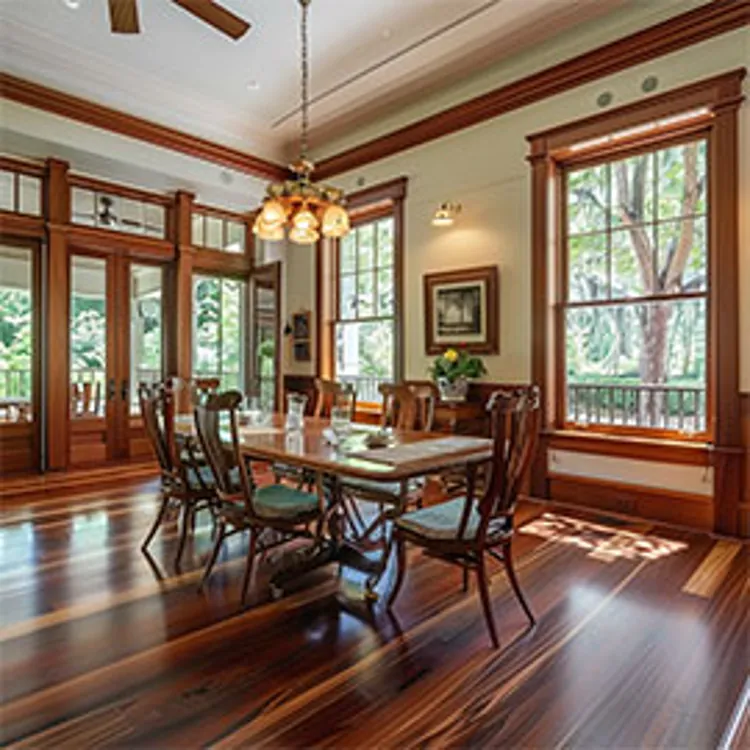


Hardwood flooring lifespan at a glance
On average, hardwood flooring will last for 50 to 100 years or more, depending largely on the type of flooring you choose. This is much longer than most other materials, especially laminate, vinyl and carpet, which usually last 8 to 25 years.
Engineered hardwood flooring has a hardwood veneer, also called a wear layer, over a plywood core for improved dimensional stability and should last 50-plus years. Solid hardwood flooring is simply solid wood planks, which are much more durable. On average, you can get 100 or more years from solid wood floors.
The biggest factor that can limit the lifespan of either type of wood flooring is exposure to moisture or water. Plumbing leaks, appliance leaks, roof leaks and even high humidity levels can all cause wood flooring to buckle and warp, which could lead to a shortened lifespan.
Hardwood floor types and refinishing limits
The two types of wood flooring, solid wood flooring and engineered wood flooring, differ in longevity primarily because of their refinishing potential. On average, you can sand and refinish solid wood floors five to seven times, while you can only sand and refinish engineered wood one to three times before it needs to be replaced.
| Average lifespan | Refinish potential | |
|---|---|---|
| Solid hardwood | 100-plus years | 5 to 7 times |
| Engineered hardwood | 50-plus years | 1 to 3 times |
Solid hardwood lifespan and plank thickness
Solid hardwood’s lifespan depends, in part, on how thick the planks are, as that dictates how many times you can sand and refinish to breathe new life into your floors. Thinner planks may only give you five refinishing cycles, whereas a thicker plank might give you seven or more.
In most cases, depending on the amount of foot and pet traffic in your space, you’ll want to sand and refinish your wood floors every 10 to 15 years. After initial installation, you can count on 10 to 15 years of solid wear and an additional 10 to 15 years each time you sand and refinish, giving you a total of 80 to 120 years of life, with a visual refresh every decade or so.
Engineered hardwood lifespan and wear layer thickness
Engineered hardwood floors have a plywood core layer with a solid wood veneer over the top. You can sand and refinish this type of floor just like you would with solid wood, but the number of times you can refinish depends on the thickness of that veneer.
A thin veneer of about 2 millimeters might give you just a single opportunity to sand the surface down before you get to the plywood core and need a full replacement. The best hardwood flooring brands often have a thicker veneer that’s 6 to 8 millimeters, which provides around three refinishing opportunities before you get down to the core.
If you sand and refinish every 10 to 15 years, you can expect a 20- to 30-year lifespan for a floor with a thin veneer, and a lifespan of between 40 and 60 years for a floor with a thicker veneer.
Factors that shorten hardwood floor lifespan
There are a handful of factors that can wear down your wood floors of either type more quickly and lead to a shortened lifespan.
Moisture and water
Exposure to moisture and water can dramatically reduce your wood floor’s longevity. Appliance leaks, plumbing leaks and spills you don’t wipe right away can soak into your floors and cause them to expand, leading to cupping and warping that could ruin the material in a very short amount of time.
Moisture isn’t as quick to damage wood floors as pooling water, but if it’s severe enough, it can take decades off of your floor’s lifespan. High humidity from bathing in bathrooms and cooking in kitchens is a concern, as is moisture wicking up through concrete floors or settling in a basement.
Wood species and hardness ratings
The wood species you choose determines how hard your floors are, which you can check with the Janka hardness rating. Pine is on the softer end and scratches and dents more easily. Maple and oak typically cost more but are much harder and stand up better to everyday wear.
Finish type
Oil-based polyurethanes are more durable than water-based options and can help your wood floors last longer in between refinishes. Water-based poly dries more quickly and with less odor, but it won’t protect your floors for as long.
Activity in the room
Finally, how much use your wood floors get plays a big role in how long they last. Foot traffic and pets cause scratches and scuffs, and furniture movement can gouge the wood. The more activity on the floor, the sooner you’ll need to sand and refinish, and each sanding removes a layer of wood, which shortens the floor’s overall life.
Maintenance schedule to extend floor life
As is the case with all flooring types, the lifespan of hardwood flooring can depend, in part, on how well you take care of it. Follow these maintenance and cleaning tips to get the most value possible from your wood floors.
- Routine vacuuming and dry mopping: Aim to vacuum and dry mop a few times a week. This will remove sand and debris that can leave scratches on your floor or in your finish.
- Damp mopping: Damp mop every one to two weeks, but be careful not to wet mop. Wring out your mop to make sure you don’t introduce too much water to your wood floors and damage them.
- Screen and recoat: You can screen and recoat as needed. This process involves lightly sanding to remove the existing polyurethane and then applying a new protective layer. This is a good option to extend your floor’s life if it has lost its luster but doesn’t need a full sanding and refinishing just yet.
- Sand and refinish: Aim to sand and refinish every 10 to 15 years. You can do it less often if screening and recoating is sufficient for light scratches or earlier if heavy foot traffic, pets and furniture movement have left larger scratches in your floor.
Signs it’s time to recoat, refinish or replace your wood flooring
It can also help to understand when you should screen and recoat, sand and refinish, or when it’s time for a total replacement. Here are a few cues to know where your wood floors are in their life cycle.
- Flat appearance: If your wood floors have lost their sheen, it’s usually a sign the protective layer is worn down. Screening and recoating is the best fix.
- Light surface scratches: Very light scratches on the surface may be in the protective polyurethane layer, and screening and recoating can get rid of them without removing any wood material.
- Deep scratches or gouges: Deeper scratches may require sanding and refinishing, especially if it has been 10 to 15 years since the last time you refinished your floors.
- Discoloration: Some discoloration or fading on your wood floors is normal, especially if the floor is exposed to sunlight. Severe discoloration might signal that it’s time to sand and refinish, as it could mean the protective coating is worn down.
- Cupping or warping: Any cupping or warping of the boards means your floors have been exposed to water or moisture. Unfortunately, you’ll likely need a total replacement to correct the issue.
- Excessive creaking: Some light creaking is common with wood floors, especially if you opted for a nail-down installation. Excessive creaking suggests that your floorboards have warped, which could mean water damage. In that case, a full replacement is often best.
- Exposed plywood core: If you sand down the veneer layer on engineered wood flooring and expose the plywood core, unfortunately it’s time to start budgeting for flooring replacement costs.
FAQ
Is it cheaper to repair or replace hardwood floors?
It is almost always cheaper to repair hardwood floors. For most scratches, sanding and refinishing is the best bet and can extend the life of your floors for another 10 to 15 years before you need to refinish again. For cupping, warping or other severe water damage, repairs might not be possible, making a replacement necessary.
What are the disadvantages of hardwood flooring?
The biggest disadvantage of hardwood flooring is that it’s not resistant to water or moisture. Exposure to leaks or high humidity can very quickly destroy wood flooring, which is why it’s not a good fit for kitchens, bathrooms, laundry rooms, mudrooms or basements.
Can you sand and refinish hardwood floors yourself?
It’s possible to sand and refinish hardwood floors yourself, but you’ll have to rent a floor sander from a home improvement or tool rental store. Even then, it’s easy to sand too deep and reduce the lifespan of your floor. It’s also easy to make a mistake when applying the stain or polyurethane, which will reduce the visual appeal of your floor, so it’s usually best to hire a pro.
What is the rule of three for flooring?
The rule of three for flooring suggests that you should cap the number of flooring types in your home at three materials, which will help make the overall design feel less cluttered and chaotic. In modern homes, that often means vinyl, engineered wood or solid wood in living areas, tile or stone in kitchens and bathrooms, and carpet in bedrooms.
Bottom line
On average, hardwood flooring will last for 100 years or more. How long yours actually lasts depends on four things: moisture exposure, foot traffic, wood species and whether it’s solid or engineered hardwood. You can typically sand and refinish solid hardwood floors multiple times and engineered wood floors a handful of times throughout their lifespan.
Article sources
ConsumerAffairs writers primarily rely on government data, industry experts and original research from other reputable publications to inform their work. Specific sources for this guide include:
- International Association of Certified Home Inspectors, "InterNACHI's Standard Estimated Life Expectancy Chart for Homes." Accessed Oct. 29, 2026.