


Best generator fuel options compared
Generators have four fuel options. Each has unique pros and cons and works best in different scenarios.
- Natural gas: Natural gas is the most reliable fuel source for generators, but it’s only an option for standby or whole-house generators. Natural gas flows directly to the generator through a utility gas line, eliminating the need for on-site fuel storage or scheduled deliveries. However, natural gas requires a permanent gas line, which isn’t always an option, depending on where you live. Running gas from the street into your home can also be costly.
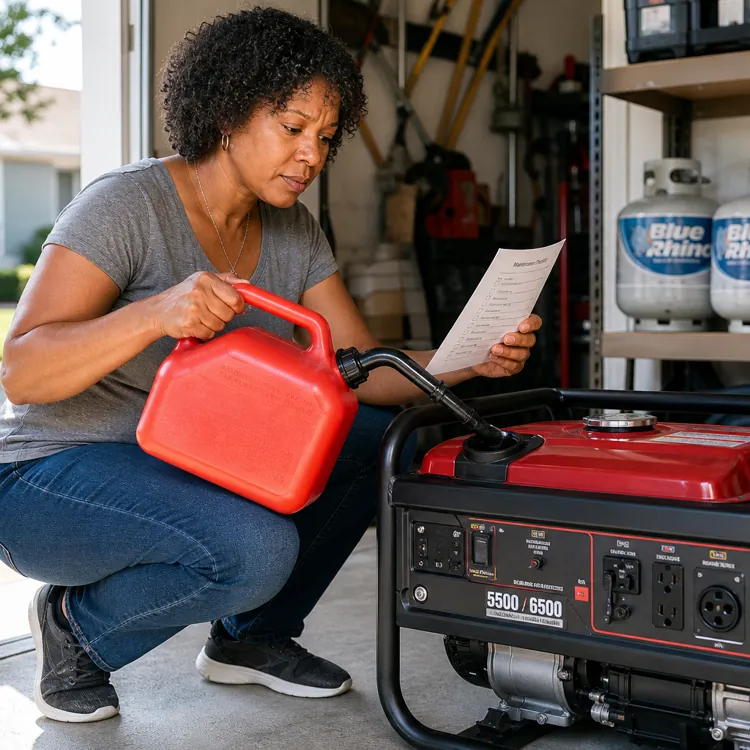
- Gasoline: Gasoline is commonly used in portable generators for temporary or emergency power. You manually refuel and start these generators, then plug individual appliances or devices directly into them.
- Diesel: Diesel powers both portable generators and large stationary units. Diesel equipment can cost more upfront, but it provides better fuel efficiency and engine lifespan.
- Propane: Propane is more commonly used for whole-house generators or standby generators. These units can automatically kick on during a power outage, so you don’t need to fill or start them manually. They do require on-site propane tanks, though, which you may need to install if you don’t already have tanks for stoves or heating systems. Propane doesn’t degrade in storage, but you must arrange deliveries to refill the tank as the fuel gets used.
You can use the table below to figure out which generator fuel options work for your situation and which offer the best value for your money. Just keep in mind that whole-home generators cost significantly more than portable generators, so while natural gas and propane are more affordable fuels, the generators that use them cost more upfront.
| Suitable for | Storage timeline | Refueling and starting | Safety concerns | |
|---|---|---|---|---|
| Natural gas | Standby generators or whole-home generators | No storage needed | Utility-supplied fuel; starts automatically | Highly flammable; utility-line leaks can cause fires or explosions |
| Gasoline | Portable generators | 6 months | Manual | Flammable |
| Diesel | Portable and standby generators | 6 months | Manual | Flammable |
| Propane | Standby generators or whole-home generators | Indefinitely | Tank refilled by delivery; starts automatically | Highly flammable; leaks can accumulate near the ground; damaged tanks can rupture or explode |
Natural gas generator fuel
Natural gas is a primary fuel option for standby generators, which don’t require manual refueling or starting. In terms of convenience, natural gas generators are better than propane generators because you also never have to worry about scheduling deliveries. Natural gas is in constant supply unless there’s an emergency.
Natural gas doesn’t require on-site storage like all of the other options, which is both an upside and a drawback. While you don’t ever have to worry about refilling storage tanks, you also can’t prepare as well for emergency situations since you have to rely on your local utility service for an ongoing fuel supply. Still, natural gas is more convenient than diesel, gasoline and propane.
A natural gas generator eliminates fuel storage and scheduled deliveries, but it can’t operate if utility gas service is interrupted.
Natural gas also has the unique issue of continuous leaks. Unlike with liquid fuel and propane tanks, which can only leak until they’re empty, the constant supply of natural gas means leaks can lead to major explosions. You can invest in automatic leak detectors, but this adds an extra expense to your upfront cost.
That’s not the only upfront cost to consider. Installing a standby generator that runs on natural gas typically costs $10,000 to $25,000, compared with $300 to $3,000 for a portable generator.
Pros
- No need for on-site storage
- Extremely efficient
- Starts automatically during power outages
- Most efficient fuel source
Cons
- Potential for continuous leaks
- High upfront cost for standby generator
- Not suitable for portable generators
- Not available in areas without gas service
» COMPARE: Top whole-house generator brands
Gasoline generator fuel
Gasoline is a common fuel option for portable or emergency generators. Portable gasoline generators are more common than diesel models, partly because gasoline is widely available at service stations and generally more affordable per gallon.
Gasoline is highly flammable and should be stored in outbuildings away from your home.
Most portable gasoline generators require manual refueling and starting. You can plug individual devices directly into the generator. Some models can power selected home circuits when connected to the electrical system through a transfer switch.
You can store gasoline in an approved container for up to six months or up to a year if you add a fuel stabilizer. Store it away from living areas in a shed or other outbuilding because gasoline is highly flammable and poses a fire or explosion risk.
One of the primary benefits of a portable gasoline generator is its upfront cost. Portable generators cost between $300 and $3,000, while standby generators cost between $10,000 and $25,000.
Pros
- Lower upfront cost than standby generators
- Widely available fuel source
- Portable emergency power
Cons
- Manual refueling and starting
- Limited storage life
- Fire and explosion risk
Diesel generator fuel
Diesel is another fuel option for portable or emergency generators. Diesel generators tend to cost more than gasoline models, but they are slightly more energy-efficient and may use less fuel to produce the same amount of power.
Adding a fuel stabilizer can extend the storage life of gasoline or diesel from about six months to as long as one year.
Portable diesel generators generally require manual refueling and starting. Like gasoline, diesel has a limited storage life. You can typically store it in an approved container for up to six months or up to a year with a fuel stabilizer.
Diesel is less easily ignited than gasoline, but it’s still flammable and must be stored safely away from living areas. A portable diesel generator can provide emergency power without requiring a permanent propane tank or natural gas connection.
Pros
- More energy-efficient than gasoline
- No permanent fuel connection required
- Suitable for portable emergency power
- Less easily ignited than gasoline
Cons
- Higher upfront cost than gasoline models
- Manual refueling and starting
- Limited storage life
- Fire risk
Propane generator fuel
Propane is one of the primary fuel options for standby generators. These generators turn on automatically during an outage and draw fuel from an on-site propane tank.
Propane is better than diesel or gasoline for emergency preparedness because you can store large quantities on-site. You also don’t have to worry about not being able to buy fuel when gas stations lose power or rely on natural gas delivery services. You can store propane indefinitely, but you’ll need dedicated whole-home propane tanks, which can cost thousands of dollars upfront.
Propane is safer to store on-site than liquid gas, largely because tanks usually come with built-in relief valves, and there’s no risk of spills.
One major drawback of propane as a generator fuel source is that it’s best for a standby generator, which costs $10,000 to $25,000 on average. While the unit is much more convenient than a portable generator, the upfront cost can be a deterrent for many homeowners.
Pros
- Indefinite fuel storage
- Best option for emergency preparedness
- Very efficient fuel source
Cons
- High upfront cost for a standby generator
- Requires scheduled fuel deliveries
- Risk of tank explosions
- Costly on-site storage tank



FAQ
Is 87 octane OK for generators?
For gasoline-powered generators, 87-octane fuel is safe and also the standard. This is a good option for powering portable or emergency generators; most standby generators that start automatically use either propane or natural gas. Just be sure to check your owner’s manual to confirm that there’s no required fuel grade.
Can propane generators run continuously?
Yes, propane generators can run continuously, and the standby generators that use propane are designed to provide continuous power through an outage. However, propane generators will only run until the stored propane runs out, so your run time is dictated by your propane tank storage and your electricity demands.
Is natural gas cheaper than propane for generators?
Natural gas is the most affordable fuel for generators, not only because it burns more efficiently than other fuels but also because it doesn’t require delivery. The supply is automatic thanks to underground gas lines, so you never have to pay someone to deliver fuel to your home or fill storage tanks.
What fuel is safest to store for generators?
Propane is generally safer to store long-term than gasoline or diesel. It doesn’t spill or degrade over time, and modern propane tanks include safety features such as pressure relief valves. However, propane is still highly flammable and must be stored outdoors according to local safety requirements.
Article sources
ConsumerAffairs writers primarily rely on government data, industry experts and original research from other reputable publications to inform their work. Specific sources for this article include:
- Alternative Fuels Data Center, "Fuel Properties Comparison." Accessed July 21, 2026.
- American Fork Fire Department, "Recommended Emergency Home Fuel Storage Limits and Guidelines." Accessed July 21, 2026.
- Liquid Propane, "Can Propane Go Bad? What You Should Know About Long-Term Storage." Accessed July 21, 2026.