


Key insights
Diesel and propane generators serve different use cases, with diesel excelling in emergency-only backup and propane offering cleaner, whole-home power for longer outages.
Jump to insightPortable diesel generators cost between $300 and $3,000, while standby propane generators average between $10,000 and $25,000.
Jump to insightPropane generators are typically better for emergency preparedness, as you can store fuel indefinitely and in large enough quantities to run your entire home for multiple days.
Jump to insightPropane vs. diesel generator overview
Propane generators are usually standby generators, permanently installed to provide backup power for your entire home or a dedicated circuit. They connect to fuel lines and large propane tanks, as well as to your home’s electrical system. Most turn on automatically during a power outage, making them the best generators for most homes.
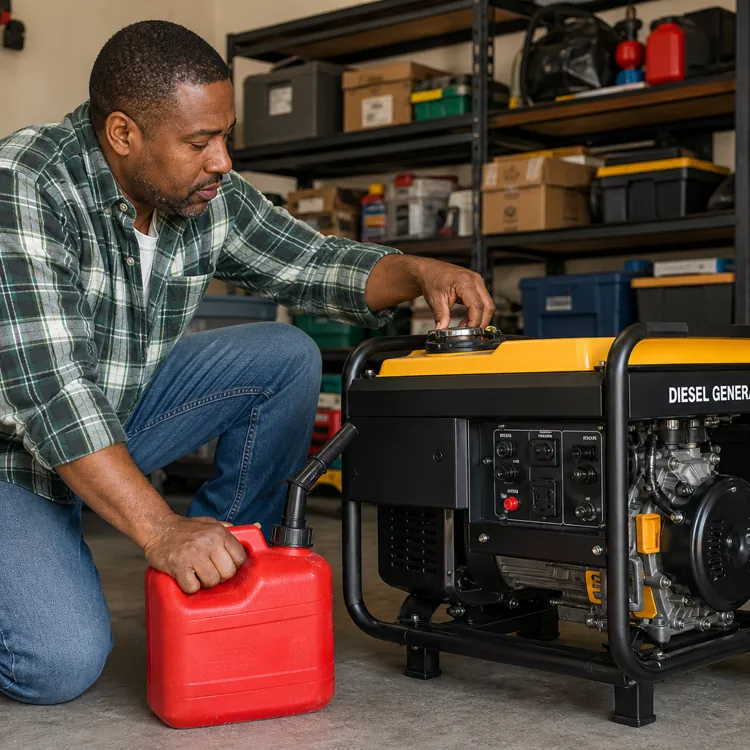
Diesel generators are almost always portable, meaning you’ll need to store fuel and start the generator manually when an outage occurs. These generators usually only power individual appliances or devices plugged into them. As a result, portable generators are less convenient to use, but they’re much more affordable.
When to use propane and diesel generators
Propane standby generators are popular for residential backup power and some small-scale commercial applications. Propane has a lower energy output per gallon than diesel, providing around 0.66 of the electricity output per gallon. However, you can store propane indefinitely, making it a more reliable option for anyone who wants long-term outage preparedness.
For residential use, diesel generators are usually portable and require manual fueling and starting. They aren’t nearly as convenient as standby generators and are usually only suitable for emergency backup. For some commercial applications, standby generators can use stored diesel fuel, which has a higher fuel density that can power entire facilities.
Run time and fuel storage for propane and diesel
How long your generator can run and how easily you can store its fuel are important considerations when choosing between propane and diesel. Here’s what you need to know about run time and fuel storage for each option.
Run time
On-site propane tanks for homes can usually store 100 or more gallons of propane, which can often provide whole-home backup power for multiple days. You can store diesel fuel in portable gas tanks, but often only up to 20 gallons. Even though diesel has a higher fuel density, you’ll only get about a quarter of the run time per tank compared to the smallest propane tank.
Fuel storage
Fuel storage is another important consideration when choosing a generator fuel. You can store propane indefinitely, which means you never have to worry about refilling tanks unless you pull from yours for backup power. Diesel fuel is much less stable and lasts only six to 12 months, even with stabilizers. So you’ll need to replace your fuel stores regularly.
Propane vs. diesel generator cost
One of the biggest differences between a standby generator running on propane and a portable generator running on diesel is the cost. Propane generators cost more to install and require more maintenance, but they’re cheaper to run.
Upfront cost
A propane generator costs an average of $10,000 to $25,000, while a portable generator averages $300 to $3,000. The difference in the upfront cost largely comes down to the installation.
Propane generators
Propane standby generators require a concrete pad for mounting, permanent installation, connection to utility lines and permanently installed propane tanks. Material and labor costs are typically in the thousands and can climb even higher depending on land prep and proximity to utility lines.
Diesel generators
Portable diesel generators don’t require installation, so you’ll only have to pay for the unit itself. Factor in the cost of fuel storage tanks, but these will rarely add more than $50 to your total.
Operation costs
Fuel prices, efficiency and storage requirements can all affect the ongoing cost of operating a generator. Here’s how propane and diesel compare.
Propane generators
Propane costs vary based on where you live, so it’s useful to compare fuel costs in a specific area. Propane costs in New York average around $3.17 per gallon.
Each gallon of propane produces around 91,500 British thermal units (Btu), or about 27 kilowatt-hours (kWh). At an average cost of 13.8 cents per kWh, propane is about 15% less expensive than diesel.
Propane also lasts indefinitely when stored properly, so you don’t have to worry about replacing unused fuel or adding stabilizers for long-term storage.
Diesel generators
Diesel fuel in New York averages $5.59 per gallon. Each gallon produces about 137,400 Btu, or 40.3 kWh, which comes to about 11.8 cents per kWh.
Diesel fuel requires stabilizers for longer-term storage, which can add to your overall operating costs. Even with stabilizers, diesel lasts only up to a year, so you’ll need to replace it regularly.
Maintenance costs
Maintenance demands vary by generator and fuel type, which affects cost.
Standby generators require annual maintenance, which costs between $200 and $500 per year. Provided you drain your diesel generator when it’s not in use and store it properly, it shouldn’t require any maintenance, meaning lower ongoing costs.
Propane vs. diesel generator costs and lifespan
The table below compares the typical costs, maintenance needs and expected lifespan of propane and diesel generators.
| Propane generator | Diesel generator | |
|---|---|---|
| Upfront cost | $10,000 to $25,000 | $300 to $3,000 |
| Fuel cost per gallon* | $3.17 | $5.59 |
| Cost per kWh* | 13.8 cents | 11.8 cents |
| Maintenance costs | $200 to $500 for annual maintenance | Fuel stabilizer and fuel replacement only |
| Lifespan | 15 to 25 years | 20 to 25 years |
Propane vs. diesel generator reliability
Standby generators that run on propane are generally more reliable and convenient than portable diesel generators for a few reasons. Still, they have some drawbacks to consider.
- No manual fueling required: Diesel generators require manual fueling each time you need backup power. This is less convenient than propane generators, which have fuel readily available as long as your tanks aren’t empty.
- Automatic start: Most propane standby generators have automatic transfer switches (ATS) that detect outages and switch your home to backup power, often in seconds. With a diesel generator, you have to manually fill the unit during an outage, start it and plug in the devices you want to power.
- Whole-home backup: Propane standby generators connect to your home’s electrical system and can power the entire house, while portable diesel generators power only the devices you plug into them. As a result, propane standby generators are less likely to disrupt your daily life during an outage.
- Long-term fuel storage: Propane lasts indefinitely in storage, so you can fill your tanks once and not worry about refilling them until you use the fuel. Diesel only lasts six to 12 months in storage, so you need to remember to replace the fuel at least once a year.
- Availability during emergencies: Diesel fuel is more likely to be available during emergencies because you can fill your portable tanks at any gas station. Propane relies on delivery, which isn’t always possible during emergencies.
- Cold weather performance: Liquid fuel like diesel can gel when temperatures reach below 10°F, so you may need a block heater or fuel additives to keep fuel viable in cold temperatures. Propane vaporizes less in cold weather, which can reduce efficiency, but you rarely have to worry about a propane generator not starting.
- Load handling: Diesel generators handle sudden load changes and surges better, making them more reliable for homeowners who need varying levels of electricity.
- Typical storage capacity: Home propane tanks typically range from 100 to 500 gallons, while diesel storage tanks top out around 20 gallons. Given a standard tank size, you’ll get a much longer generator run time on propane than you would on diesel.
While propane is generally the most reliable option, assess your specific needs and have a professional generator installer help you decide what is ideal for your situation.
Propane vs. diesel generator efficiency and emissions
Before committing to one or the other, consider fuel efficiency and emissions. Then, choose the source that delivers the electricity you need while having the least possible negative impact on the environment.
Fuel efficiency
Diesel is more fuel-efficient than propane, producing more Btu and kWh per gallon. A gallon of diesel generates about 120,000 to 130,000 Btu, or 35 to 38 kWh, compared with about 91,500 Btu, or 27 kWh, from a gallon of propane.
However, propane’s lower price makes it the more affordable option per kWh of fuel.
Emissions
Propane generators produce about 15.2% less CO2 than diesel generators.
On average, propane generates 138.63 pounds of CO2 for every 1,000,000 Btu of energy output. Diesel fuel generates 163.45 pounds of CO2 per 1,000,000 Btu of energy output. Modern diesel generators require lower emissions to meet Tier-4 regulations, but they’re still not as eco-friendly.
Always consult with a professional to determine where to install or run your generator.
For comparison, natural gas is the most efficient fuel source for backup generators, producing just 116.65 pounds of CO2 per 1,000,000 Btu generated. Gasoline generators are the least efficient, generating 167.79 pounds of CO2 per 1,000,000 Btu.
Regardless of emissions performance, all generators, including portable and standby models, require proper ventilation to avoid carbon monoxide poisoning.



FAQ
Is it cheaper to run a generator on propane or diesel?
In most cases, it’s cheaper to run a generator on propane. While propane produces less electricity per gallon, it’s significantly cheaper than diesel, so it costs less per kWh. However, installing a propane standby generator is much more expensive than buying a portable diesel generator.
How long will 100 gallons of propane last on a generator?
100 gallons of propane in a generator can power the average home for close to 90 hours. This assumes your home uses an average of 30 kWh per day. Your exact runtime can vary widely based on how much electricity you use. When sizing your tank based on your runtime expectations, consult a professional to ensure you choose a tank size that meets your needs.
Are diesel generators being phased out?
Diesel generators aren’t being phased out, but according to the Environmental Protection Agency (EPA), new models must have improved efficiency and emission control technology in line with Tier-4 diesel generator requirements.
What is the lifespan difference between diesel and propane generators?
Portable diesel generators last an average of 20 to 25 years, and standby propane generators average 15 to 25 years.
Portable generators tend to last longer because they aren’t used very often, whereas standby generators run each week for maintenance. That said, propane generators are more convenient and can power your entire home, making them better suited for most whole-home applications.
Bottom line
Propane standby generators are a better option if you want whole-home backup and the peace of mind that comes from stable fuel storage and long run times during outages. Portable diesel generators are best for emergency backup only, especially if outages are uncommon in your area or you’re on a tight budget.
Article sources
ConsumerAffairs writers primarily rely on government data, industry experts and original research from other reputable publications to inform their work. Specific sources for this article include:
- U.S. Department of Energy Transportation Technologies Office, "Fuel Properties Comparison." Accessed Aug. 21, 2026.
- New York State Energy Research and Development Authority, "Monthly Average Propane Prices." Accessed Aug. 21, 2026.
- New York State Energy Research and Development Authority, "Weekly On-Highway Diesel Prices." Accessed Aug. 21, 2026.
- U.S. Energy Information Administration, "Energy conversion calculators." Accessed Aug. 21, 2026.
- AmeriGas Propane, Inc., "BTUs: What They Are and Why You Should Care." Accessed Aug. 21, 2026.
- U.S. Department of Energy, "Fuel Properties Comparison." Accessed Aug. 21, 2026.
- U.S. Energy Information Administration, "Carbon Dioxide Emissions Coefficients." Accessed Aug. 21, 2026.
- United States Environmental Protection Agency, "Regulations for Emissions from Heavy Equipment with Compression-Ignition (Diesel) Engines." Accessed Aug. 21, 2026.