

Compare our top prescription hearing aid picks
| Company | Customer rating | Best for | Starting price | Warranty | Financing | |
|---|---|---|---|---|---|---|
 hear.com | Learn More | 4.6 | Best overall | $1,599 per pair | 1 to 3 years |  |
 Starkey Hearing Aids | Learn More | 4.2 | Best customer service | $1,999 per device | Limited | |
 Beltone Hearing Aids | Learn More | 3.4 | Best hearing aid selection | $2,000 per pair | 1 year | |
hear.com

- Starting price
- $1,599 per pair
- Trial period
- 45 days
- Number of models
- 5
- Types of hearing loss
- Mild to profound
Starkey Hearing Aids

- Starting price
- $1,999 per device
- Trial period
- 45 days
- Number of models
- 6
- Types of hearing loss
- Mild to profound
Beltone Hearing Aids
- Starting price
- $2,000 per pair
- Trial period
- 30 days
- Number of models
- 8
- Types of hearing loss
- Mild to profound
Methodology: How we chose the best prescription hearing aids
The ConsumerAffairs Research Team compared prescription hearing aid brands using verified customer reviews, product details and company policies. To qualify, companies needed verified reviews submitted between Sept. 1, 2023, and Aug. 31, 2026. We scored each brand in four areas:
- Customer experience: Satisfaction with staff, customer service and price
- Hearing aid selection: Product lines and options for all levels of hearing loss
- Price and policies: Starting price for a pair, warranty coverage and trial period
- Recent engagement: Recent review volume and company response rate
Each company received a score from zero to 10 for every metric. The top performer earned a 10, and the other companies were scored relative to it. We used different weightings for each award. For example, the customer service award focused more on customer service satisfaction, while the hearing aid selection award emphasized product lines.
Prescription hearing aid buyers guide
Before purchasing a prescription hearing aid, take a comprehensive hearing test and use the results to guide your decision on aid style and features. Look for a clinic with licensed professionals who will personalize your aids and help you maintain them throughout their lifespan.
Key insights
Hearing test results provide critical information to help you decide on the best aids for your level of hearing loss.
Jump to insightPrescription hearing aids usually begin around $2,000 per pair.
Jump to insightPrescription hearing aids cost more, but offer greater customization, support and advanced features.
Jump to insightHow to choose prescription hearing aids
With so many types and models of prescription hearing aids available, and so many brands to choose from, it can be hard to decide. When choosing a hearing aid, use your hearing test results to select an aid style that fits your needs, ideally with features and expert personalization tailored to the nuances of your hearing loss.
When comparing prescription hearing aids, pay attention to the following factors.
Hearing test results
Your hearing test results are the most important factor in choosing your hearing aids. Virtually all prescription hearing aid providers — including those on our list — require a hearing test before you choose a model. Licensed professionals use these results to determine the best model, fit and settings for you.
Choose hearing aids suited to the nuances of your hearing loss. Mismatched volume levels could leave hearing loss untreated or, worse, cause excessively loud aids that further damage your hearing.
Hearing aid style
Prescription hearing aids come in several styles, each designed for different levels of hearing loss and offering its own advantages and drawbacks. Your choice may also depend on factors such as amplification needs, ease of use and appearance.
Prescription hearing aids commonly come in the following styles:
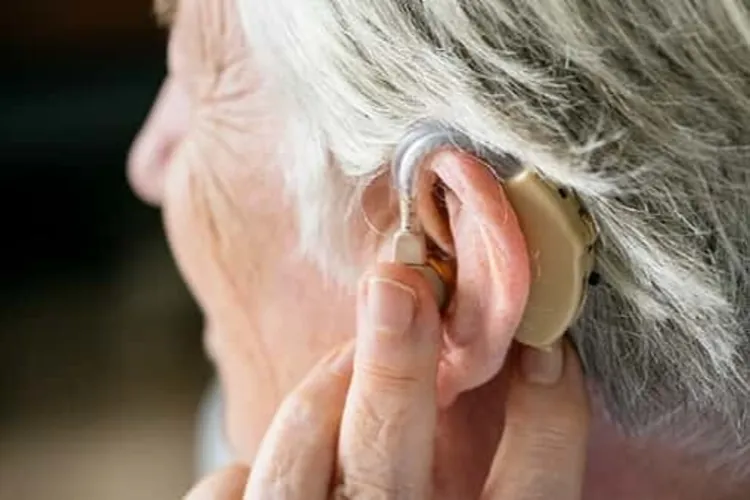
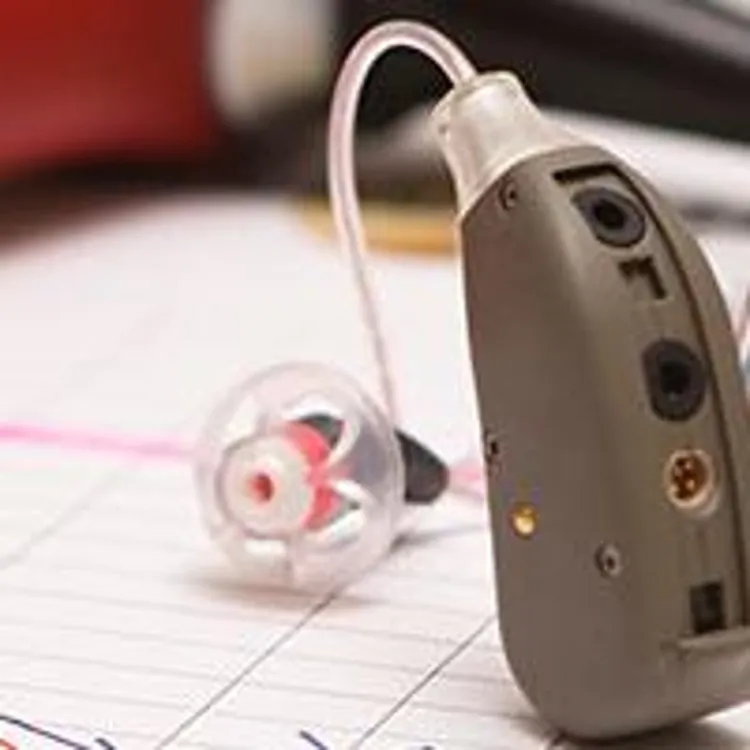
- Behind-the-ear (BTE): BTE aids, the largest type of hearing aid, sit behind your ear and use a small tube that goes into your ear canal. While bulky and relatively conspicuous, BTE aids provide strong amplification and tend to work well for any level of hearing loss, from mild to profound.
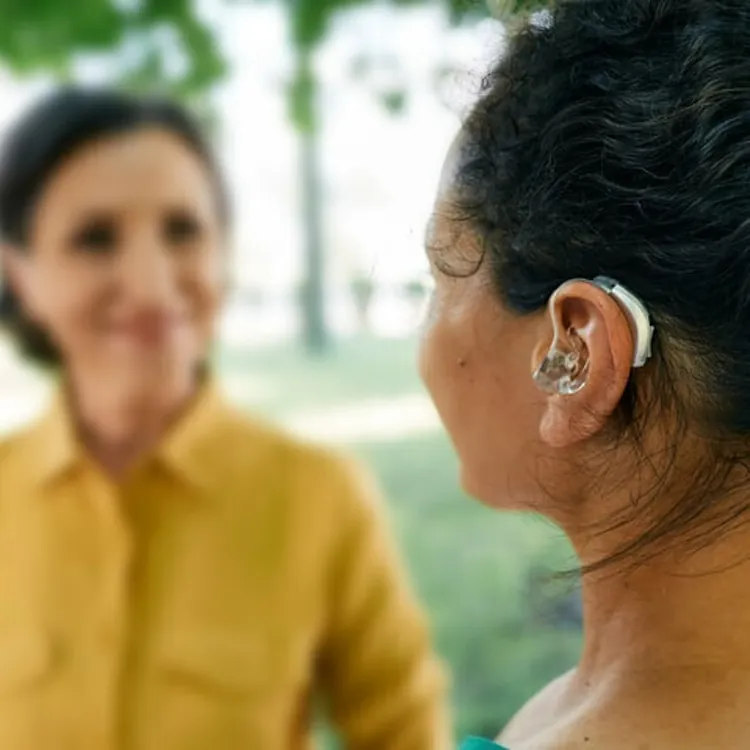
- Receiver-in-canal (RIC): RIC aids also sit behind your ear, but the receiver goes inside your ear, so the device itself is slightly smaller and more discreet. RIC devices offer less amplification than BTE aids but provide good high-frequency amplification and natural sound for mild to moderate hearing loss.
- In-the-ear (ITE): ITE aids fit entirely inside your ear canal. These are discreet and comfortable, but they tend to have shorter battery life than larger sizes and may offer fewer features.
- Completely-in-canal (CIC) aids: CIC aids, slightly smaller than ITE aids, also fit entirely in your outer ear. Like ITE aids, CIC devices are discreet but can have the same battery and feature limitations. In-ear placement offers other advantages, like better wind-noise blocking and more natural sound reproduction.
- Invisible-in-canal (IIC) aids: Invisible aids, the smallest of all, sit entirely in your ear and are usually invisible. They offer minimal wind noise and great comfort while remaining sturdy and secure for activities and sports. However, like other in-ear aids, IIC devices aren’t large enough for strong amplification, making them best for mild-to-moderate loss.
Features
Modern-day prescription-level hearing aids offer an incredible variety of features — especially when it comes to AI and noise cancellation. While sophisticated features increase the device’s price tag, they improve user experience, day-to-day convenience and sound immersion.
Here are several key features to look for in a prescription hearing aid:
- Selective noise reduction: Modern hearing aids use AI to analyze sound, filtering out unwanted noise like feedback or wind, and clarifying desired sounds like speech. This leads to a clearer hearing experience, especially in noisy or busy environments like restaurants or crowded rooms.
- Directional microphones: Many modern hearing aids utilize directional microphones — multiple mics facing different directions. These microphones adjust volume based on where noise comes from, helping you hear sounds from where you want and block out noise from directions you don’t.
- AI tools: Hearing aids from brands like Starkey and Beltone frequently utilize AI, often through a smartphone connection, for a variety of purposes. AI tools can block out sound, act as a personal assistant, track health data and translate languages in real time.
- Rechargeable battery: Hearing aids typically use rechargeable batteries, which usually last between three and 10 days between charges. BTE and RIC aids tend to last the longest, while IIC and CIC aids fall on the shorter end of that range.
- Bluetooth and connectivity: Modern hearing aids usually support Bluetooth and smartphone connectivity, letting you sync your hearing aids with streaming, phone calls, and audio from other smart devices.
Customization and maintenance requirements
The level of customization and your ongoing service experience will differ depending on the clinic you choose and the style and model you select. Typically, in-ear devices are form-fitted to your ear, while BTE devices are one-size-fits-all.
More expensive, higher-end models from providers like Starkey and hear.com typically include guaranteed fitting and ongoing service from top audiologists and professionals. In contrast, lower-end models may only include technical support. Clarify the customized setup and amount of ongoing support you’ll receive with your aids.
» LEARN: Hearing aid warranty coverage
Prescription hearing aid cost
The cost of prescription hearing aids typically ranges from $2,000 to over $5,000 per pair, depending on the clinic you visit, the model you choose and its features. In general, basic hearing aid models at the low end of this range offer fewer features and often lack advanced noise cancellation or deeply immersive audio.
Check whether your insurance plan offers coverage before buying hearing aids.
As you add advanced directional microphones and AI features, the price moves toward $5,000 for a pair of devices. Usually, this higher price tag includes ongoing in-person maintenance and service from audiologists and licensed professionals at your clinic. These services may not apply to cheaper models.
Generally, most insurance plans and Original Medicare do not cover the cost of hearing aids, though some insurance plans may offer partial coverage.
Pros and cons of prescription hearing aids
Compared to OTC aids, prescription hearing aids tend to be costlier and require a more tedious testing process. However, prescription aids offer substantial benefits like better customization, stronger amplification and more nuanced hearing-support features.
Pros
- Customized fit and settings
- Better noise cancellation
- More comfortable
- Personalized ongoing support
- Sophisticated connectivity
Cons
- Costlier
- Requires a tedious testing process
- Can take longer to get your aids
- Requires more care and maintenance
- Advanced settings can feel frustrating
FAQ
How much do prescription hearing aids cost?
Prescription hearing aids generally cost between $2,000 and $6,000 per pair. This figure usually includes two devices, plus support and setup from a licensed professional.
What is the difference between OTC and prescription hearing aids?
Compared to OTC aids, prescription hearing aids usually require a more involved onboarding process, including comprehensive testing and personalized settings adjustments. Prescription aids also tend to have more advanced noise-cancellation and connectivity features.
Are prescription hearing aids covered by insurance?
Usually, no. Most insurance plans, including Medicare, do not cover prescription hearing aids.
How do I know if I need prescription hearing aids?
The best way to know if you need hearing aids is to take a hearing test at an audiology clinic. The results will tell your clinician if you need support from an aid.
Are prescription hearing aids worth it?
Prescription hearing aids can be worth the extra cost if you have more severe hearing loss, need precise adjustments or want personalized support. A licensed hearing care professional can use your hearing test results to recommend a model and fine-tune its settings for you. If you have mild to moderate hearing loss, over-the-counter hearing aids may be a lower-cost option. Before you buy, ask the clinic what fitting services and ongoing support the price includes.
Article sources
ConsumerAffairs writers primarily rely on government data, industry experts and original research from other reputable publications to inform their work. Specific sources for this guide include:
- Aflac Incorporated, "Are Hearing Aids Covered by Insurance?" Accessed Nov. 23, 2026.
- Audibel, "How to Maximize Hearing Aid Battery Life." Accessed Nov. 23, 2026.
- Cleveland Clinic, "Types of Hearing Aids: Which Is Right for You?" Accessed Nov. 23, 2026.
- CornerStone Ear, Nose & Throat, "Why You Should Consult An Audiologist Before Purchasing OTC Hearing Aids." Accessed Nov. 23, 2026.
- Ear-Tronics, "The Pros and Cons of Invisible Hearing Aids." Accessed Nov. 23, 2026.
- Macomb Audiology & Hearing Aid Center, "The Pros and Cons of Different Types of Hearing Aids." Accessed Nov. 23, 2026.
- Nevada Ear + Sinus Institute, "Directional Vs. Omnidirectional Hearing Aid Microphones." Accessed Nov. 23, 2026.
- Southwest Balance, Dizziness & Ear Institute (formerly Arizona Balance & Hearing Aids), "Benefits and Drawbacks of Receiver-in-Canal (RIC) Hearing Aids." Accessed Nov. 23, 2026.
- U.S. Centers for Medicare and Medicaid Services, "Hearing aids." Accessed Nov. 23, 2026.
- Universal Audiology, "Noise Reduction: What to Know Before You Upgrade Your Hearing Aids." Accessed Nov. 23, 2026.
- Virsono Hearing Centers, "How Much Do Hearing Aids Cost? (2026 Guide)." Accessed Nov. 23, 2026.