

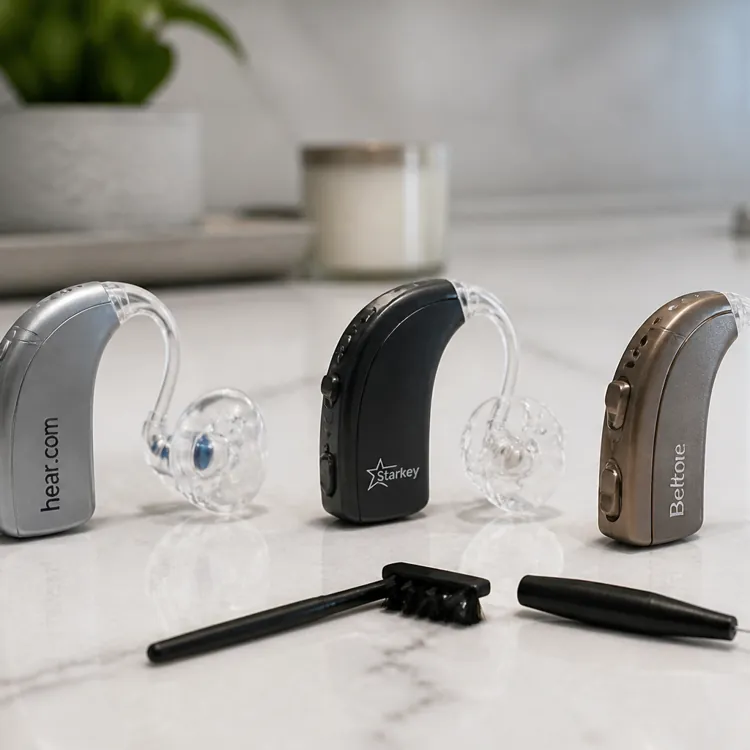
Compare our top BTE hearing aid picks
| Company | Customer rating | Best for | Financing offered | Types of hearing loss supported | Warranty | |
|---|---|---|---|---|---|---|
 hear.com | Learn More | 4.6 | Best overall |  | Mild to profound | 1 to 3 years |
 Starkey Hearing Aids | Learn More | 4.2 | Customer support | | Mild to profound | Limited |
 Beltone Hearing Aids | Learn More | 3.4 | BTE selection | | Mild to profound | 1 year |
hear.com

- Starting price
- $1,599
- Trial period
- 45 days
- Hearing test required
- Yes
- Who programs
- Licensed professional
Starkey Hearing Aids

- Starting price
- $1,998
- Trial period
- 45 days
- Hearing test required
- Yes
- Who programs
- Licensed professional
Beltone Hearing Aids
- Starting price
- $2,000
- Trial period
- 30 days
- Hearing test required
- Yes
- Who programs
- Licensed professional
Methodology: How we chose the best BTE hearing aids
The ConsumerAffairs Research Team compared BTE hearing aid brands using verified customer reviews, product details and company policies. To qualify, companies needed verified reviews submitted between Sept. 1, 2023, and Aug. 31, 2026.
We scored each brand in four areas:
- Customer experience: Satisfaction with staff, customer service and price
- Hearing aid selection: Product lines and options for all types of hearing loss
- Price and policies: Starting price for a pair, warranty coverage and trial period
- Recent engagement: Recent review volume and company response rate
Each company received a score from zero to 10 for every metric. The top performer earned a 10, and the other companies were scored relative to it. We used different weightings for each award. For example, the customer support award focused more on staff and customer service ratings, while the BTE selection award emphasized product lines.
Behind-the-ear hearing aids buyers guide
When you compare hearing aids, you’ll find a range of styles and prices. Behind-the-ear (BTE) hearing aids vary in features and levels of amplification. The right choice depends on your degree of hearing loss, budget and lifestyle.
Below, we outline everything you should know before choosing a BTE aid.
Key insights
Prioritize amplification levels, microphone directionality and your hearing test results when researching BTE hearing aids.
Jump to insightBTE hearing aids can cost $1,000 to over $6,000 per device, but lower-cost options and financing can make them more affordable.
Jump to insightBTE aids are generally more versatile, but also bulkier, than in-the-ear (ITE) aids.
Jump to insightWhat to look for in BTE hearing aids
When choosing a hearing aid, consider the nuances of your hearing loss and lifestyle to choose a design, amplification levels, ease of use and other features that will give you the richest day-to-day hearing experience.
Degree of hearing loss
Before getting a medical-grade BTE hearing aid, it’s advisable to get a hearing test, as required by all the providers on our list. Hearing test results enable your audiologist or hearing professional to customize recommendations and personalize your hearing aid settings.
All the providers on our list offer a variety of aids, and each is intended for specific degrees of hearing loss. Before choosing a hearing aid, get a comprehensive hearing test and ask a licensed professional which hearing aid best fits the nature and severity of your hearing loss.
Design and style
BTE hearing aids are very similar to and often grouped together with receiver-in-canal (RIC) aids. While both designs use an apparatus that sits mostly behind your ear, they vary in size, amplification level and ease of use.
Many providers, including all the ones on our list, offer both styles, so it helps to know the difference.
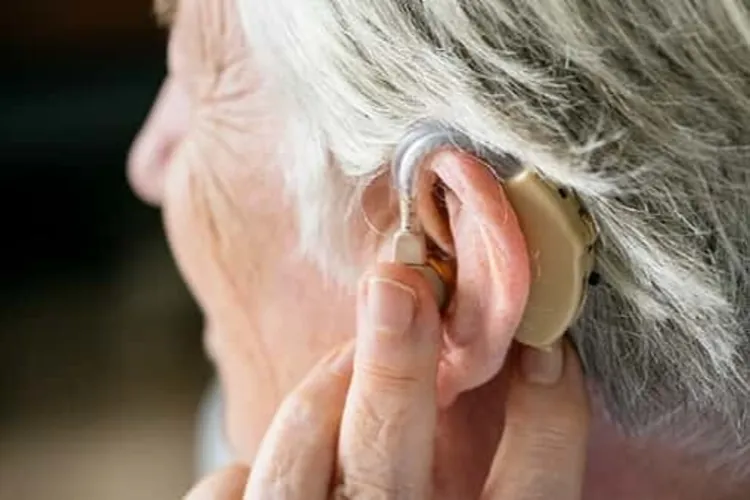
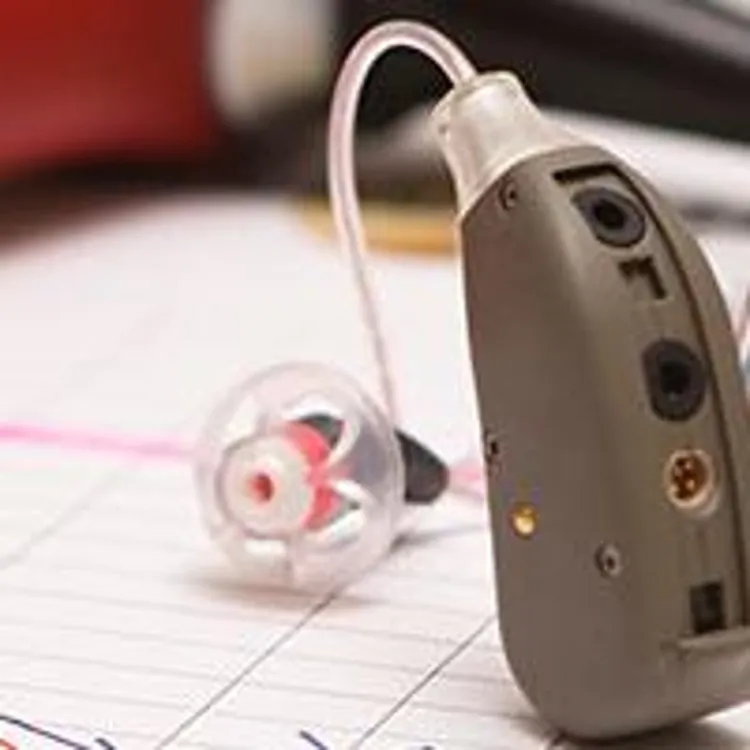
- Behind-the-ear (BTE): Standard BTE aids, the largest style, place the full apparatus, including the speaker, behind your ear. Due to the larger case, BTE aids house powerful amplification technology, making them a better choice if you have significant hearing loss.
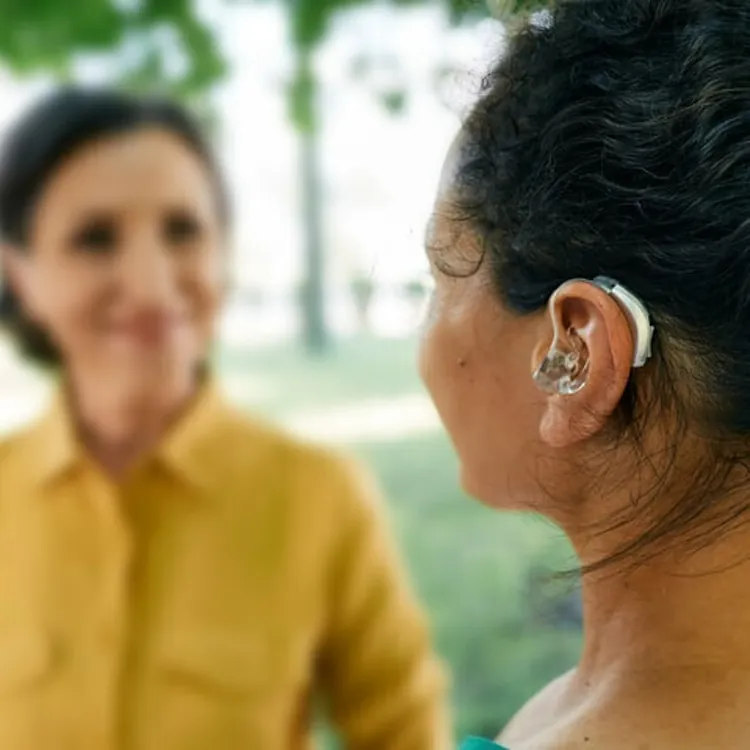
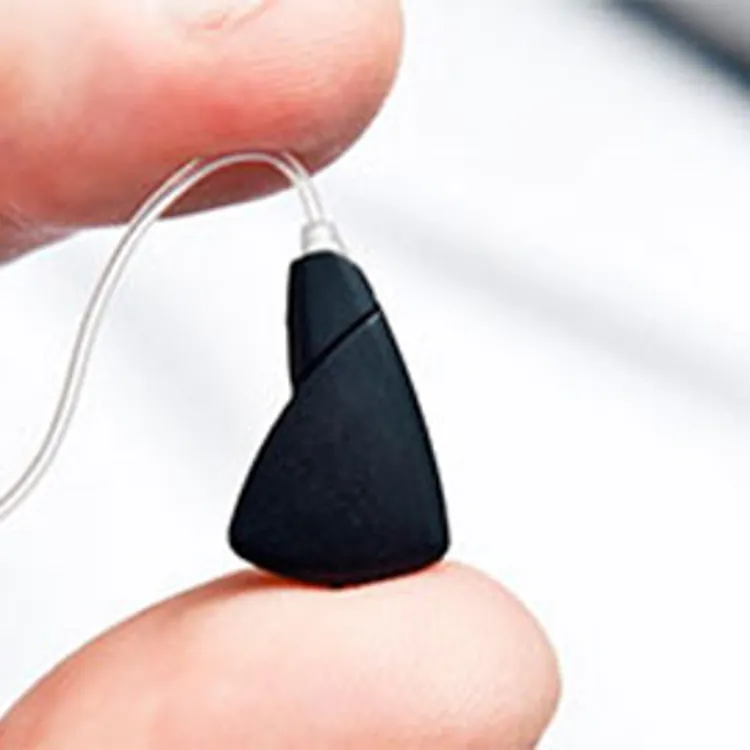
- Receiver-in-canal (RIC): RIC aids place a case behind your ear, but the small speaker sits in your ear canal and connects to the case with a small tube. The smaller case makes the aids more discreet, and placing the speaker closer to your eardrum can make sound feel more natural.
Amplification levels and other features
Modern BTE and RIC aids are exceptionally feature-rich, with noise cancellation, battery longevity, speech articulation, wireless connectivity and more. But these features usually increase the price of your aids, and you may not need to have all the latest features.
Features to consider and prioritize in your BTE aids:
- Amplification levels: BTE hearing aids with larger cases tend to offer more robust amplification technology and microphones, providing better amplification for more severe hearing loss.
- Rechargeable battery lifespan: BTE aids can last around four to 10 days, depending on the model you choose. If you plan to spend extended time away from electricity or a charger, choose an option with a long battery lifespan.
- Omnidirectional and directional microphones: Hearing aids often include directional microphones, which pick up sound from one direction. Many BTE aids have omnidirectional microphones that pick up sound from many directions. Some hearing aids, such as Beltone Illuminate, switch between the two based on your environment.
- AI features: Many modern BTE aids, such as the Starkey Omega AI aids, integrate AI technology that connects with your phone and smartwatch to enable automated reminders, voice assistance, a smart assistant and live translation.
- Unwanted noise reduction: Today’s high-end hearing aids implement algorithms that detect and filter out unwanted noise, such as wind noise, feedback or excessive background noise. These capabilities preserve a more distraction-free listening environment for you.
- Bluetooth capabilities: Nearly all modern BTE aids, including all the options on our list, include Bluetooth technology that syncs with your smartphone, car and other smart devices to play music, phone calls and more.
Ease of use and maintenance support
Generally, BTE hearing aids are relatively easy to use, especially when compared to in-the-ear (ITE) hearing aids. Since BTE aids sit outside your ear, they are less vulnerable to earwax and require less cleaning. The larger size also generally means larger buttons, which are easier to press and switch.
Regardless, it’s smart to ask your provider about follow-up appointments and ongoing maintenance support, because you may run into unexpected difficulties with your aids. Some providers include several periodic follow-up appointments with your purchase.
BTE hearing aids cost
BTE hearing aids vary in price, with mid- to high-end models typically ranging from $1,000 to over $6,000 per device, meaning you could pay a lot more for a pair. These prices reflect prescription-grade models, like those on our list, with more features and strong amplification technology. But these providers often include free hearing tests and maintenance in the price.
Lower-grade over-the-counter BTE aids can sometimes cost as little as $800 per pair.
Many providers offer financing options that let you split the total upfront cost into monthly payments, sometimes as low as $34 monthly. In most cases, insurance does not cover the cost of hearing aids, though some plans in some states may cover part or all of the cost.
Pros and cons of BTE hearing aids
Compared to ITE hearing aids, BTE aids offer advantages in amplification, battery life, features and maintenance. However, ITE hearing aids can be more discreet and offer a more custom fit.
Consider the following factors when deciding whether BTE hearing aids are right for you.
| Pros | Cons |
|---|---|
| Better amplification | Easier to see |
| Longer battery life | Can feel bulky on your ear |
| Suitable for all levels of hearing loss | More susceptible to wind noise than ITE aids |
| Easier to maintain and keep clean | Usually isn’t custom-molded for your ear |
FAQ
What are behind-the-ear hearing aids best for?
Behind-the-ear hearing aids are a great option for any level of hearing loss, including profound loss. They work well for those who want strong sound amplification and powerful noise-blocking features.
Are behind-the-ear hearing aids better than in-the-ear models?
Behind-the-ear aids tend to have more powerful amplification than in-the-ear models, making BTE aids a better choice for those with severe or profound hearing loss.
How much do behind-the-ear hearing aids cost?
Behind-the-ear aids typically cost anywhere between $1,000 and $5,000 per device for mid- to high-end models, with more features typically pushing toward the higher end of the range.
Are BTE hearing aids covered by insurance or Medicare?
Medicare typically does not cover hearing aids, and many private insurance plans don’t either. However, coverage requirements vary by state, and some plans may cover at least part of your hearing aid costs.
What is the difference between BTE and RIC hearing aids?
BTE and RIC aids both feature cases that go behind your ear. However, BTE aids place the receiver, or speaker, in the case behind your ear. RIC aids place the receiver in your ear canal, which can sound a bit more natural and reduce the bulkiness of the case behind your ear.
Guide sources
ConsumerAffairs writers primarily rely on government data, industry experts and original research from other reputable publications to inform their work. Specific sources for this guide include:
- Aflac, "Are Hearing Aids Covered By Insurance?" Accessed Nov. 21, 2026.
- Amplifon Hearing Health Care, "RIC vs. BTE Hearing Aids." Accessed Nov. 21, 2026.
- Audibel, "How to Maximize the Lifespan of Hearing Aid Batteries." Accessed Nov. 21, 2026.
- ENT Physicians, "Pros and Cons of BTE Hearing Aids." Accessed Nov. 21, 2026.
- hear.com, "Hearing Aid Prices." Accessed Nov. 21, 2026.
- HearingLife, "Hearing aid prices in 2026 comparison table." Accessed Nov. 21, 2026.
- Nevada Ear + Sinus Institute, "Directional Vs. Omnidirectional Hearing Aid Microphones." Accessed Nov. 21, 2026.
- Sioux Falls Audiology Associates, "Understanding Wind Noise Management in Hearing Aids." Accessed Nov. 21, 2026.
- U.S. Centers for Medicare and Medicaid Services, "Hearing aids." Accessed Nov. 21, 2026.
- University of California, San Francisco, "Hearing Aid Types: BTE, RIC, ITE, CIC/IIC." Accessed Nov. 21, 2026.