


What are the different types of credit scores?
Fair Isaac Corporation (FICO) established the first credit scoring algorithm in 1989. It calculates your credit score, a three-number rating that shows your creditworthiness and gives a snapshot of the risk of lending you money.
“Personal credit is tied to you as an individual, your Social Security number, your personal income and how you manage things like credit cards, auto loans and your mortgage,” said Linda Jensen of Heart Financial Group in Olympia, Washington. “Lenders look at your personal credit score to gauge how reliably you handle debt in your own life.”
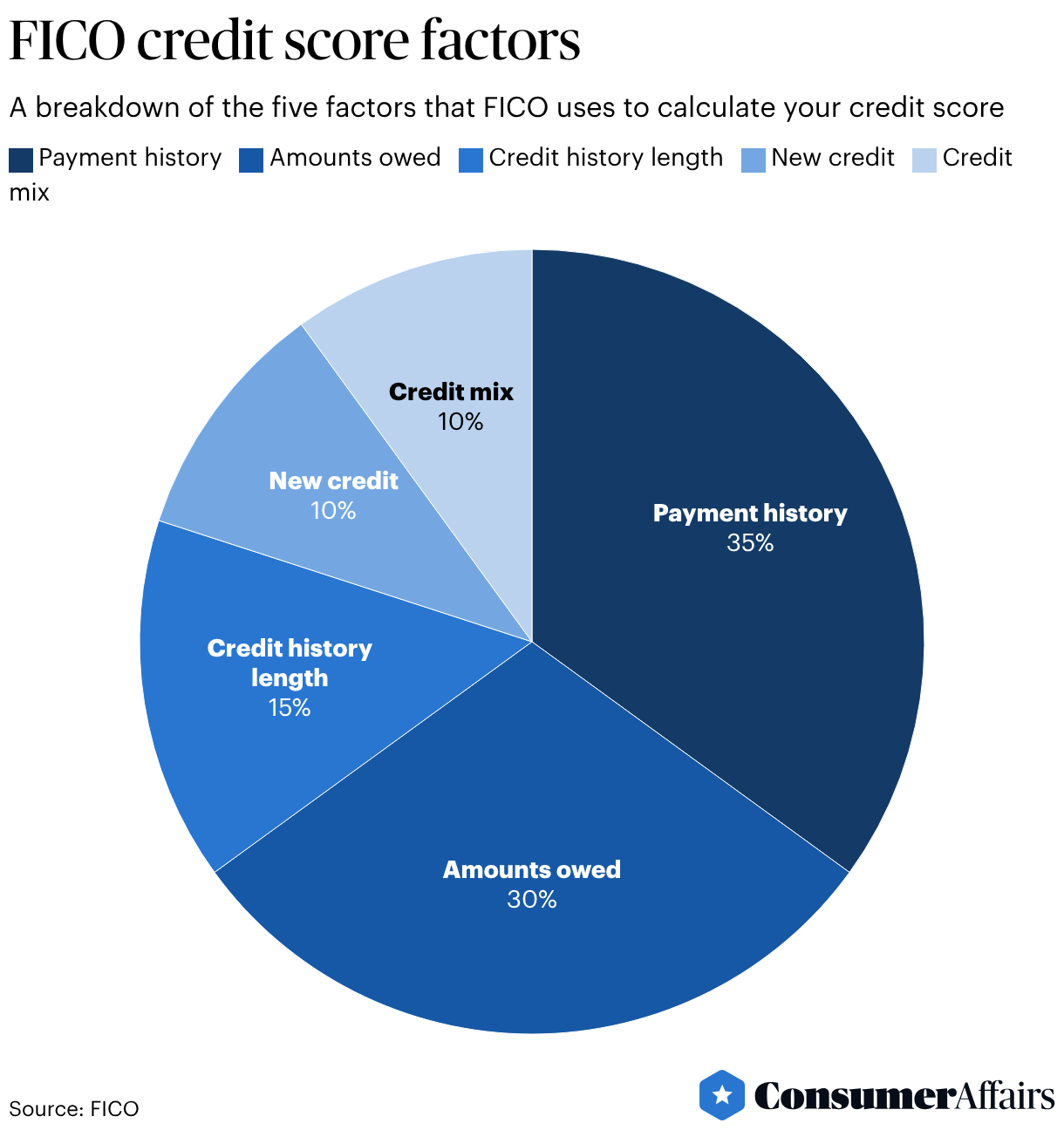
FICO is the most commonly used score, employed by 90% of top lenders today. It uses a scale of 300 to 850, designating tiers from poor to exceptional. According to this model, you are assigned a score based on five factors.
However, your credit score can change based on the type of credit you apply for.
Base vs. industry-specific
There are two main ways your scores may be calculated, resulting in either a base score or an industry-specific score.
- Base scores: Base scores are based on the likelihood of you maintaining your payment obligations throughout the life of the loan. However, these scores are updated regularly, and lenders may not always upgrade their systems, using an older model instead of the current FICO Score 8.
- Industry-specific scores: Industry-specific scores take a different approach and are based on the type of loan you want. It adjusts its algorithm to suit the industry for your loan, whether you are buying a house or an insurance policy.
Credit score model by credit type
| Credit type | Credit scoring model |
|---|---|
| Mortgage | FICO Score 2, 4 or 5 |
| Small business loan | D&B PAYDEX, FICO SBSS |
| Auto loan | FICO Auto Score |
| New or limited credit | Experian Boost or UltraFICO |
Business credit scores vs. personal scores
Just as there is personal credit, there is business credit. To get a business loan, companies must typically use their credit scores to demonstrate financial stability and creditworthiness.
Ultimately, your credit score may differ depending on which model your lender uses.
“Business credit is tied to the business itself and its EIN, revenue, cash flow and payment history with vendors and lenders,” explained Jensen.
Business credit scores may be used not only by lenders but also by parties such as suppliers, insurance underwriters and other business vendors. The higher a company’s credit score, the better the interest rates and loan terms are likely to be.
“A strong business credit profile can help a company qualify for better terms on lines of credit, equipment financing, and corporate cards without always leaning on the owner’s personal guarantees,” Jensen said.
However, businesses do not use the same credit score models as personal credit scores. While personal loans traditionally use FICO or Vantage Score for their credit reports, business loans use different systems entirely.
- Dun & Bradstreet (D&B) PAYDEX score: Dun & Bradstreet’s PAYDEX score uses scores ranging from 0 to 100. Scores above 80 are considered low-risk borrowers.
- Experian Intelliscore Plus V3: Now ranging from 300 to 850, the Experian Intelliscore Plus score is a blended credit score that combines the business owner’s credit profile with that of the business.
- FICO Small Business Scoring Service: The FICO Small Business Scoring Service (SBSS) is available for term loans, lines of credit and business credit cards up to $1 million, with scores ranging from 0 to 300.
- Equifax One Score for Commercial: Among its business credit reporting options is Equifax’s One Score for Commercial, an industry-specific credit scoring model that is said to allow lenders to “approve as many as 15% to 20% more applications.”
Several factors can affect business credit scores.
- Payment history with vendors and suppliers
- Credit utilization ratio
- Credit history length
- Industry risk factors
- Years in business
- Revenue
- Public records and legal filings
“(Business credit) tracks a company’s financial behavior, such as vendor payments and business loan repayments, and is connected to the firm’s Employer Identification Number (EIN),” said Dat Ngo, a certified public accountant at Vetted Prop Firms.
“However, if you personally guarantee business debt, there is a possibility your personal credit might be affected.”
It is something Todd Christensen has seen as a housing counseling and education manager at Money Fit, a nonprofit that offers financial education. “In many cases, entrepreneurs use their personal credit to pay for startup costs,” he said.
This makes it all the more important that business owners safeguard both their personal and business credit scores by maintaining responsible financial practices with regular credit monitoring.
Blended credit scores
Some lenders may also use a blended credit score that combines both your personal and business credit information on a single report.
“One simple way to think about it is personal credit measures how well you manage your household life, and business credit measures how well you manage your company’s financial life,” explained Jensen.
There are several credit scoring models that can be used here, but these are among the most popular.
- FICO SBSS
- Experian Intelliscore Plus
- Equifax Business Delinquency Score
- Equifax Business Delinquency Financial Score
This type of scoring model can be ideal for start-ups with new business credit but excellent personal credit.
Major credit scoring models
FICO is not the only credit scoring model used today, as VantageScore is a similar model also frequently used by lenders. While FICO is older and more widely known, VantageScore is the brainchild of the three major credit bureaus: Equifax, Experian and TransUnion.
Here are the major features of FICO and VantageScore and how they differ.
FICO
FICO Scores 8 and 9 are the two most common FICO scores, using five main factors to shape your score:
- Payment history accounts for 35% of your score.
- Amounts owed and credit utilization ratio are 30% of your total score.
- Account ages and credit history length is 15% of your score.
- Credit mix accounts for 10% of your FICO score.
- New credit is 10% of your credit score.
FICO scores range from 300 to 850, with 850 representing exceptional credit:
| Credit tier | Credit score range |
|---|---|
| Exceptional | 800 to 850 |
| Very good | 740 to 799 |
| Good | 670 to 739 |
| Fair | 580 to 669 |
| Poor | 300 to 579 |
There are also several industry-specific FICO scores for home mortgages, auto loans and credit cards.
| Credit type | FICO Score models |
|---|---|
| Mortgages | FICO Score 2, FICO Score 4, FICO Score 5 |
| General | FICO Score 9, FICO Score 8, FICO Score 10, FICO Score 10T |
| Auto loans | FICO Auto Score, FICO Auto Score 10 |
| Credit cards | FICO Bankcard, FICO Bankcard Score 10 |
While these different score models allow for industry-specific provisions, they can create a lot of confusion about your actual credit score because different models show different results.
For example, if you run a credit report using FICO Score 9, but your lender is still using FICO Score 8, your results may not match up. Worse, updates may be missing that could increase your score on one report but not the other.
VantageScore
In 2006, VantageScore emerged as a new way to calculate credit scores. Today, more than 3,700 financial institutions use this model, including Credit Karma and TransUnion, which use the VantageScore 3.0 and 4.0 credit scoring models.
Like FICO, VantageScore credit scores are calculated slightly differently and break down your credit file into more factors:
VantageScore 3.0
- 40% payment history
- 21% depth of credit
- 20% credit utilization
- 11% balances
- 5% recent credit
- 3% available credit
VantageScore 4.0
- 41% payment history
- 20% depth of credit
- 20% credit utilization
- 11% recent credit
- 6% balances
- 2% available credit
Also like FICO, a VantageScore ranges from 300 to 850, with 850 considered superprime credit:
| Credit tier | Credit score range |
|---|---|
| Superprime | 781 to 850 |
| Prime | 661 to 780 |
| Near Prime | 601 to 660 |
| Subprime | 300 to 600 |
FICO vs. VantageScore
FICO and VantageScore are the two leading types of credit scores today. While very similar, there are some key differences when comparing VantageScore vs. FICO that can impact your credit score and cause your report to look different.
| FICO | VantageScore | |
|---|---|---|
| Time to establish credit | 6 months | Immediately |
| Credit score ranges | 300 to 850 | 300 to 850 |
| Personal credit score models | 8, 9, 10, 10T | 3.0, 4.0, 4plus |
| Industry-specific models | 2, 4, 5, Bankcard, Bankcard Score 10, Auto Score, Auto Score 10 | None |
Here’s how the factors that make up your credit score differ between FICO and VantageScore

VantageScore can be ideal for those with new credit or those recovering from bad credit. Unlike FICO, which takes up to six months before generating a credit score, your VantageScore may be created as soon as your first credit account is reported to the bureaus.
FICO and VantageScore are not your only options. You may hear about other credit scoring models, such as Equifax, whose credit rating scale ranges from 280 to 850. However, most lenders today rely on FICO or VantageScore models.
When you get a copy of your credit report, look for a provider that uses FICO or VantageScore to most closely mirror the information your lender will likely receive.
Why do I have different credit scores?
It can be confusing when you pull your credit reports and find different scores. However, credit scores often vary depending on where you pull your report.
This is for a few reasons:
- The three credit bureaus may use different scoring models for your score. Overall, there are 28 different FICO credit scores used among the three bureaus.
- Your lender may only work wtih one credit bureau instead of all three, limiting the information it receives.
- FICO has industry-specific scores developed for different types of loans, such as your mortgage or credit card, so these scores may differ from your VantageScore.
Your report may also be missing some information, as credit bureaus update at different times. To ensure you have the full picture, be sure to check your credit score from all three credit bureaus.
FAQ
How do business credit scores differ from personal credit scores?
Business credit scores use entirely different credit models than personal credit scores. They have different credit score ranges that are created specifically for business use.
What are alternative credit scores, and who uses them?
Alternative credit scores incorporate additional information not typically used when calculating credit scores. It incorporates several types of loans that are typically not reported on the average credit report, including certain types of loans, buy now, pay later, point-of-sale loans and even your rent payments.
How do recent changes in credit scoring models affect my eligibility for loans?
The mortgage industry has become increasingly inclusive of new credit scoring models, with the Federal Housing Finance Agency working to incorporate newer, revamped scores like VantageScore 4.0 and FICO 10T into mortgage lending requirements. Additionally, Fannie Mae has removed its minimum credit score requirement, allowing more borrowers to qualify.
Can I improve my score in one model but not another?
Different credit scoring models weigh factors differently, and credit reports can update at different times, so it is possible to improve your credit score on one report and not on another.
How do I know which credit score a lender will use?
Lenders use all different types of credit scores, so the best way to know which one they will use is to simply ask a company representative. That way, you can pull and check your report yourself before applying.
What should I do if my credit scores are very different across bureaus?
If your scores differ considerably, obtain copies of your reports to pinpoint any credit discrepancies. File a dispute letter with the credit reporting company immediately so they can be corrected promptly.
Article sources
ConsumerAffairs writers primarily rely on government data, industry experts and original research from other reputable publications to inform their work. Specific sources for this article include:
- FICO, “The History of the FICO Score.” Accessed Dec. 16, 2025.
- FICO, “What is a FICO Score and why is it important?” Accessed Dec. 16, 2025.
- VantageScore, “The Guide To Your VantageScore Credit Score VantageScore.” Accessed Dec. 16, 2025.
- Dun & Bradstreet, “What is a PAYDEX Score?” Accessed Dec. 16, 2025.
- Nav, “FICO SBSS℠ Score in 2025: A Key SBA Loan Credit Score Explained.” Accessed Dec. 16, 2025.
- FICO, “FICO Score Types: Why Multiple Versions Matter for You.” Accessed Dec. 16, 2025.
- FICO, “FICO Small Business Scoring Service | Small Business Credit Score.” Accessed Dec. 16, 2025.
- Experian, “Top factors that impact your business credit score.” Accessed Dec. 16, 2025.
- Experian, “Blended credit scores: a smarter approach to small business lending.” Accessed Dec. 16, 2025.
- Nav, “Business Credit vs. Personal Credit: Key Differences & Why They Matter.” Accessed Dec. 16, 2025.
- FICO, “FAQs About FICO Scores in the US.” Accessed Dec. 16, 2025.
- FICO, “What are the minimum requirements for a FICO score?” Accessed Dec. 16, 2025.
- VantageScore,“What Is a VantageScore Used For?” Accessed Dec. 16, 2025.
- ABA Banking Journal, “FHFA nearing deal to use new FICO credit scoring model for mortgages.” Accessed Dec. 16, 2025.
- Experian, “What Is Alternative Credit Scoring?” Accessed Dec. 16, 2025.
- Fannie Mae, “Selling Guide Announcement.” Accessed Dec. 16, 2025.