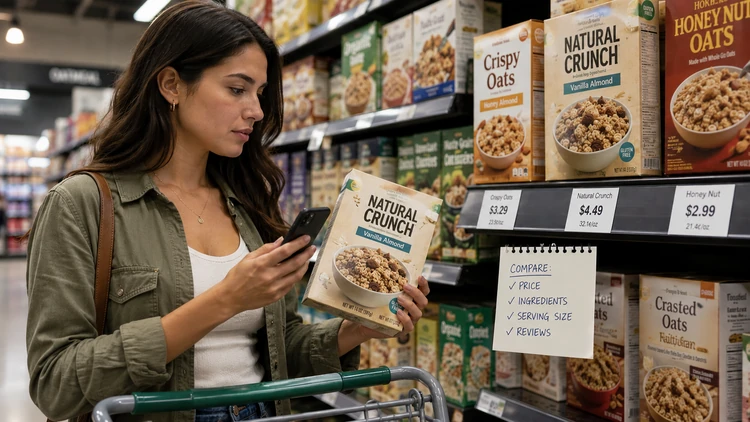

Brand loyalty may be changing: More than one-third (37%) of loyal shoppers say they would let an AI agent recommend a different brand if it found a product that better fits their needs.
Consumers are growing comfortable with AI shopping assistants: Nearly three-quarters (74%) of people surveyed said they're open to AI helping with shopping tasks, and the same percentage said they'd trust an AI agent more than a friend to make a purchase recommendation.
AI could help shoppers save time and money: Experts say AI can compare products, prices, and value more effectively than most consumers can on their own, helping people make smarter purchasing decisions.
For years, brand loyalty has been one of the most valuable assets a company could have. Many shoppers stick with the same products, stores, and brands they know and trust. But a new study from Accenture suggests that may be starting to change as artificial intelligence becomes more involved in everyday purchasing decisions.
The global survey found that consumers are becoming increasingly comfortable letting AI help them shop, compare products, and even make final recommendations. In fact, 37% of shoppers who typically stay loyal to a small group of preferred brands said they would be willing to let an AI agent switch them to a different brand if it found a better option.
ConsumerAffairs spoke with Accenture's Oliver Wright, global lead of consumer industries, who explained how AI-powered shopping assistants could reshape the relationship between consumers and brands, creating new opportunities while also challenging companies to earn the trust of both shoppers and the algorithms that increasingly influence their decisions.
You could use something like this as the body section of the article:
Trusting AI
The survey suggests that consumers are becoming surprisingly comfortable with the idea of AI playing a larger role in their shopping decisions. Nearly three-quarters (74%) of respondents said they are open to using an AI agent to complete shopping-related tasks on their behalf, such as researching products, comparing options, or making recommendations.
Trust in AI is also growing. In one of the study's most eye-catching findings, 74% of consumers said they would trust a personal AI agent more than their best friend when it comes to making a purchase on their behalf.
“Consumers will continue to ask friends and family for their thoughts on what, where and when to buy, the difference is who will they most depend on for the actual decisions they take, Wright said. “Why? Because AI is able to convey responses that are truly the best researched, and it explains the answer in a way that is most relatable for the consumer, even better than the consumer’s friends.”
Letting AI make the decisions
The study also found that nearly one-third (32%) of respondents would allow an AI agent to make the final purchasing decision for them, as long as it stayed within limits they set, such as budget, preferred brands, or product features.
Perhaps most notably, AI's influence appears poised to grow rapidly. More than seven in 10 consumers (71%) believe that at least half of their spending in a given category will be influenced by AI over the next year.
The findings suggest that shoppers increasingly view AI not just as a tool for gathering information, but as a trusted advisor that can help simplify purchasing decisions and identify products that best match their needs.
Driving better consumption
One of the key findings from the study: 37% of behaviorally loyal shoppers would let an AI agent switch them from their favorite brands for a better fit.
What does this mean for the everyday consumer who values consistency but wants the best value? Wright broke it down:
“Our research suggests that AI will drive better consumption, period,” he said. “Consumers expect AI to help them make better choices whether that is by switching to a brand they haven’t tried before that actually meets their needs, or by buying a product at a location they haven’t thought of before.
Interestingly this will mean, on occasion, spending more, where AI recommends a product that, while more expensive in the short term, is far better over the full product lifecycle.”
Using AI to save money
In addition to possibly altering brand loyalty, Wright says there are also ways for consumers to use AI to save money.
“We have all been confronted with a row of detergent bottles in a grocery store of slightly different concentrations, pack appearances and effectiveness, even the cost per ounce fails to give consumers an accurate view of value,” Wright said. “AI solves that, making the true comparisons, ‘doing the math,’ and cutting through the clutter to tell confused, time poor consumers the one to choose.
“Similarly, when given a list, AI agents can direct a consumer where to shop (and for what) and outline the trade off of e-commerce versus in store. Don’t underestimate the total value of this.”