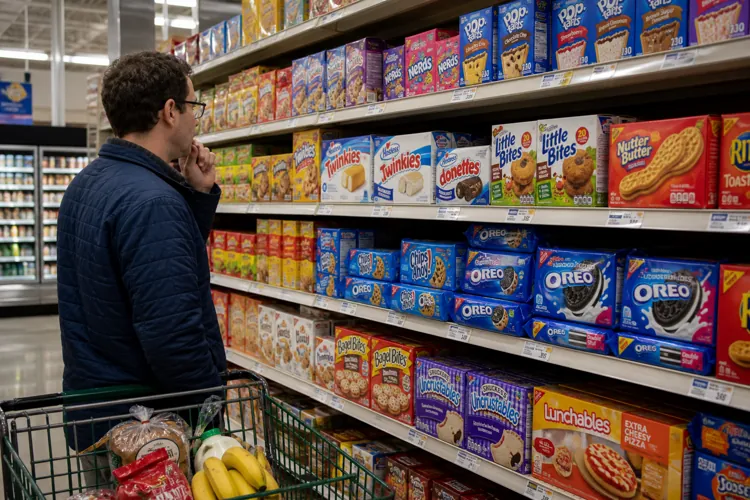

A new analysis estimates that diets high in ultra-processed foods could be associated with nearly $360,000 in additional lifetime costs.
Many Americans may underestimate how much ultra-processed food they eat, with just 9% able to correctly identify these foods.
Experts say shoppers can make more informed choices by comparing food labels, recognizing common ingredients, and making small, affordable grocery swaps.
That $2 box of mac and cheese might seem like a budget-friendly dinner, but the true cost of ultra-processed foods could add up over time.
A first-of-its-kind analysis estimates that diets high in these foods could carry nearly $360,000 in lifetime costs, raising questions about how everyday food choices may affect both health and finances. The findings also point to a gap in consumer awareness, with just 9% of Americans reportedly able to correctly identify ultra-processed foods.
ConsumerAffairs spoke with health economist Lindsay Allen, Ph.D., and Amy’s Kitchen CEO Paul Schiefer about what the findings mean for shoppers and how to better understand what's on their plates.
Methodology
The analysis, conducted independently by health economist Lindsay Allen, Ph.D., and commissioned by Amy’s Kitchen, compared Americans in the top 20% of ultra-processed food consumption with those in the bottom 20%.
Using a 2025 review of research on ultra-processed foods and health outcomes, Allen focused on five conditions with the strongest supporting evidence: type 2 diabetes, heart disease, colorectal cancer, depression, and Crohn’s disease.
The analysis estimated the associated lifetime costs, including medical care, long-term care, lost earnings, and the economic impact of a shorter life expectancy. Researchers modeled a 20-year-old maintaining the same relative level of ultra-processed food consumption throughout adulthood.
Key findings
Here’s a look at what the survey found:
Nearly $360,000 in estimated lifetime costs: People with diets high in ultra-processed foods faced an estimated $359,836 in additional lifetime costs compared with those whose diets were low in these foods.
A shorter life expectancy accounts for most of the estimate: Approximately $338,419 of the total reflected the economic value of an estimated 10-month reduction in life expectancy. Another $21,417 was attributed to additional health-related costs, including medical care, long-term care, and lost earnings.
Diabetes was the biggest contributor to health-related expenses: Type 2 diabetes accounted for 76% of the estimated additional health costs.
The estimate remained substantial under different assumptions: Researchers ran the model 1,000 times using different assumptions, and the estimated lifetime cost exceeded $200,000 in 98% of simulations.
Consumers may underestimate their exposure: A companion survey of 2,000 Americans found that respondents estimated ultra-processed foods made up 16% of their diets, while CDC data cited in the release indicates these foods account for about 53% of calories consumed by American adults.
Dr. Allen explained that these higher lifetime costs arise because higher consumption is associated with a greater lifetime risk of several chronic conditions.
“For example, among every 100 people in the highest fifth, we would expect about 13 more cases of type 2 diabetes and about 11 more cases of cardiovascular disease than among 100 people in the lowest fifth,” she said. “Type 2 diabetes accounts for the largest share of the cost of illness, because it is common, it typically begins in middle age, and its costs continue for the rest of a person’s life.”
Misconceptions about processed foods
With under 10% of Americans surveyed saying they can identify processed foods at the grocery store, Schiefer pointed out some of the biggest misconceptions facing many shoppers.
“The biggest is that any frozen or packaged food must be ultra-processed,” he explained. “Frozen is a way of keeping food, and it tells you nothing on its own about how the food was made, the quality of the ingredients, or the nutritional profile of the food.
“Another is that a front-of-package claim like high protein or high fiber means a food isn’t ultra-processed. Those nutrients can come with or without ultra-processed techniques, and the claim doesn’t say which.”
Another thing to look out for: just because something is cheap on the shelf doesn’t mean there aren’t hidden costs.
“Something that looks inexpensive at checkout can carry costs that show up later, which is what Dr. Allen’s analysis looked at,” Schiefer said.
Making simple swaps at the grocery store
With grocery prices on a seemingly never-ending uptick, the thought of swapping out cheaper options can be daunting for many shoppers. However, Schiefer said that consumers don’t have to change the whole cart at once.
“Start by picking the three or four things you buy every week, like bread, pasta sauce, or a snack, and compare labels,” he said. “Look for a whole food ingredient list that you recognize and have in your own kitchen. Staples help, too. Frozen vegetables, beans, and oats are affordable and go a long way.
“A lot of people are also cutting back on takeout and delivery. A good frozen meal at home covers that same ‘I need something now’ moment, usually for less than ordering in.”