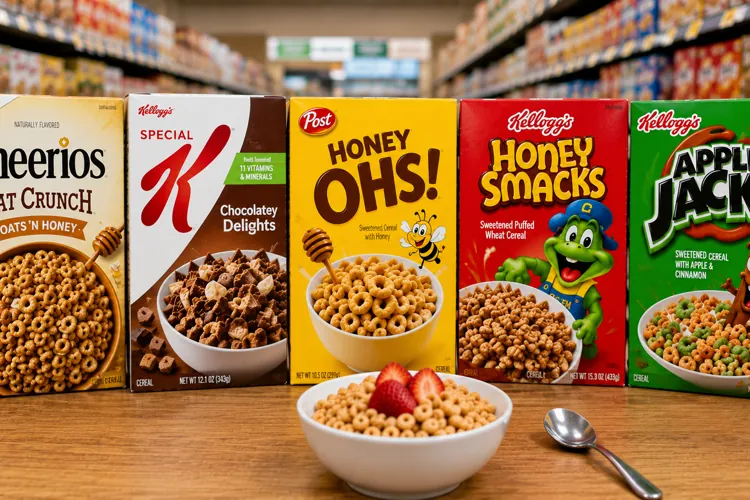

Don't trust the packaging. Words like whole grain, honey, and oats can make cereals seem healthier than they really are.
Compare varieties carefully. Even trusted brands can have flavored versions with significantly more added sugar than the original.
Read the Nutrition Facts label. Aim for cereals with 10 grams or less of added sugar, at least 3 grams of fiber, and as much protein as possible.
Words like "whole grain," "honey," "oats," and "protein" can make a cereal seem like a healthy way to start the day. But according to a recent roundup by Tasting Table, several cereals with wholesome-sounding names or healthy-looking packaging still contain surprisingly high amounts of added sugar.
The publication consulted registered dietitians to identify cereals they recommend limiting on your pantry shelf. Not just because of the sugar levels, but also because many are low in fiber and protein, making them less filling than consumers might expect.
Here are five cereals that may not be as healthy as their packaging suggests.
Cheerios Oat Crunch Oats 'N Honey
Original Cheerios has only one gram of sugar in 1.5 cups. This stuff packs a whopping 15 grams of sugar in just one cup. Yes, they shrunk the serving size on the box, otherwise 1.5 cups would have well over 20 grams of sugar.
So, while the Cheerios name gives this cereal a healthy reputation, this version contains considerably more added sugar than Original Cheerios.
While oats and whole grains are part of the recipe, the added sweetness makes it less nutritious than many shoppers assume.
If you like Cheerios, be sure to compare the Nutrition Facts labels, as there are now many varieties available. I have yet to find a variety that has sugar levels as low as the original.
Special K Chocolatey Delights
For years, Special K has been marketed as a better-for-you cereal, but the chocolate variety tells a different story.
Dietitians point to its added sugar (12 grams per cup) and refined ingredients, saying it's closer to a sweet snack than a balanced breakfast.
Don't assume every cereal in a healthy brand lineup is equally nutritious. Flavored varieties often contain much more sugar than the original.
Honey Ohs
With words like "Honey" and images of golden cereal pieces, Honey Ohs looks like a fairly wholesome breakfast option.
Nutritionists say the reality is different, citing multiple added sweeteners (18 grams of sugar per cup) and relatively little fiber to balance them out. It actually has more sugar than the Oreos cereal.
Shopping tip: Ignore buzzwords on the front of the box and check the "Added Sugars" line on the Nutrition Facts panel.
Honey Smacks
Whole-grain wheat is the first ingredient, but it's quickly followed by several forms of added sugar.
Nutritionists say a single serving contains about 18 grams of added sugar, making it one of the sweeter cereals in the aisle.
Shopping tip: A cereal can contain whole grains and still be high in sugar. That’s why it’s so important to look at the full nutrition label before assuming it's a healthy choice.
Apple Jacks
The name and colorful apples on the box may suggest fruit, but experts note that the cereal gets its apple flavor primarily from added flavorings rather than real fruit.
Combined with its sugar content (13 grams of sugar per cup), it's another example of marketing creating a "health halo."
Shopping tip: Pictures of fruit don't necessarily mean a cereal contains meaningful amounts of fruit. Especially when fruit is spelled “froot.”
The cereals that probably won't surprise you
Nutritionists also included several cereals that most shoppers already recognize as treats rather than health foods, including:
Golden Crisp
Cap'n Crunch's Crunch Berries
Marshmallow Fruity Pebbles
Oreo Puffs
Krave Double Chocolate Brownie Batter
Shop smarter in the cereal aisle
Rather than judging a cereal by its front label, flip the box over and read the Nutrition Facts panel.
Nutrition experts generally recommend choosing cereals with 10 grams or less of added sugar, at least three grams of fiber, and as much protein as possible. Pairing cereal with Greek yogurt, nuts, or fresh fruit can also create a more balanced breakfast.