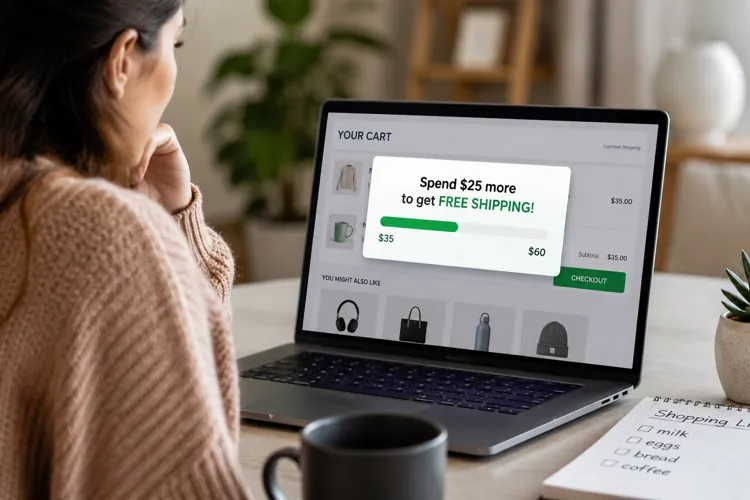

"Spaving" can backfire: Spending extra to earn free shipping, discounts, or rewards often leaves shoppers spending more.
Don't fall for the math: Before adding another item to your cart, ask yourself if you'd buy it without the promotion and compare the cost to paying shipping.
Spend more only when it adds value: Buying everyday essentials in bulk and investing in durable products can be smart long-term savings strategies.
Who doesn't love a good deal? Whether it's free shipping, a buy-one-get-one offer, or a coupon that unlocks a bigger discount, retailers have become experts at convincing shoppers to spend just a little more.
The problem is that sometimes those "savings" actually leave you spending far more than you planned.
Consumer guru Clark Howard recently highlighted the growing shopping habit known as "spaving," a blend of the words spending and saving. The concept is simple: You spend extra money to qualify for a discount, free shipping, bonus rewards, or another promotion.
While it feels like you're saving, your wallet may tell a different story.
How retailers encourage spaving
You've probably seen messages like these while shopping online:
"Spend $15 more for free shipping."
"Buy two and save 25%."
"Spend $100 and receive a $20 gift card."
These offers create a sense of urgency and make shoppers feel like they're leaving money on the table if they don't qualify.
The reality is that retailers design these promotions to increase the average amount customers spend and not necessarily to help them save.
Pro tip: Track your impulse buys. For one month, make a note every time you buy something solely to qualify for a promotion. You may be surprised how much those "little extras" add up over the course of a year.
Five ways to avoid the spaving trap
Know your budget before you shop: Decide how much you're willing to spend before you start browsing. Having a firm budget makes it easier to ignore tempting checkout offers.
Ask one simple question: Would you buy the extra item if there wasn't a promotion? If the answer is no, skip it.
Compare the math: Don't spend an extra $25 just to avoid a $7 shipping charge. In many cases, paying for shipping costs less than buying something you didn't need.
Keep a shopping list: Whether you're grocery shopping or buying household items online, sticking to a list helps reduce impulse purchases.
Wait 24 hours: If you're shopping for something that's not an everyday necessity, leave it in your cart overnight. Many impulse purchases lose their appeal after a little time.
Pro tip: Don't let free shipping dictate your purchase. Before adding another item to your cart, compare the shipping fee with the cost of the extra product. Paying a small shipping charge is often the cheaper option.
When spending more actually makes sense
Not every "spaving" situation is a bad idea.
Buying larger quantities of stuff you regularly use, (think paper towels, laundry detergent, and pet food) can save money if the unit price is lower and you'll use everything before it expires.
The same goes for annual subscriptions that cost less than paying month to month, provided you're confident you'll use the service all year.
Also, investing in a higher-quality product that lasts significantly longer (think tools, tech, furniture, or luggage) can be a smart financial decision in the long run, since you won't have to replace it anytime soon.