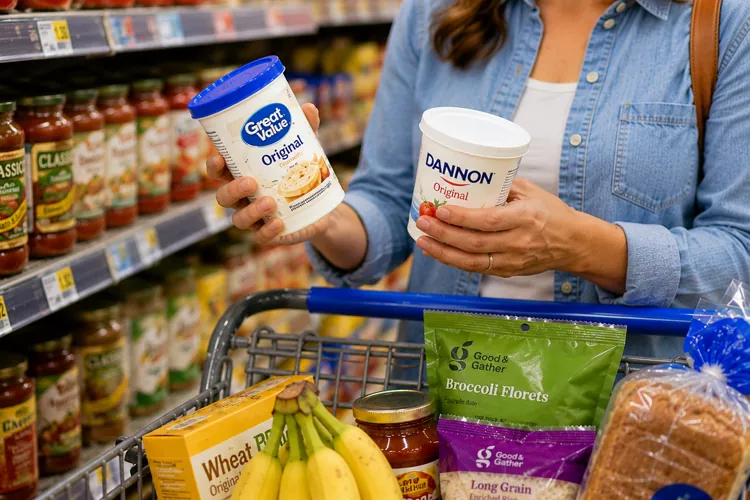

Store brands have improved dramatically. Generic medications, pantry staples, frozen produce, and many household essentials often deliver similar quality for a lower price.
Shop smarter, not by brand. Compare unit prices and ingredient lists—you may be paying extra for a familiar label rather than a better product.
Some categories are still personal. Coffee, cereal, ketchup, and certain snacks may be worth the splurge if you prefer the taste or performance.
Private-label products have come a long way. From pain relievers to frozen vegetables, many store brands now rival national brands in both quality and performance.
That doesn't mean every generic product is automatically the better buy. While some categories offer virtually identical products at a lower price, others still have meaningful differences in terms of taste, performance, and ingredients.
Here's where store brands can help you save money, and where paying extra for a national brand may still make sense.
Over-the-counter medications are easy savings
If you're still buying brand-name pain relievers, allergy medicine, or heartburn medication simply because you recognize the name, you may be spending far more than necessary.
The U.S. Food and Drug Administration (FDA) requires approved generic medications to contain the same active ingredient, strength, dosage form, and intended use as their brand-name counterparts. They must also meet the same manufacturing and quality standards.
That means store-brand ibuprofen works the same way as Advil. Generic acetaminophen contains the same active ingredient as Tylenol. The same principle applies to many allergy medications, acid reducers, and cold medicines.
The biggest difference is often the packaging, and of course the price.
Pro tip: Ignore the logo on the front of the box. Turn it over and compare the active ingredient panel. If the ingredients and dosage match, the generic version is often an easy way to cut your pharmacy bill.
Pantry staples rarely justify paying extra
Walk down the baking aisle and you'll find national brands sitting next to store brands that often contain nearly identical ingredient lists.
Products like flour, sugar, salt, rice, dried beans, pasta, oats, baking soda, and canned vegetables are commodities. Most shoppers would be hard-pressed to notice a difference once they're incorporated into a recipe.
Instead of focusing on the brand name, compare the ingredient list and the unit price. Many shoppers are surprised to discover they're paying 20% to 40% more simply because they're accustomed to reaching for a familiar label.
Pro tip: Pick one pantry staple each shopping trip and switch to the store brand. If your family doesn't notice the difference, make it your new default.
Frozen fruits and vegetables are another win
Fresh produce isn't always the freshest option. Many frozen fruits and vegetables are harvested at peak ripeness and frozen shortly afterward, helping preserve flavor and nutrients.
Whether you're buying broccoli, peas, corn, mixed vegetables, berries, or mango chunks, the differences between national brands and store brands are often minimal.
For making things like smoothies, soups, casseroles, and side dishes, store-brand frozen produce can deliver excellent value.
Pro tip: Buy plain frozen vegetables instead of seasoned versions. You'll usually save money and have more control over sodium levels and the added seasonings.
Store brands have become brands in their own right
Retailers no longer see private labels as "cheap alternatives." Instead, they've become an important part of their business strategy.
Brands like Kirkland Signature, Great Value, Good & Gather, Bettergoods, Simple Truth, Member's Mark, and Aldi's exclusive labels have built loyal followings by focusing on quality while keeping prices below national competitors.
Many shoppers who initially tried store brands to save money continue buying them because they like the products and not simply because they're less expensive.
That shift has encouraged retailers to expand into more “premium” products. You now often see store-brand premium coffee, organic foods, specialty cheeses, frozen meals, and gourmet snacks.
Categories where paying more may still make sense
Coffee is one example where some people will balk at going to a generic grind or whole bean. This is because many strongly prefer a specific roast or flavor profile.
The same goes for things like breakfast cereal, ketchup, mayonnaise, soft drinks, barbecue sauce, and certain snack foods.
In these categories, the decision comes down to your own taste, not clever marketing.
The takeaway here is instead of replacing everything at once, experiment one product at a time. You just might discover that generic Greek yogurt becomes a permanent purchase, while your favorite coffee remains worth the splurge.
Pro tip: Conduct a blind taste test at home. Remove the packaging and let family members choose their favorite. You may be surprised how often the less expensive option wins.
Household basics deserve a second look
The savings don't stop in the grocery aisles. Paper towels, trash bags, aluminum foil, plastic wrap, cleaning sprays, dish soap, bleach, and many paper products often have lower-priced store-brand alternatives.
Performance can vary more than with pantry staples, so it's worth experimenting and testing out certain products. For example, you may decide that generic glass cleaner works perfectly fine while continuing to buy your preferred name-brand dishwasher detergent.
The goal isn't to replace every national brand but to identify where paying more no longer makes sense from a value perspective.
Pro tip: Start with smaller packages when trying a new household product. If you like it, then you can buy the larger size the next time you need it.
Five more ways to maximize your savings
Compare unit prices, not package prices: Keep in mind that the lowest sticker price isn't always the best deal. Check the unit price to see what you're really paying per ounce, pound, or item.
Don't shop only one retailer: One store may have the best private-label dairy products, while another excels in frozen foods or pantry staples.
Read reviews: Many grocery apps and retailer websites include customer ratings that can help identify standout store-brand products.
Watch for satisfaction guarantees: Some retailers will refund or replace store-brand products if you're not satisfied, making it virtually risk-free to try something new.
Keep an open mind: The generic product you tried five years ago may be very different today. Retailers continually reformulate and improve their private-label offerings.