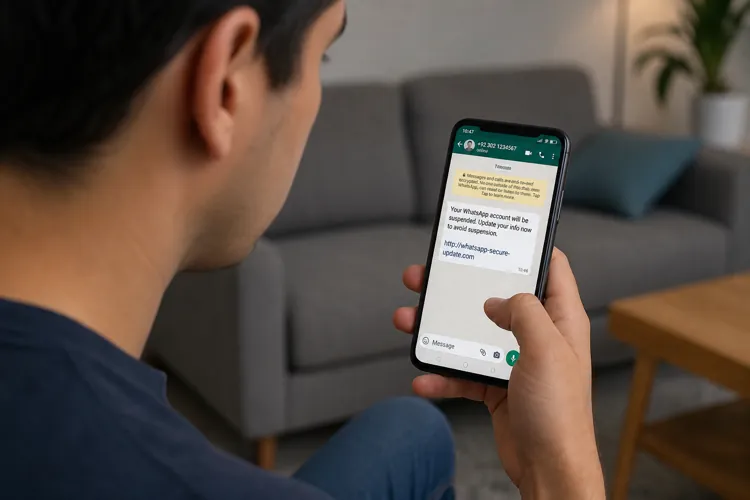

WhatsApp is testing an optional “Scam Alert” that uses on-device machine learning to identify suspicious messages from unknown senders.
Potential scams will trigger a private warning, but WhatsApp will neither block the message nor automatically report the conversation.
The limited beta cannot detect every threat, particularly scams sent through a known contact’s compromised account.
WhatsApp is testing a new feature designed to warn users when a message from an unknown sender appears to be part of a scam.
The optional feature, called Scam Alert, downloads a machine-learning model to the user’s device. It analyzes incoming messages from people outside the recipient’s contacts, looking for linguistic signals and conversational patterns associated with scams that have been previously reported by WhatsApp users.
When the system identifies a potentially fraudulent message, it displays a warning banner inside the chat. The alert is visible only to the recipient, preventing the suspected scammer from knowing that the message has been flagged.
Users can then block the sender, report the conversation, continue chatting or mark the sender as trusted. Choosing the last option removes the warning and stops the feature from flagging that particular conversation again.
Privacy protection
Scam Alert does not automatically block messages or report their senders. Classification takes place locally on the user’s device, an approach intended to add protection without requiring WhatsApp to examine private conversations on its servers.
The feature is aimed at scams involving impersonation, fake job or sales offers, investment fraud, romance schemes, malicious links, and fraudulent payment requests. Such schemes may begin on Facebook, Instagram, or another public platform before the criminal moves the target to a private WhatsApp conversation.
Scam Alert nevertheless has a significant limitation: it focuses on messages from unknown senders. A scam delivered through a friend’s or relative’s compromised account may therefore escape detection because the sender is already listed in the victim’s contacts.
What to watch out for
Users should remain cautious about unexpected links and requests to transfer money, scan QR codes, or connect new devices — even when a message appears to come from someone they know. WhatsApp users can also enable two-step verification and review the devices connected to their accounts under Settings > Linked devices.
The feature is undergoing a limited beta rollout and is being tested with researchers in Meta’s bug-bounty community. WhatsApp has not announced when it will become broadly available.