


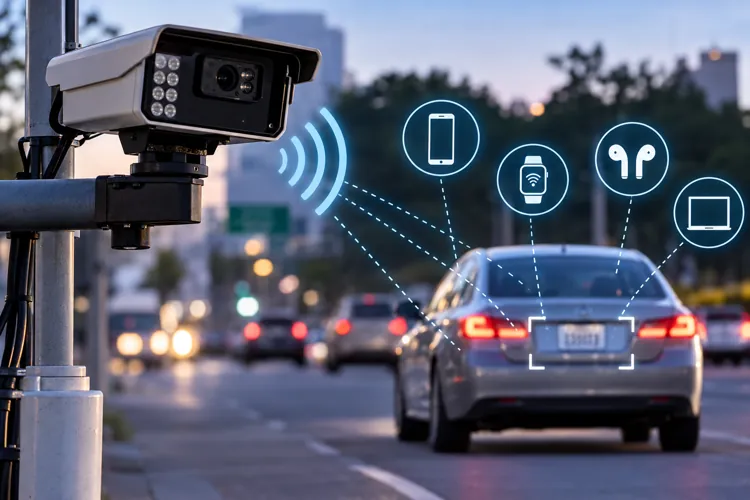

License plate readers are getting smarter: New technology can detect wireless signals from phones, smartwatches, and other electronic devices inside vehicles.
Your devices can create a digital fingerprint: The technology could help police recognize a vehicle even when its license plate isn't visible.
Privacy concerns are growing: The system doesn't read your messages, but it could help authorities track your movements over time.
You probably already know that cameras along roads and intersections can scan your license plate.
But what if those same surveillance systems could also recognize your phone, smartwatch, and wireless headphones? As SlashGear recently reported, a new technology called SignalTrace, developed by security company Leonardo, could make that possible.
And while it could give police another tool for solving crimes, it also raises an important question. How much information should authorities be able to collect about people who haven't done anything wrong?
How exactly does it work?
Traditional automated license plate readers photograph passing vehicles and record information such as license plate numbers, locations, and timestamps.
Rather than replacing existing license plate cameras, the SignalTrace technology is designed to work alongside them, using additional sensors to detect wireless signals from electronic devices traveling inside vehicles.
According to Leonardo, sensors can detect wireless signals from the following:
Smartphones and tablets
Smartwatches and fitness trackers
Bluetooth headphones
Vehicle entertainment systems
Certain RFID tags and other connected devices
The system looks for devices that repeatedly travel together. For example, your phone, smartwatch, and car's Bluetooth system might create a distinctive combination.
When that combination repeatedly appears alongside your license plate, the technology can associate those devices with your vehicle. Eventually, police could potentially recognize that electronic signature even without seeing your license plate.
Can police read your texts or listen to your calls?
According to Leonardo, no. The company says SignalTrace doesn't decrypt communications or read the contents of phones and other devices.
Instead, it collects electronic signals and looks for patterns. But those patterns could reveal quite a bit about your daily routine.
Think about it. You drive to work, visit the grocery store, pick up your kids, and occasionally stop at a friend's house.
If enough sensors collect information about your movements, investigators could potentially piece together where you've been and which devices regularly travel with you.
The ACLU of Northern California has raised concerns about the technology's ability to expand government surveillance beyond traditional license plate tracking.
Another concern is mistaken associations. Just because a particular phone was detected inside a vehicle doesn't prove who was carrying it.
Is this technology already being used?
SignalTrace is a real product being marketed to law enforcement, but that doesn't mean every license plate camera is suddenly tracking phones.
The technology has reportedly been tested and marketed to police departments, but widespread deployment hasn't been established.
In other words, this is an emerging surveillance capability worth watching, not proof that every roadside camera is already collecting your phone's electronic signature.
5 ways to protect your privacy
There isn't a guaranteed way to prevent every form of roadside electronic tracking, but a few precautions may help reduce the signals your devices broadcast.
Turn off Bluetooth when you don't need it. Disabling Bluetooth can reduce some wireless signals, although it won't necessarily stop all device identification.
Turn off Wi-Fi when you're not using it. This may reduce additional wireless broadcasts, particularly from devices searching for nearby networks.
Review your connected devices. Phones aren't the only potential source of electronic signals. Smartwatches, headphones, and vehicle electronics can also contribute to a recognizable combination.
Check your local surveillance policies. Ask your city or police department whether it uses automated license plate readers, what information is collected, and how long records are retained.
Don't assume turning off location services is enough. GPS settings and wireless signal detection are different technologies, so disabling location permissions doesn't necessarily prevent a nearby sensor from detecting device transmissions.