


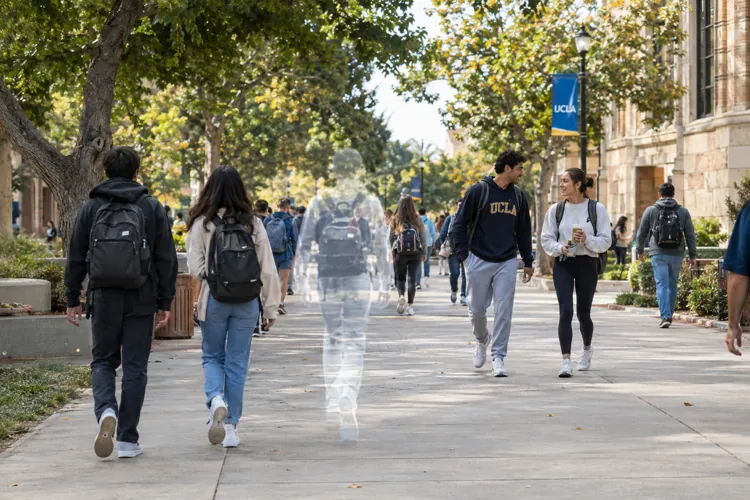

Federal authorities charged five people in Operation Ghostbusters, a nationwide investigation into alleged fraud involving fake college students.
Prosecutors say scammers used stolen identities to obtain student aid, then routed the money through U.S. bank accounts to overseas accomplices.
Investigators seized more than $750,000 in cryptocurrency, and the investigation now spans more than 40 cases.
The eve of Halloween seems like a good time to bring up the subject of ghosts — in this case “ghost students” applying for college financial aid, using stolen American identities, and never setting foot on a college campus.
The Justice Department this week announced the first charges from Operation Ghostbusters, a nationwide crackdown on alleged schemes that turned stolen identities into fake college enrollments — and federal student aid payments.
Five defendants face charges in Virginia, New Jersey, and Nebraska. Authorities say the cases involve approximately $2.9 million in alleged fraud and represent an early stage of a much wider investigation.
How the alleged scam worked
According to authorities, fraudsters used Americans’ stolen personal information to submit the Free Application for Federal Student Aid, known as FAFSA, and enroll fictitious “ghost students” in colleges.
The goal was to collect grants and loans without a legitimate student pursuing an education. Once schools disbursed aid refunds, U.S.-based intermediaries — commonly called money mules — received the payments and forwarded proceeds overseas, prosecutors allege.
Artificial intelligence helped some perpetrators maintain the illusion of an active student, Assistant Attorney General Colin McDonald said at the announcement. Scammers used AI to fill out applications and complete coursework, and some created the appearance of a student participating in an online classroom.
That apparent participation helped keep the aid flowing, even though the person whose identity appeared on the application was not attending.
A New Jersey case illustrates the alleged money trail. Investigators say three defendants received hundreds of federal aid deposits over several years. One allegedly collected more than $1 million linked to more than 300 fraudulent student accounts.
Much of the money then went to accounts belonging to alleged accomplices in Kenya associated with a safari company, according to the criminal complaint.
How investigators tracked it
The investigation began with a referral from the Education Department’s inspector general to the FBI’s Richmond office. Investigators used financial and student aid data to identify participants and refer leads nationwide.
Working with Kenyan authorities, investigators seized more than $750,000 from a cryptocurrency account linked to the alleged fraud. They also identified 830,840 potentially fraudulent Federal Student Aid IDs and recommended disabling them.
The FBI said it has identified more than $32 million in losses in similar schemes, with additional losses suspected. Officials believe the broader fraud could reach hundreds of millions of dollars.
For identity theft victims, the first warning may be a college enrollment or student aid record they never authorized. DOJ urged suspected victims to report the matter through the Education Department.
Was your identity stolen?
Americans can check their federal student aid records and credit reports for signs of this fraud — even if they never attended college. Checking both matters because a credit report alone would not reveal a fraudulent grant.
Here are the steps:
Review records atStudentAid.gov. Sign in and examine your loans, grants, FAFSA activity, and enrollment history. Look for unfamiliar schools, applications, or payments. If you cannot access your account — or discover your Social Security number is attached to an account you did not create — contact Federal Student Aid at 1-800-433-3243. An account problem warrants investigation but does not by itself prove identity theft.
Check all three credit reports. Get free reports from Equifax, Experian, and TransUnion atAnnualCreditReport.com. Look for student loans and other accounts you never opened. Free reports are available weekly.
If something appears suspicious:
Contact Federal Student Aid, the school’s financial aid office, and any loan servicer involved. Explain that you suspect identity theft, ask for an investigation, and request the procedure for disputing unauthorized loans or correcting fraudulent aid records. Save statements, screenshots, correspondence, and case numbers. Education Department guidance specifically advises notifying Federal Student Aid and the servicer.
Report the suspected fraud to the Education Department’s inspector general through its hotline complaint form. DOJ specifically directs potential Operation Ghostbusters victims there.
File an identity theft report atIdentityTheft.gov. The FTC provides a recovery plan and documentation to help dispute fraudulent accounts.
Freeze your credit with each of the three credit bureaus. Freezes are free and help prevent additional credit accounts from being opened. Also secure your StudentAid.gov account with a new, unique password and review its contact information and two-step verification methods.
Consumers should not wait for a collection notice. DOJ says the FBI has mailed letters to many identified victims. Anyone concerned about whether a letter is authentic can verify it directly with their local FBI field office.