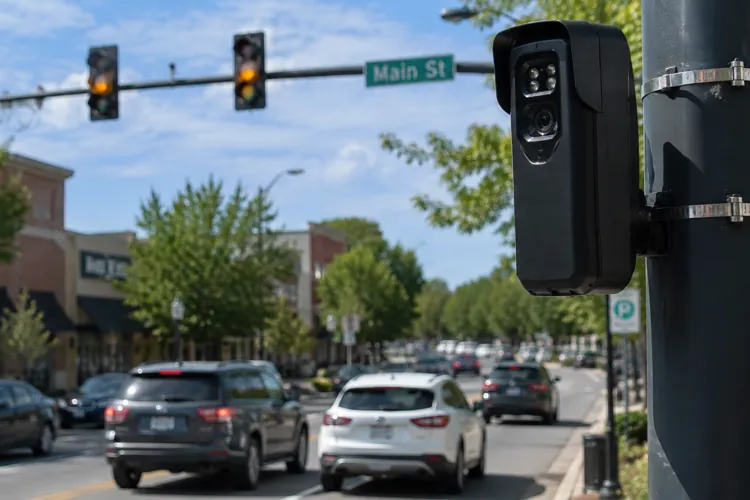

Flock is tightening its safeguards after cases of police officers misusing its license plate camera network.
New rules require specific reasons for searches, flag suspicious activity, and cut data retention from 30 days to seven.
Drivers should ask who can access their vehicle data, how searches are audited, and what happens when the system is misused.
Flock Safety cameras have spread rapidly across American roads, giving thousands of police departments the ability to search records showing where vehicles have been spotted.
Now the company behind those cameras is confronting an uncomfortable problem: What happens when the person doing the searching is the one abusing the system?
Flock is taking steps aimed at increasing oversight after cases in which law enforcement officers allegedly used its automatic license plate reader (ALPR) network for purposes far removed from catching car thieves or violent criminals.
Here's what drivers should know.
First, what does Flock know about your car?
Flock's roadside cameras automatically photograph passing vehicles and then create records that include the following:
License plate number
Vehicle make, model, and color
Any distinguishing characteristics
Exact location
Exact date and time
Police can then search those records as part of an investigation.
As you can imagine, these cameras can be enormously useful. A stolen vehicle might pass a Flock camera miles away from where it disappeared. A car connected to a kidnapping or violent crime could potentially be located much faster than through traditional investigative methods.
But there's another side to that capability, as a large enough network of cameras can produce numerous records of the same vehicle over time.
In one Virginia lawsuit reported by NBC News in 2025, for example, 176 cameras around Norfolk reportedly recorded one driver's vehicle 526 times in roughly four months. Another plaintiff's vehicle was recorded 849 times during a similar period.
These large numbers don’t mean that police were actively following those drivers, as the cameras were simply recording the vehicles that passed by. But it does show just how much location and vehicle information can accumulate, even when you’re not part of an active investigation.
So what changes is Flock making?
Every vehicle search will need a specific reason. Officers will have to enter a case code connected to an investigation and identify the type of offense, such as kidnapping or motor vehicle theft. The goal is to prevent officers from using vague explanations like "investigation" or inventing a reason for a search.
Flock will automatically flag suspicious searches. Police departments will be required to use an auditing tool that looks for unusual activity, such as an officer repeatedly searching the same license plate or conducting clusters of searches late at night. When the system spots potentially suspicious behavior, the user can be temporarily locked out until an administrator reviews it.
Vehicle data will generally be deleted after seven days. That's a significant reduction from the previous 30-day retention period. An exception will apply when information needs to be preserved as evidence in an ongoing investigation tied to a case number.
Departments will get more control over who can search their cameras. Agencies will be able to decide which types of investigations other departments can use their camera data for. For example, a department could allow outside searches involving kidnapping or homicide while blocking searches related to immigration enforcement.
5 questions to ask about Flock cameras in your community
If your city or county uses Flock cameras, you don't need to be a surveillance expert to ask the right questions.
Start with these:
Who is allowed to search the system? Ask whether every officer has access or whether searches are limited to investigators or specifically authorized personnel.
Does every search require a case number or justification? A requirement to document why a search is being performed can create an important accountability trail.
Who reviews the audit logs? This may be the most overlooked question. Ask whether supervisors conduct random or routine audits rather than waiting for someone to complain.
How long is vehicle data retained? Find out your department's actual policy rather than assuming the vendor's default applies everywhere.
What happens when someone misuses the database? There should be a written policy covering investigations, discipline, and potential loss of access.