


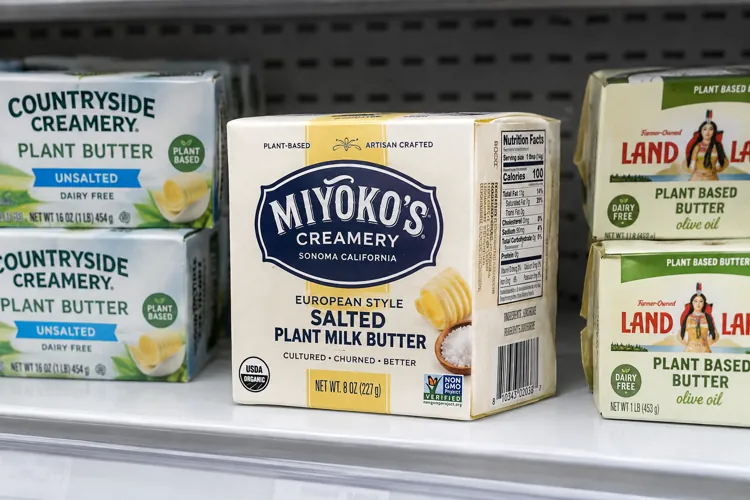

Miyoko’s Creamery European Style Salted Plant Milk Butter has been recalled because of possible contamination with E. coli, yeast and mold.
The recall affects 1,304 cases, containing 7,824 individual packages, distributed in 10 states.
The FDA has classified the recall as Class II, meaning the product could cause temporary or medically reversible health problems.
Consumers who have purchased Miyoko’s Creamery European Style Salted Plant Milk Butter are being urged to check their refrigerators and freezers following a recall involving possible contamination with E. coli, yeast and mold.
According to the U.S. Food and Drug Administration (FDA), Prosperity Organic Foods Inc., based in Boise, Idaho, voluntarily initiated the recall on September 11, 2026. The FDA classified the action as a Class II recall on October 23.
The recall covers 1,304 cases of the plant-based butter, with six 8-ounce packages per case. That amounts to 7,824 individual packages that may have reached consumers.
The product was distributed in Connecticut, Florida, Georgia, Illinois, Indiana, Iowa, Maryland, New Hampshire, New Jersey and Wisconsin.
The recall remains ongoing. No illnesses have been reported in connection with the recalled butter, according to published reports.
How to identify the recalled butter
Consumers should check their packages for the following identifying information:
Product: Miyoko’s Creamery European Style Salted Plant Milk Butter
Package size: 8 ounces (227 grams)
UPC: 857554005773
Lot code: 07871 on the retail package; 1007871 on the shipping case
Best-by date: November 5, 2026
The product is sold as a refrigerated, dairy-free alternative to conventional butter and is commonly used for spreading, cooking and baking.
Retailer Wegmans also posted a recall notice identifying the affected product and offering customers a full refund.
What are the health risks?
The FDA's Class II designation means exposure to the recalled product could cause temporary or medically reversible health consequences, while the probability of serious adverse health effects is considered remote.
However, certain strains of E. coli can cause significant illness, particularly among young children, older adults and people with weakened immune systems.
Symptoms of an E. coli infection may include abdominal cramps, diarrhea, nausea, vomiting and sometimes fever. Certain strains can cause bloody diarrhea and, in severe cases, a potentially life-threatening complication known as hemolytic uremic syndrome, which can damage the kidneys.
Yeast and mold contamination can also indicate food spoilage or compromised product quality. Not all molds or yeasts are dangerous, but contaminated food should not be consumed.
The FDA's recall notice identifies E. coli, yeast and mold as the reasons for the action but does not establish that every recalled package contains harmful microorganisms or identify a particular disease-causing strain of E. coli.
What consumers should do
Consumers who purchased the recalled butter should stop using it immediately, even if the product looks and smells normal.
They should check the lot code and best-by date and either discard the affected product or return it to the retailer where it was purchased. Some retailers, including Wegmans, are offering full refunds.
Consumers should also clean any utensils, containers or refrigerator surfaces that may have come into contact with the recalled butter.
Anyone who develops severe abdominal pain, bloody diarrhea or other significant symptoms after consuming the product should contact a healthcare professional.
Because the butter can be stored frozen, consumers should check their freezers as well as their refrigerators, even if they purchased the product several weeks ago.
The recall is a reminder that plant-based food products, like their dairy-based counterparts, can be subject to microbial contamination and food safety recalls.